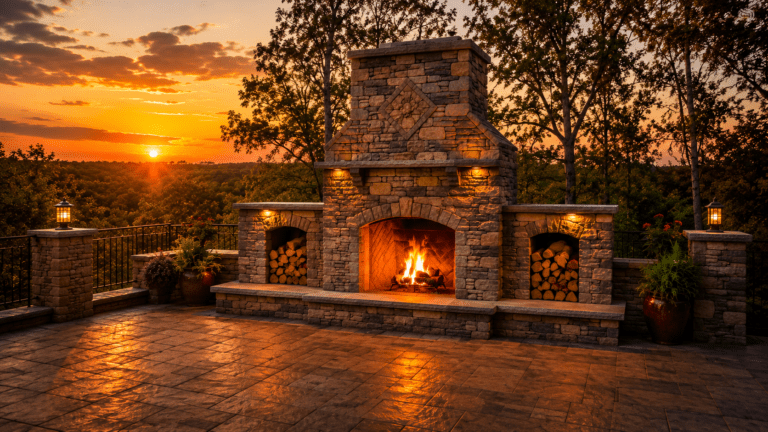
Best Outdoor Firepits — Solo Stove vs Breeo vs Tiki
This post contains affiliate links. If you purchase through these links, I may earn a small commission at no extra cost to you.
Introduction
There’s a specific kind of evening that a good outdoor firepit makes possible. The kind where nobody goes inside. Where the conversation slows down and deepens at the same time. Where the fire does exactly what fire has always done — pulls people together and holds them there long after they meant to call it a night.
I’ve sat around a lot of fires in my life. Campfires in the woods. Firepits on cabin patios. Stone fireplaces at the end of a long day in the field. And I’ve also sat around poorly designed firepits that smoked everyone out of their chairs within fifteen minutes, required constant attention to keep going, and left every piece of clothing smelling like a bonfire for three days.
The difference between a great firepit and a frustrating one is almost entirely about design. And in the last five years the smokeless firepit category has genuinely changed what’s possible in an outdoor fire experience. Companies like Solo Stove, Breeo, and BioLite have applied real engineering to a technology that hadn’t meaningfully evolved in decades — and the results are dramatic. Less smoke. More heat. Better burn efficiency. And a fire experience that keeps people outside longer and enjoying it more.
According to the Hearth Patio and Barbecue Association outdoor fire feature sales have grown over 300% in the last decade — with smokeless firepits representing the fastest growing segment. The market is flooded with options at every price point from $50 to $1,000+. This guide cuts through all of it and tells you exactly what’s worth buying and why.
Whether you’re outfitting a cabin patio, a backyard entertaining space, or looking for a portable fire solution for hunting camp — this guide covers the best outdoor firepits at every budget with honest real-world assessments of what they actually deliver.
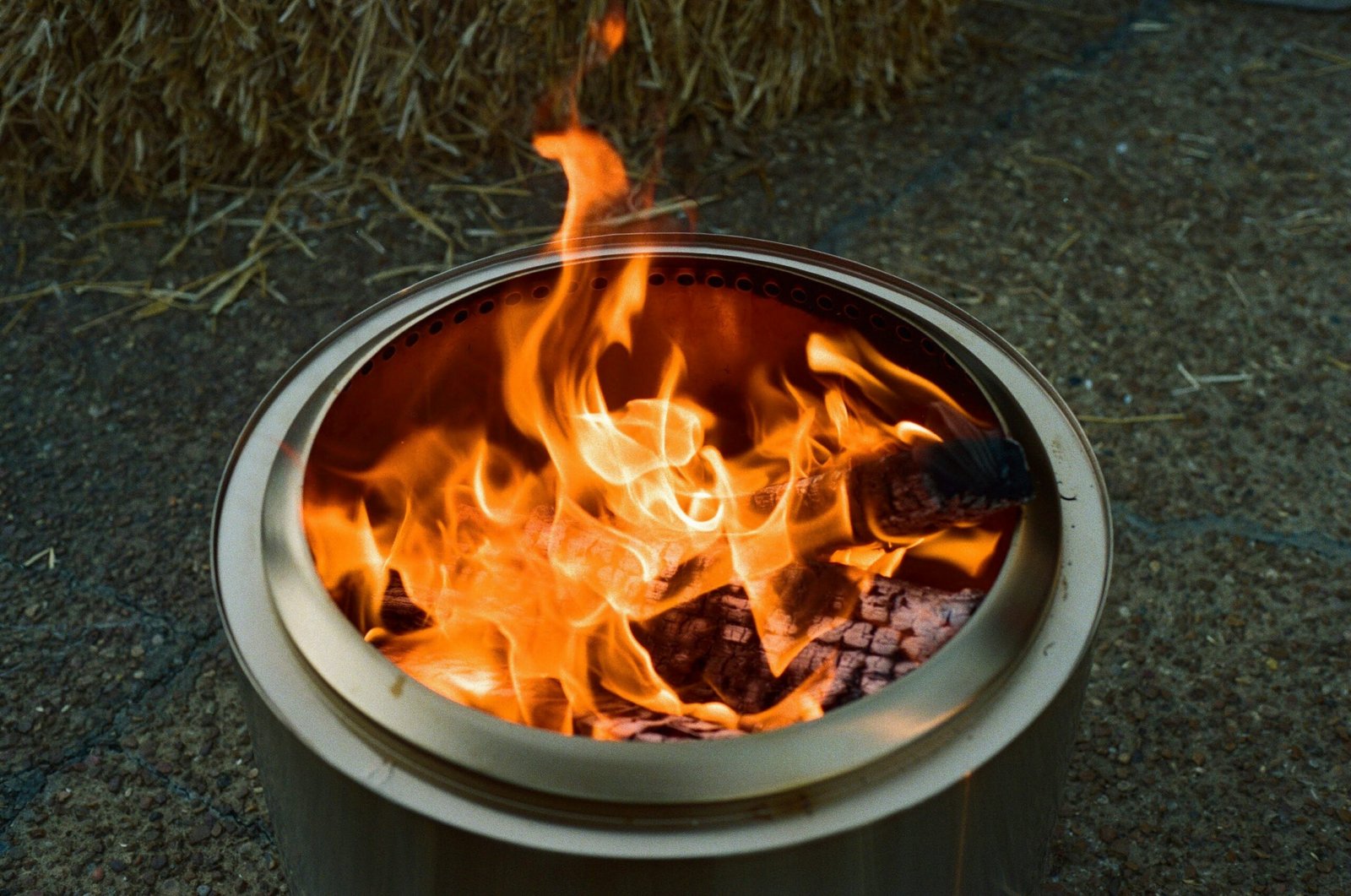
Table of Contents
How Smokeless Firepits Work — The Engineering Behind the Fire
Before getting into specific product recommendations it’s worth understanding why smokeless firepits work — because that understanding helps you evaluate every product on this list and every product you’ll encounter outside of it.
Smoke is the incomplete combustion of wood — specifically the gases, water vapor, and particles that escape from wood before they fully combust. Traditional firepits produce smoke because the fire doesn’t have enough oxygen at the right temperatures to burn those gases completely.
Smokeless firepits solve this through a double-wall design with strategically placed airflow channels. Here’s the basic mechanism:
Air enters through holes at the base of the firepit. As it travels up between the inner and outer walls it gets preheated by the fire burning inside. That preheated air exits through holes near the top of the inner wall — directly above the flame. The result is a secondary combustion event — the preheated air ignites the smoke and gases that would otherwise escape, burning them before they leave the firepit.
This secondary combustion produces two meaningful benefits. First — dramatically less smoke, because the smoke itself is being burned as fuel. Second — more heat from the same amount of wood, because more complete combustion extracts more energy from every log.
The effectiveness of this system depends on the quality of the engineering — specifically the diameter and placement of the airflow channels, the quality of the double wall construction, and the overall geometry of the burn chamber. This is why a well-engineered smokeless firepit outperforms a poorly designed one by a significant margin even when they look similar on paper.
What to Look for in an Outdoor Firepit
Before spending money on a firepit here’s what actually matters for real-world performance:
Smokeless effectiveness. Not all smokeless firepits are equally smokeless. The best ones produce almost no visible smoke after the fire is established. Budget smokeless firepits often produce significant smoke during startup and whenever you add wood — which is frequently enough to be annoying. Premium models reach near-smokeless performance within 10–15 minutes of startup and maintain it through the whole burn.
Heat output. A firepit’s heat output is determined by the size of the burn chamber and the quality of the combustion. For a standard patio seating area of 6–8 chairs you need enough heat to keep people comfortable in shoulder season — 40°F to 55°F evenings. Most quality firepits in the medium size range handle this adequately. Smaller firepits struggle to heat more than 4 people comfortably.
Burn efficiency. How long does a fire last on a given amount of wood? A more efficient burn means less frequent wood loading which means more time enjoying the fire and less time tending it. Smokeless firepits generally burn more efficiently than open firepits because more complete combustion extracts more energy per log.
Portability and weight. If you want to move the firepit from patio to hunting camp to boat dock portability matters. Most premium firepits come with a carrying case — but the weight varies significantly. The Solo Stove Bonfire weighs 21 lbs. The Breeo X Series 24 weighs 62 lbs. One goes in the back of a truck easily. The other needs two people and a plan.
Durability and materials. 304 stainless steel is the standard for quality firepits — rust resistant, handles high heat cycling without warping, and weathers well in outdoor environments. Corten steel develops a rust patina intentionally — it’s not a defect, it’s the finish. Powder-coated steel is found in budget options and is adequate but less durable under sustained high heat use.
Cooking capability. Some firepits are designed purely for atmosphere. Others have cooking grate options that let you grill over them. If cooking over your firepit matters — for hunters who want to cook at camp, for example — make sure the model you choose has a compatible cooking accessory.
Price and value. The smokeless firepit market has genuine quality tiers. Budget options under $250 typically deliver some smokeless benefit with significant compromises in materials and performance. Mid-range options $250–$400 hit the sweet spot of performance and value. Premium options $500+ deliver the best possible experience for people who want the absolute best.
The Best Starter Fire Pit – Tiki
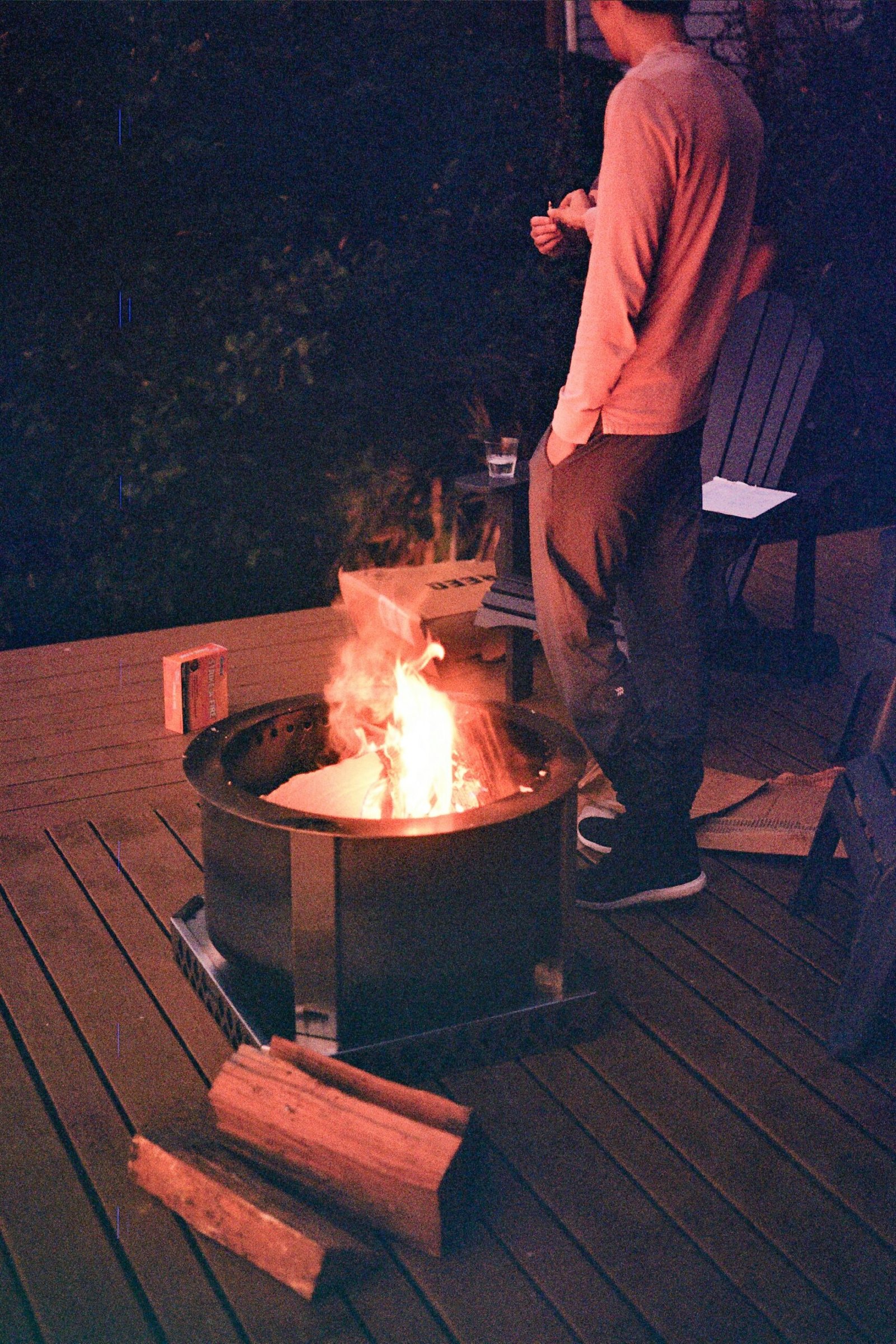
Tiki Brand Fire Pit — Smokeless Technology Without the Premium Price
The Tiki Brand fire pit brings genuine secondary combustion technology to a price point that makes smokeless fire accessible without a significant investment. It’s not as refined or as effective as Solo Stove or Breeo — but it delivers meaningfully better smoke performance than a traditional open firepit at reduced price.
What it does well:
The Tiki uses the same basic double-wall secondary combustion principle as the premium brands — air enters at the base, travels up the double wall, and exits as preheated air above the flame. The execution isn’t as precise as the premium options but the effect is real. On a calm evening with dry hardwood the Tiki produces noticeably less smoke than an open firepit of the same size — not the near-zero smoke of a Solo Stove but a meaningful reduction that keeps people comfortable.
The steel construction handles normal outdoor use adequately. It won’t look as good as a Solo Stove or Breeo after two seasons but it holds up to regular use without structural failure. The size at 20 inches in diameter is generous for this price point — big enough to hold a proper fire that heats a small seating area.
The Tiki also has a cooking accessory system — a separate grate that fits over the top of the firepit for grilling. For hunters who want a camp cooking option without a separate grill this is a meaningful value addition at this price point.
Where it struggles:
Smoke performance is inconsistent — particularly during startup and when adding wood. You’ll see smoke. Less than a traditional firepit but more than the premium options. Wind is more disruptive to the Tiki’s secondary combustion than to better-engineered alternatives. On a calm night with dry wood it performs well. On a breezy night with green wood it smokes like a traditional firepit.
The materials are noticeably less refined than premium options. The welds are adequate but not impressive. The steel is thinner. After a full season of use the difference in build quality between a Tiki and a Solo Stove is clearly visible.
Who it’s for: The buyer who wants the smokeless firepit experience at an entry level price point. If you’re not sure how much you’ll use a firepit or whether the smokeless technology is worth the premium, the Tiki is a reasonable way to find out.
- Diameter: 20 inches
- Weight: 32 lbs
- Material: Powder coated stainless steel.
- Smokeless rating: Moderate — good on calm nights, inconsistent in wind
- Cooking capability: Yes — separate grate accessory available
- Carry case: No
- Amazon: Search “Tiki Brand Fire Pit smokeless”
- Price range: $225–$250
The Best Mid-Range Pick — $250 to $300
Solo Stove Bonfire 2.0 — The Standard That Everyone Else Is Measured Against
The Solo Stove Bonfire is the firepit that created the premium smokeless category and it’s still the one that most people are buying when they invest in a quality outdoor fire experience. The Bonfire 2.0 represents meaningful refinements to an already excellent design — and the result is the best overall value in the smokeless firepit market.
What it does well:
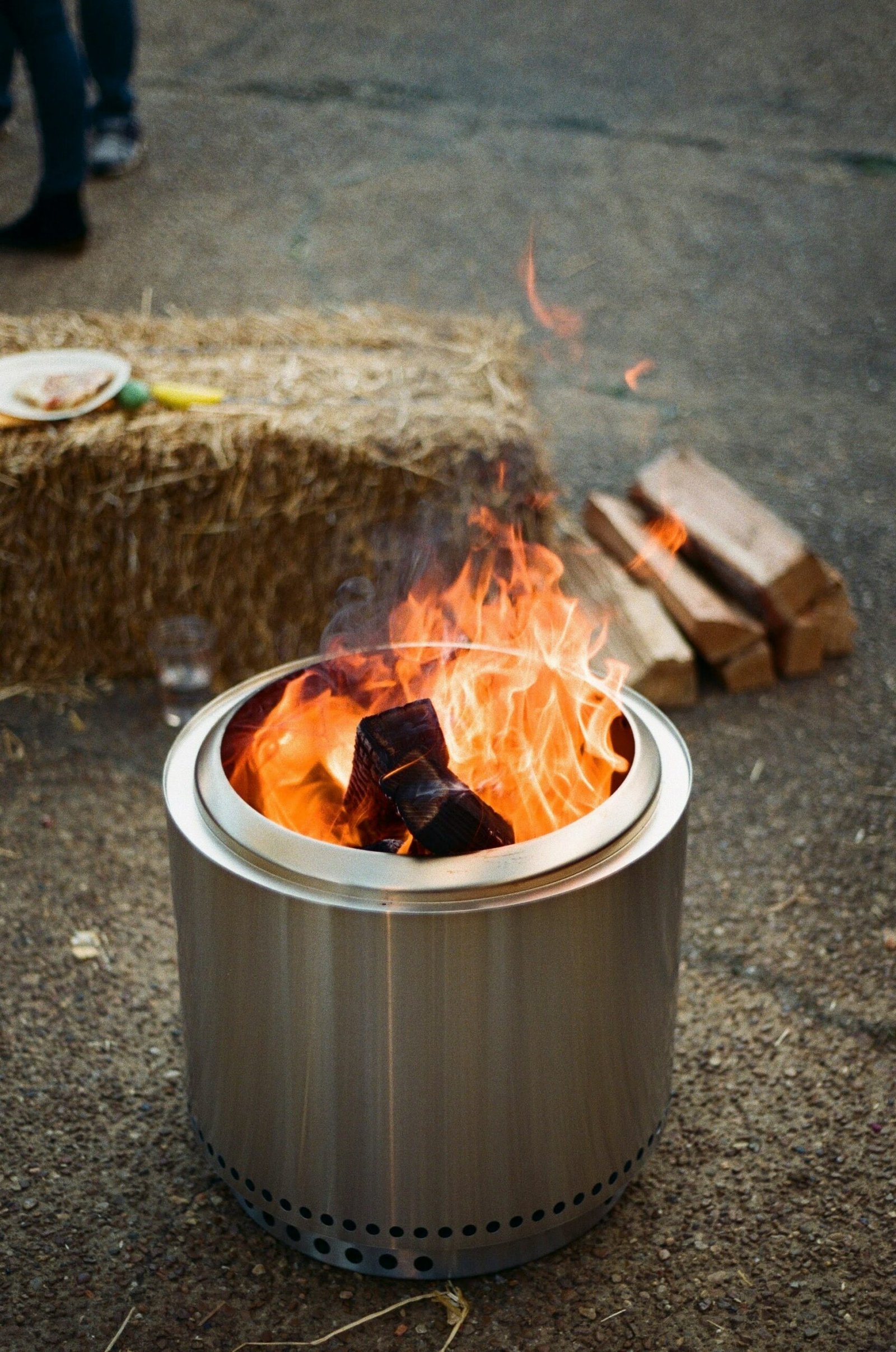
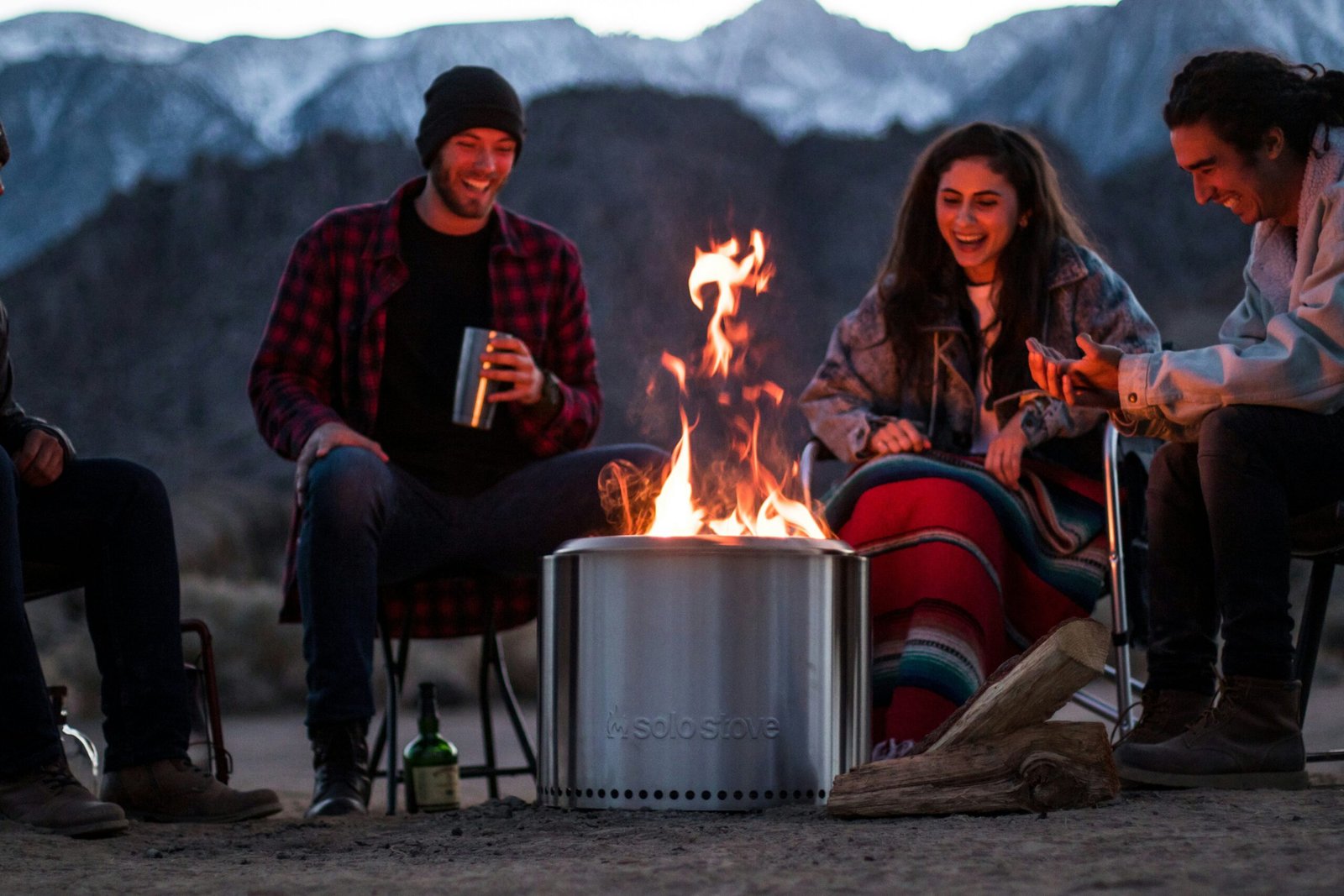
The Solo Stove’s secondary combustion technology is among the best implemented in the category. After 10–15 minutes of startup the Bonfire produces near-zero visible smoke under normal conditions. The preheated air coming through the top vents ignites gases and particles before they escape — you see flame dancing above the top rim as the secondary combustion burns off what would otherwise be smoke. It’s one of the more visually satisfying aspects of the Solo Stove experience and a clear demonstration that the technology is working.
The heat output from the Bonfire is excellent for a patio seating area of 4–6 people. At 19.5 inches in diameter the burn chamber holds enough wood to sustain a significant fire — and the efficient burn means each load of wood lasts longer than it would in a traditional firepit. On a 45°F evening the Bonfire keeps a circle of chairs comfortable without anyone needing to lean in.
The 304 stainless steel construction is genuinely high quality. The natural patina that develops on the steel over time actually improves the aesthetic — it develops a warm honey tone that looks intentional rather than worn.
The Bonfire 2.0’s key upgrade over the original is the removable base plate — a flat plate that catches ash and allows for easier cleanup than the original design where ash fell through to the ground. Cleanup is as simple as removing the base plate, dumping the ash, and replacing it. The whole process takes two minutes.
The included carry bag stores the Bonfire compactly for transport or off-season storage. At 21 lbs one person can comfortably carry it — making it genuinely portable in a way that heavier alternatives aren’t.
Where it struggles:
The Solo Stove Bonfire produces smoke during startup — sometimes significant smoke — before the secondary combustion system reaches operating temperature. This typically takes 10–15 minutes. If you’re lighting a fire and expecting smokeless performance immediately you’ll be disappointed. If you understand that it needs to warm up first the experience is excellent.
The cooking story on the Solo Stove is limited. The Bonfire has a standalone cooking accessory — a grill top that sits across the opening — but the high heat and narrow opening make it less practical for serious cooking than a firepit designed with cooking as a primary use case. For hunters who want to grill over the fire regularly the Breeo is the better choice.
The price point — while justified by the quality — is a meaningful investment. At $300 the Solo Stove Bonfire is not an impulse purchase.
Who it’s for: Anyone who wants the best overall smokeless firepit experience at a price that represents genuine value for what you’re getting. The Bonfire is the right answer for most people looking at this category — it’s why it’s the market leader.
- Diameter: 19.5 inches
- Weight: 21 lbs
- Material: 304 stainless steel
- Smokeless rating: Excellent — near zero smoke after 15 minute warmup
- Cooking capability: Limited — grill top accessory available but not ideal
- Carry case: Yes — included
- Amazon or SoloStove.com: Search “Solo Stove Bonfire 2.0”
- Price range: $250–$300
The Best Premium Pick — $600
Breeo X Series 24 — When Cooking Over Fire Matters as Much as the Fire Itself
The Breeo X Series 24 is what happens when you take the smokeless firepit concept and build cooking capability directly into the design from the start rather than as an afterthought. For hunters who want to cook wild game over a real wood fire — not just sit around one — the Breeo is the firepit the Solo Stove isn’t.
What it does well:
The Breeo’s smokeless technology uses the same secondary combustion principle as Solo Stove but with a different geometry that produces excellent smoke reduction while maintaining a wider and more accessible burn chamber. In testing the Breeo X Series 24 produces smoke performance comparable to the Solo Stove Bonfire — near-zero after warmup, minimal during startup.
The cooking system is where the Breeo genuinely separates itself. The X Series has a built-in outpost cooking system — a swinging arm that holds a grate over the fire at adjustable heights. You can grill steaks, fish, and vegetables directly over the wood fire without any additional accessories. For a hunter cooking venison backstrap or fresh fish over a real wood fire at hunting camp this is the feature that makes the Breeo worth the premium over the Solo Stove.
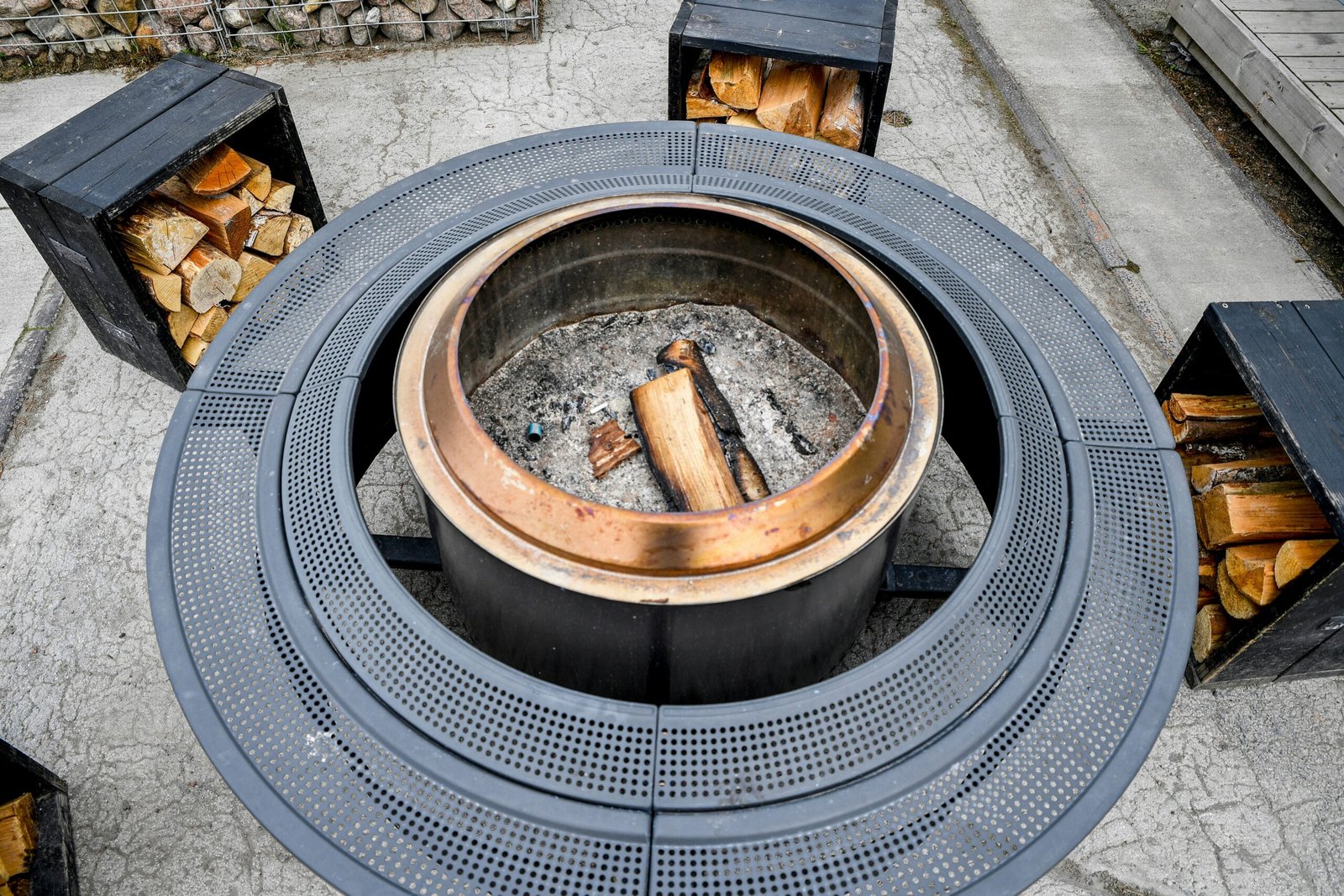
The Corten steel construction of the Breeo develops a controlled rust patina over time — this is intentional and structural, not deterioration. The oxidized surface actually becomes more durable as the patina develops. The aesthetic of a weathered Breeo on a cabin patio after two seasons is genuinely beautiful — organic, natural, and completely at home in an outdoor lifestyle setting.
At 24 inches in diameter the X Series 24 has a significantly larger burn chamber than the Solo Stove Bonfire. This produces more heat, accommodates larger pieces of wood, and sustains fires longer between loadings. For larger seating areas or colder weather the size advantage is meaningful.
The Breeo also has a sear plate option — a flat steel plate that sits inside the firepit and acts like a flat top grill. For wild game cooking specifically the sear plate opens up possibilities the grate alone doesn’t — searing fish skin side down without it falling through the grate, cooking ground venison patties, and finishing delicate cuts.
Where it struggles:
Weight is the Breeo’s most significant practical limitation. The X Series 24 weighs 62 lbs — nearly three times the Solo Stove Bonfire. This is not a firepit you carry to hunting camp on a whim. It’s a permanent or semi-permanent installation on your patio or cabin deck. If portability matters the Breeo is the wrong choice.
Price is the other consideration. At $600 the Breeo X Series 24 is a meaningful premium over the Solo Stove. That premium is justified by the cooking capability and the larger size — but only if you’ll actually cook over it. If you primarily want atmosphere and won’t use the cooking system you’re paying for a feature you won’t use.
Who it’s for: The hunter or outdoor cook who wants to actually cook wild game over a real wood fire — not just sit around one. The Breeo is the answer for anyone who sees the firepit as a cooking tool as much as a gathering place. Also the right choice for anyone who wants a larger, more permanent fire feature with premium aesthetics.
- Diameter: 24 inches
- Weight: 62 lbs
- Material: Corten steel — develops natural patina
- Smokeless rating: Excellent — comparable to Solo Stove
- Cooking capability: Excellent — built-in outpost system, optional sear plate
- Carry case: No — not designed for portability
- Where to buy: Breeo.com or Amazon — search “Breeo X Series 24”
- Price range: $600
The Best Portable Pick — For Hunting Camp and Travel
Solo Stove Ranger 2.0 — Full Smokeless Performance in a Pack-Sized Footprint
The Solo Stove Ranger 2.0 is the compact version of the Bonfire — same secondary combustion technology, same stainless steel construction, same quality — in a size that fits in a large backpack or easily in the back of a truck for hunting camp.
What it does well:
The Ranger 2.0 delivers the same near-zero smoke performance as the Bonfire in a dramatically smaller package. At 15 inches in diameter and 15 lbs it’s genuinely portable in a way the larger firepits aren’t. The included carry bag makes transport clean and easy. For hunters who want a quality fire experience at camp without hauling a full-size firepit the Ranger is the answer.
The heat output is lower than the Bonfire by virtue of its smaller size — but for 2–4 people gathered close it produces more than enough warmth. For hunting camp situations where a small group is huddled around a fire after a long day in the field the Ranger is exactly right.
The same high-quality 304 stainless steel construction as the Bonfire — the Ranger will last as long and perform as well per unit of size as its larger sibling.
Where it struggles:
The smaller size means shorter burn times and more frequent wood loading. For a large group or a long evening the Ranger requires more active tending than the Bonfire. The heat radius is also smaller — comfortable for 4 people, limiting for 6 or more.
Who it’s for: Hunters who want a quality smokeless firepit experience at camp. Anyone who needs genuine portability without sacrificing smokeless performance. A cabin owner who already has a full-size firepit and wants a portable option for the dock or the truck.
- Diameter: 15 inches
- Weight: 16 lbs
- Material: 304 stainless steel
- Smokeless rating: Excellent — same technology as Bonfire
- Cooking capability: Limited — small grill top accessory available
- Carry case: Yes — included
- Amazon or SoloStove.com: Search “Solo Stove Ranger”
- Price range: $230
Outdoor Firepit Comparison Chart
| Model | Diameter | Weight | Smokeless Rating | Cooking | Portability | Price |
|---|---|---|---|---|---|---|
| Tiki Brand | 20 inches | 32 lbs | Moderate | Yes — grate | Good | $225–$250 |
| Solo Stove Ranger 2.0 | 15 inches | 16 lbs | Excellent | Limited | Excellent | $230 |
| Solo Stove Bonfire 2.0 | 19.5 inches | 21 lbs | Excellent | Limited | Very good | $250–$300 |
| Breeo X Series 24 | 24 inches | 62 lbs | Excellent | Excellent | Poor | $600 |
Solo Stove vs Breeo — The Head to Head
This is the comparison most people end up at when researching smokeless firepits. Both are excellent products. The right choice depends on one question more than any other.
Do you want to cook over your firepit?
If yes — Breeo. The built-in outpost cooking system is significantly better than anything Solo Stove offers and there’s no real comparison for hunters who want to cook wild game over real wood fire. The Breeo was designed with cooking as a core use case. The Solo Stove was not.
If no — Solo Stove Bonfire 2.0. Better portability, lower price, comparable smokeless performance, cleaner aesthetics for a pure fire experience. The Solo Stove wins on every dimension except cooking capability.
Accessories Worth Adding
Once you’ve chosen your firepit these accessories make a meaningful difference in the experience:
Firepit stand: Elevates the firepit off a wood deck surface — important for protecting decking from heat damage. Solo Stove and Breeo both make branded stands. Third-party options work equally well.
- Amazon: Search “firepit stand stainless steel”
- Price: $30–$60
Spark screen or lid: Keeps sparks contained — important on wood decks and in dry conditions. Essential if you have a covered patio where sparks could contact overhead structures.
- Amazon: Search “Solo Stove spark screen” or “firepit spark screen”
- Price: $30–$70
Firewood storage rack: A dedicated wood rack near the firepit keeps firewood accessible and organized. A simple black iron rack that holds enough wood for a full evening eliminates constant trips to the woodpile.
- Amazon: Search “outdoor firewood rack black iron”
- Price: $35–$50
Long reach lighter: A quality long-reach refillable lighter makes starting a fire in a deep-bowled smokeless firepit significantly easier than matches or a standard lighter.
- Amazon: Search “long reach lighter flexible refillable”
- Price: $10–$18
Fatwood fire starters: Dry fatwood gets a smokeless firepit to operating temperature faster — which means reaching the near-zero smoke zone sooner. Worth stocking.
- Amazon: Search “fatwood fire starters”
- Price: $25–$50
How to Get the Best Performance From a Smokeless Firepit
Owning the right firepit is half the equation. Using it correctly is the other half. Here’s what makes a real difference in smokeless performance.
Use dry seasoned hardwood — always. Green or wet wood produces far more smoke than the secondary combustion system can burn off. The smokeless technology works best with dry hardwood that’s been seasoned for at least 12 months. Oak, hickory, maple, and cherry all burn hot and clean. Softwoods like pine burn hotter initially but produce more smoke and creosote. Wet wood of any species produces smoke that overwhelms the secondary combustion.
Start small and build. Don’t load the firepit with a full stack of wood for the first light. Start with a small fire using kindling and two or three medium pieces of wood. Let the secondary combustion system come up to temperature. Once you see the characteristic ring of secondary combustion jets firing above the fire — typically 10–15 minutes in — the pit is at operating temperature and you can add larger pieces.
Don’t choke the airflow. The base vents are what feed the double wall system. Never place the firepit directly on a surface that blocks those vents — a flat concrete pad without a stand, for example. Always use the included feet or a stand to keep base vents clear.
Let it burn down before extinguishing. Smokeless firepits are most efficiently extinguished by letting the fire burn down naturally. Dousing with water ruins the seasoning on the steel and produces significant steam and smoke. If you need to extinguish quickly use a firepit lid or spark screen to starve the fire of oxygen.
Frequently Asked Questions
Are smokeless firepits actually smokeless? Nearly — not completely. The best smokeless firepits produce near-zero visible smoke after 10–15 minutes of warmup with dry seasoned hardwood under calm conditions. During startup and when adding wood there will be some smoke. In windy conditions smoke performance is reduced on passive systems.
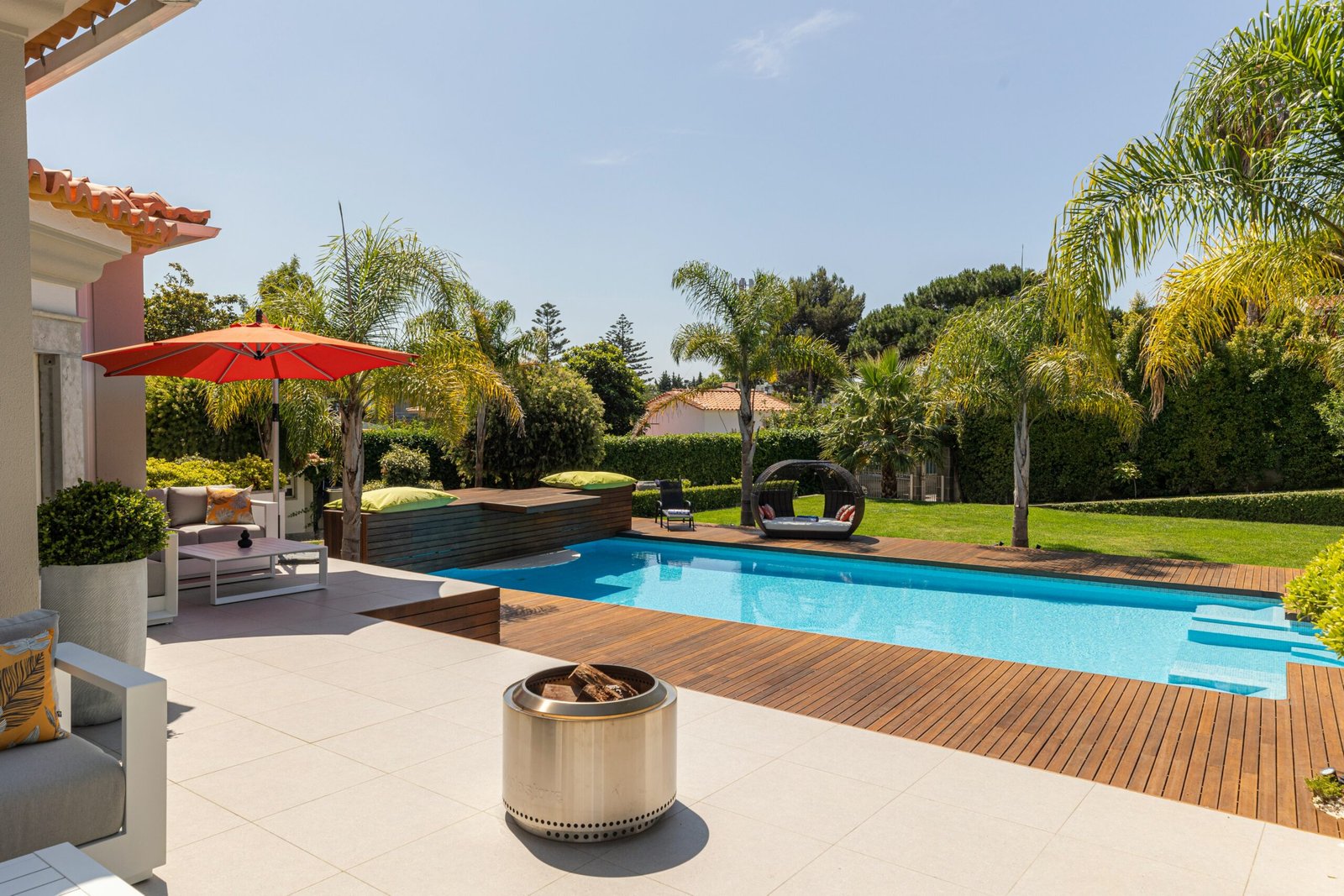
Can I use a smokeless firepit on a wood deck? Yes with precautions. Use the manufacturer’s stand or a third-party stand to elevate the firepit off the deck surface — even stainless steel firepits radiate significant heat downward. Place a heat-resistant mat under the stand for additional protection. Keep the area around the firepit clear of combustible materials. Never place directly on a wood deck without a stand.
What wood burns best in a smokeless firepit? Dry seasoned hardwood — oak, hickory, maple, or cherry. Pieces split to 4–6 inches in diameter and seasoned for 12+ months burn hot and clean with minimal smoke. Avoid softwoods, green wood, treated wood, and compressed wood products. Kiln dried firewood available at most home improvement stores is an excellent option if you don’t have access to your own seasoned supply.
How do I clean a smokeless firepit? Let the fire burn down completely and the pit cool fully. Remove ash using the base plate (Solo Stove) or ash pan if equipped. For the interior walls wipe down with a dry cloth when cool — avoid water which can cause temporary discoloration on stainless steel. The exterior can be wiped with a damp cloth. Avoid abrasive cleaners that scratch the steel surface.
Is a smokeless firepit worth the price over a regular firepit? For most people who use a firepit regularly — yes. The smoke reduction meaningfully changes the experience. You sit closer. You stay longer. Your clothes don’t smell like a bonfire. The fire requires less constant attention. The visual experience of secondary combustion is genuinely beautiful. The premium over a basic firepit pays for itself quickly in a better outdoor fire experience.
Can I cook on a Solo Stove Bonfire? Yes with limitations. Solo Stove sells a grill top accessory for the Bonfire that allows grilling over the fire. It works adequately for simple grilling but the design isn’t optimized for cooking. If cooking is a primary use case the Breeo with its dedicated outpost system is the significantly better choice.
The Bottom Line — Which Firepit Should You Buy
Want to try smokeless technology without a major investment: → Tiki Brand — $225–$250. Entry level smokeless that outperforms a traditional firepit without the premium price.
Need genuine portability for hunting camp: → Solo Stove Ranger — $230. Full smokeless performance in a pack-sized footprint. The hunting camp firepit.
Want the best overall outdoor fire experience: → Solo Stove Bonfire 2.0 — $250–$300. The standard. Best balance of performance, portability, aesthetics, and price.
Want to cook wild game over real wood fire: → Breeo X Series 24 — $600. Built-in cooking system makes this the firepit for hunters who cook. The permanent installation choice.
Conclusion
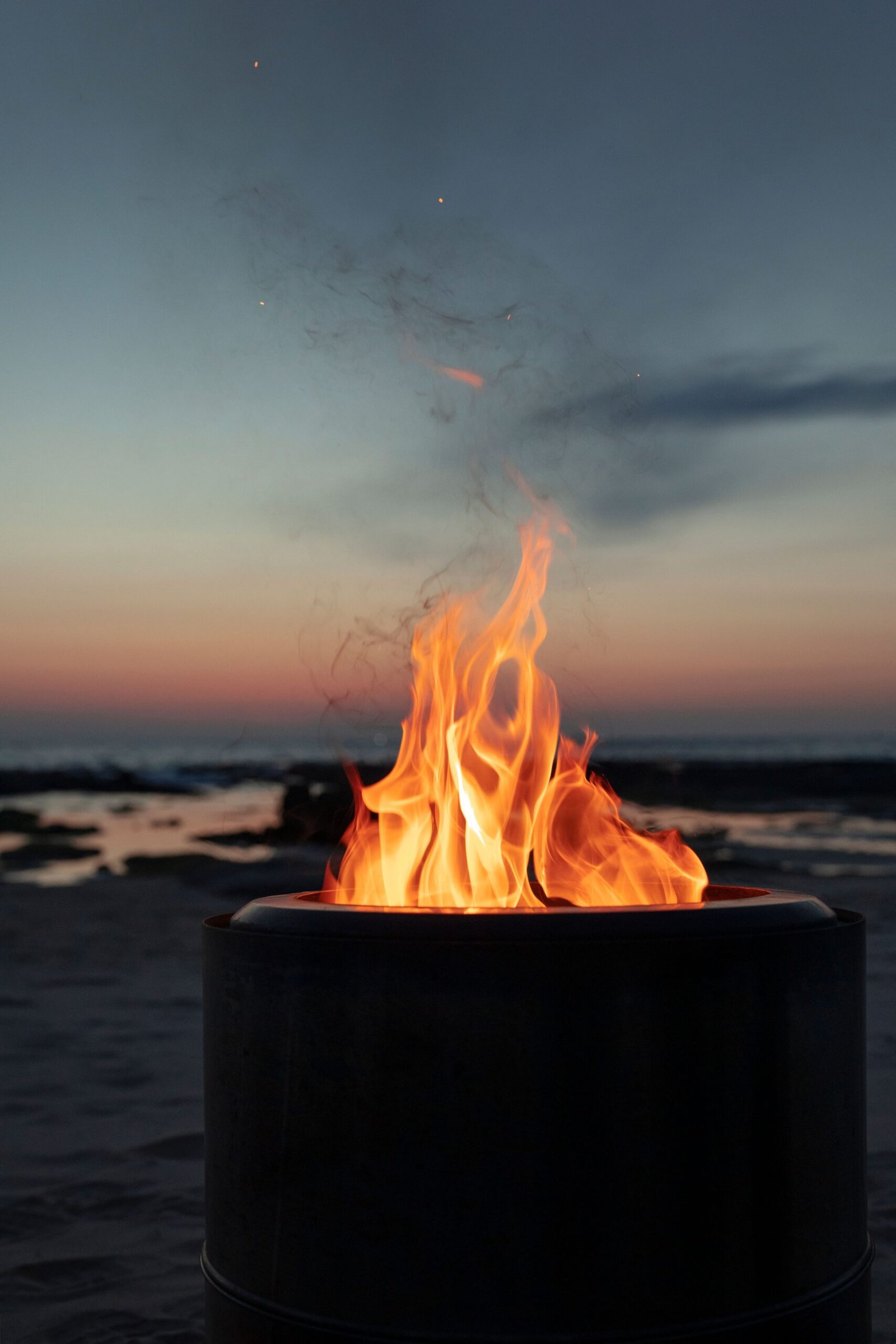
A great outdoor firepit does something that almost nothing else in outdoor living can do — it creates a reason to stay outside. Not because you have to. Because you want to. Because the fire is going and the conversation is good and nobody is ready to call it a night.
The smokeless firepit category has genuinely changed what that experience looks like. Less smoke means sitting closer. Sitting closer means better conversation. Better conversation means later nights and more memorable evenings around the fire.
Whether you choose a Solo Stove Bonfire for its portability and clean design or a Breeo X Series for its cooking capability — any of these represents a meaningful upgrade from a traditional open firepit. And any of them will make your outdoor space something worth gathering around.
The fire’s on. Come outside.
What outdoor firepit are you running? Drop it in the comments — always looking for what’s working in other people’s outdoor spaces.