Best Vacuum Sealers for Hunters in 2026
This post contains affiliate links. If you purchase through these links, I may earn a small commission at no extra cost to you.
Introduction
Let me tell you about the processing mistake I made several years ago.
I tagged out on a buck early in the season. Great deer, clean harvest, exactly the kind of morning you replay in your head for years. I processed the whole thing myself, wrapped it in standard freezer paper, and stacked it neatly in the chest freezer in the garage. By January the backstraps were covered in freezer burn. By March most of the ground venison had gray patches through it. By the time turkey season rolled around I’d thrown away a significant portion of the meat because I didn’t protect it properly. That was the last time I used freezer paper on wild game.
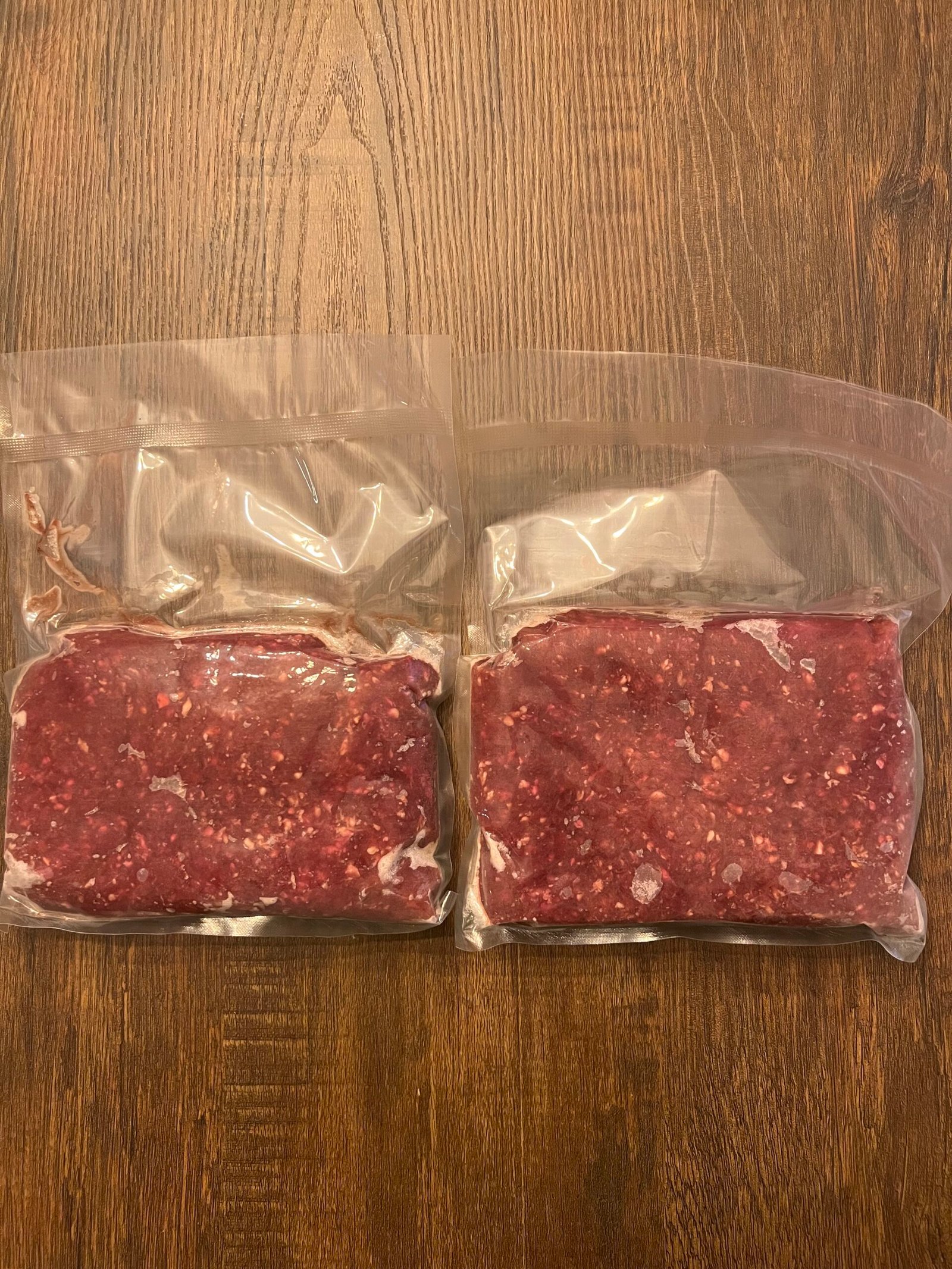
A quality vacuum sealer changed everything. Properly vacuum sealed venison lasts 12–18 months in the freezer without any quality loss — compared to 3–6 months with freezer paper or zip-lock bags. That means the buck you tagged in November is still table quality in August. The fish from June is still excellent in December. The turkey from spring is still worth cooking the following spring.
According to the USDA properly vacuum sealed meat can last 2–3 years in the freezer without safety concerns — though quality starts declining after 18 months for most game. That’s not a small difference from the 3–6 months you get with conventional storage. That’s the difference between a full season’s harvest feeding your family through the following year and throwing away meat you worked hard to bring home.
This guide covers the best vacuum sealers for hunters at every budget — from a solid entry-level machine under $150 to the professional-grade unit that serious processors use for hundreds of pounds of game per season.
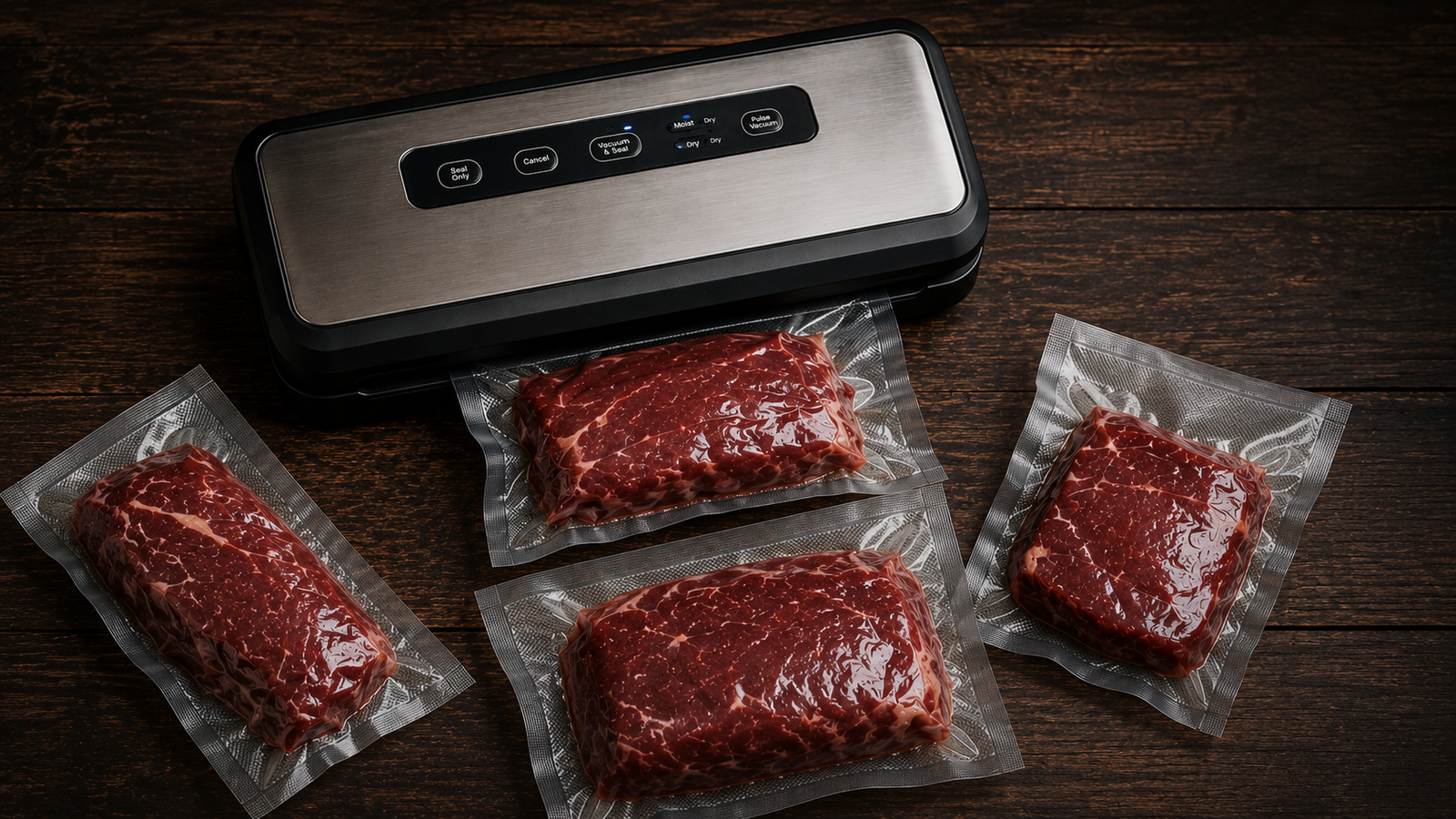
Table of Contents
Why Hunters Need a Different Kind of Vacuum Sealer
Before getting into specific recommendations let’s talk about why vacuum sealers matter specifically for wild game — because not all vacuum sealers are created equal and the challenges of sealing wild game are different from sealing grocery store cuts.
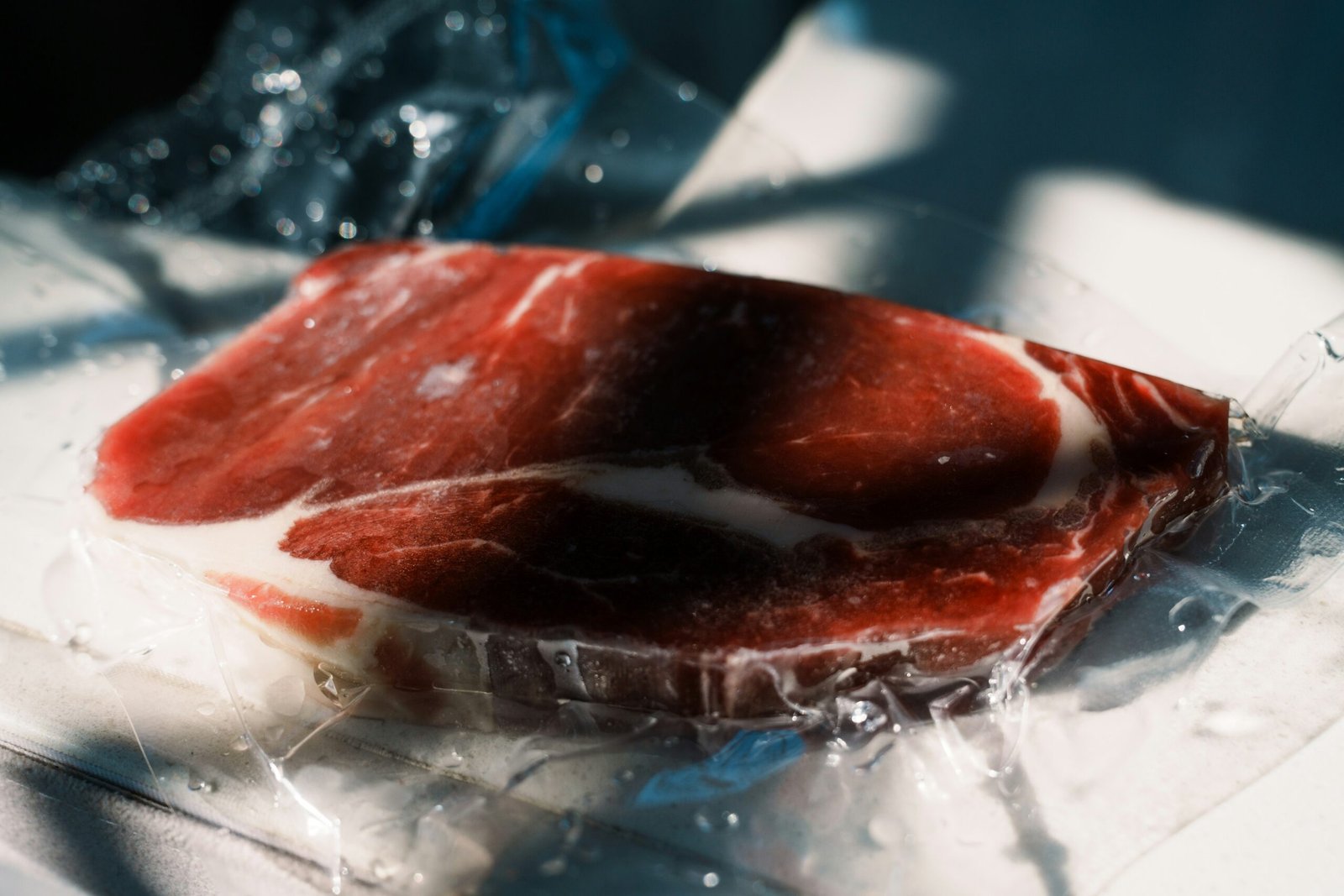
The moisture problem. Wild game — especially freshly processed venison and fresh-caught fish — contains significantly more surface moisture than commercially processed meat. Standard vacuum sealers struggle with moist products because the liquid gets pulled into the sealing channel before the bag can seal properly. The result is a weak or failed seal that allows air back in within days.
The bone problem. Bone-in cuts — ribs, shanks, whole birds — have sharp edges that puncture standard vacuum bags during the sealing process. A punctured bag isn’t sealed and the meat gets freezer burn just as fast as unwrapped meat.
The volume problem. A serious deer hunter processing a 150-pound whitetail produces a large amount of meat that needs to be sealed quickly — often in a single session that might run several hours. Entry-level sealers overheat with continuous use and require cool-down periods that slow the whole process significantly.
The solution to all three: Pre-freeze moist cuts for 30–60 minutes before sealing — this firms the surface and prevents liquid from being pulled into the seal. Use heavy duty bags or double bag bone-in cuts. Choose a sealer with a commercial-duty cycle if you’re processing large volumes.
What to Look for in a Vacuum Sealer for Wild Game
Sealing bar length: Standard sealers have an 11-inch sealing bar. This limits you to standard bags and smaller cuts. A 15-inch bar handles larger roasts, whole fish, and full game birds without folding or cramming the bag.
Duty cycle: The duty cycle tells you how many consecutive seals you can make before the machine needs to cool down. Entry-level machines might handle 10–15 seals before needing a break. Commercial machines run continuously without stopping. For processing a full deer in one session you want at least a 20-seal continuous duty cycle.
Vacuum strength: Measured in inches of mercury (inHg) — higher is stronger. Most consumer machines run 20–23 inHg. Commercial units run 24–28 inHg. Stronger vacuum means better compression which means better seal quality and longer preservation.
Bag compatibility: Some machines only work with proprietary brand bags — which are expensive and sometimes unavailable. Look for machines that accept standard embossed vacuum bags from any manufacturer. This saves significant money over time and means you’re never stuck waiting for a specific bag order.
Moist mode: Many mid-range and premium sealers have a specific moist food setting that pauses slightly longer before sealing to allow excess moisture to be removed. This is genuinely useful for fish and fresh game.
Roll storage and bag cutter: A built-in roll storage compartment and bag cutter lets you make custom-sized bags from a roll rather than using pre-sized bags. This eliminates waste when sealing oddly-shaped cuts and saves money on bags over time.
The Best Vacuum Sealers for Hunters — Every Budget
Budget Pick — Under $150
FoodSaver FM2100 Vacuum Sealer
The FoodSaver FM2100 is the best entry-level vacuum sealer for a hunter who is new to vacuum sealing or who processes modest volumes of game — one or two deer per season, regular fishing trips, a few turkeys. It’s not a commercial machine and it doesn’t pretend to be. But for the price it does exactly what it’s supposed to do reliably — and it comes with everything you need to get started right out of the box.
What makes it work for hunters:
The FM2100 keeps things simple and that simplicity is actually a strength. A straightforward one-button operation with separate vacuum and seal controls lets you manage the process manually — useful when sealing irregular cuts that need a little extra vacuum time before sealing. The built-in roll storage and integrated bag cutter let you make custom-sized bags from a roll which eliminates waste and gives you the right size bag for every cut.
The moist food setting handles fresh venison and fish better than you’d expect at this price point. It’s not foolproof with very wet cuts but patting meat dry before sealing and using the moist setting together produces reliable results on most game. Roll storage and an integrated cutter let you make custom bag sizes which is genuinely useful when you’re sealing everything from backstrap medallions to whole fish fillets.
The duty cycle is the main limitation — plan on 15–20 consecutive seals before giving it a brief rest. For a hunter processing one deer in a single evening session this means breaking the work into two or three rounds. Annoying but manageable with a little planning. The FM2100 works with FoodSaver brand bags and most standard embossed third-party bags which keeps ongoing bag costs reasonable.
Real world performance: For a hunter processing one to two deer per season and regular fishing hauls this machine handles the volume comfortably as long as moist cuts are pre-frozen before sealing and cool-down periods are respected. Bags are widely available — FoodSaver brand and compatible third-party options both work well. The seals hold reliably for 12+ months in a properly maintained freezer.
Who it’s for: The hunter who processes one to two deer per season, fishes regularly, and wants reliable vacuum sealing without a major investment. Clean simple operation, decent bag compatibility, and a price point that makes it an easy yes for anyone on the fence about whether vacuum sealing is worth it.
Specs:
- Sealing bar: 11.5 inches
- Vacuum strength: 20 inHg
- Duty cycle: 15–20 consecutive seals
- Bag compatibility: FoodSaver and standard embossed third-party bags
- Built-in roll storage: Yes
- Moist mode: Yes
- Handheld attachment: No
- Sous vide friendly: Yes
Price range: $100 to $150 Amazon affiliate link: FoodSaver FM2100 Vacuum Sealer
Mid-Range Pick — $400 – $475
Weston Pro-2300 Vacuum Sealer
This is where the real upgrade happens. The Weston Pro-2300 is built for hunters specifically — not repurposed from a kitchen appliance line but designed from the ground up for processing large volumes of game and fish. The difference between this and the FoodSaver is immediately apparent the first time you run a processing session.
What makes it genuinely different:
The dual piston pump produces 28 inHg of vacuum — significantly stronger than consumer machines. This means better compression, tighter seals, and longer preservation times. The 15-inch sealing bar handles large roasts, whole fish, and full game birds without compromise. And the commercial-grade duty cycle means you can run it continuously through a full processing session without stopping to let it cool.
The stainless steel construction is worth mentioning specifically. Consumer machines are plastic and feel like it. The Weston feels like a tool — because it is one. It sits solidly on the processing table, doesn’t move around during operation, and cleans up easily after a full session.
The moist food performance: The Weston handles moist cuts better than almost any consumer machine on the market. The stronger vacuum removes more moisture from the bag before sealing which produces tighter seals on fresh game. I still pre-freeze particularly wet cuts — fish especially — but the margin for error is significantly wider than with a FoodSaver.
Bag compatibility: The Weston accepts standard embossed vacuum bags from any manufacturer. This allows for the use of generic bags from Amazon that work well at a fraction of the cost of some other name brand bags.
Who it’s for: The hunter who processes two to five deer per season, does significant fishing, and wants a machine that keeps up with a full processing session without slowing down.
Specs:
- Sealing bar: 15 inches
- Vacuum strength: 28 inHg
- Duty cycle: Continuous commercial duty
- Bag compatibility: Standard embossed bags — any brand
- Built-in roll storage: Yes
- Moist mode: Yes — automatic liquid detection
Price range: $400–$475 Amazon affiliate link: Weston Pro-2300
Premium Pick — $500 and Up
Weston Pro-3000 Commercial Grade Vacuum Sealer
If you process serious volume — multiple deer per season, large fishing hauls, processing for family and friends, or running a small hunting camp — the Pro-3000 is the machine that handles it all without question. This is Weston’s most powerful external vacuum sealer and the one serious processors reach for when volume and reliability are non-negotiable.
What separates the Pro-3000:
The digital control panel with programmable LED controls and dual displays is the feature that most distinguishes the Pro-3000 from the Pro-2300. You can set and save the exact seal time for different food types — once you dial in the right setting for ground venison you save it and every subsequent bag seals identically. The dual displays monitor both seal time and vacuum progress in real time so you can see exactly what the machine is doing rather than guessing.
The extra-wide 15-inch sealing bar accommodates bags up to 15 inches wide — larger than virtually any external vacuum sealer available. Full-size game birds, large venison roasts, whole fish, and oversized cuts all seal cleanly without trimming or folding. If you’ve ever wrestled a wide cut into an undersized bag you understand exactly why this matters at 11 PM when you’re halfway through processing a deer.
The double piston pump delivers 28 inHg of vacuum strength — the same as the Pro-2300 — but the programmable manual mode adds a critical feature for hunters dealing with moist and delicate game. Manual mode lets you control the precise amount of vacuum pressure applied before sealing. Fresh fish fillets, organ meats, and other delicate cuts that compress or lose moisture under full vacuum pressure can be sealed at reduced pressure without sacrificing seal quality. This is a feature absent from every consumer-grade machine on this list.
The fan-cooled motor is designed specifically for continuous repetitive use without overheating. The internal cooling fan runs whenever the unit is on — keeping the motor temperature stable across long processing sessions. The machine has a built-in thermal shutoff that activates if it does overheat — requiring a 20-minute cool-down before resuming — but in normal use with the 20-second recommended interval between cycles the Pro-3000 runs continuously through a full deer processing session without thermal issues.
The transparent acrylic lid is a small detail that makes a real practical difference — you can see exactly where the bag is positioned against the seal bar before committing to the seal cycle. Misaligned bags are one of the most common causes of seal failures on machines with opaque lids. The Pro-3000 eliminates this problem completely.
The honest conversation about price: The Pro-3000 retails at $600–$650 and that price is real. But consider what you’re protecting — a mature whitetail deer yields 50–60 pounds of processed meat worth $8–$12 per pound at retail prices. That’s $400–$720 of protein per deer. A single season of preserved harvest more than justifies the investment. And this is a machine built to last decades — the 2-year manufacturer’s warranty is the floor, not the ceiling, of what you should expect from it with proper care.
Who it’s for: The serious hunter who processes five or more deer per season, runs a hunting camp, wants programmable digital controls for different game types, or simply wants the absolute best external vacuum sealer available and is willing to invest accordingly.
Specs:
- Motor: 1020 watts — 120V
- Sealing bar: 15 inches extra-wide
- Vacuum strength: 28 inHg — double piston pump
- Duty cycle: Fan-cooled continuous use — 20 second interval between cycles recommended
- Control panel: Digital programmable LED — dual display monitors seal time and vacuum progress
- Modes: Automatic one-touch and manual programmable
- Bag compatibility: Standard embossed bags up to 15 inches wide — any brand
- Built-in roll storage: Yes
- Moist mode: Yes — programmable and savable settings
- Housing: Stainless steel
- Warranty: 2 years manufacturer
Price range: $600–$650 Amazon affiliate link: Weston Pro-3000
Bonus Pick — Best Vacuum Sealer for Fish Specifically
Nesco VS-12 Deluxe Vacuum Sealer
Fish presents specific challenges for vacuum sealing — high moisture content, delicate flesh that compresses under vacuum, and the need for double wall bags to prevent puncture from bones and fins. The Nesco VS-12 handles all of these better than most machines in its price range and has become my go-to recommendation specifically for anglers.
What makes it work for fish:
The double vacuum cycle on the VS-12 removes more moisture from the bag before sealing than a standard single cycle machine. This is the key to sealing fresh fish without liquid being pulled into the seal channel. The gentle vacuum mode prevents delicate fillets from being compressed to the point of damaging the flesh texture.
The VS-12 also accepts nearly any type of bag — standard embossed bags, channel bags, and even zipper-top vacuum bags for marinating. For an angler who vacuum seals a variety of fish and wants flexibility in storage options this versatility is genuinely useful.
Price range: $100–$150 Amazon affiliate link: Nesco VS-12
The Best Vacuum Sealer Bags for Wild Game
The machine is only half the equation. The bags you use matter as much as the sealer for long-term preservation quality.
Standard embossed bags — everyday use: The textured surface of embossed bags creates the channels that allow the vacuum pump to remove air evenly across the entire bag. Any major brand — Weston, FoodSaver, or generic Amazon options — works well for standard cuts. Buy in bulk — the per-bag cost drops significantly at higher quantities.
Heavy duty bags — bone-in cuts: For ribs, shanks, whole birds, or any cut with exposed bone use heavy duty double-wall bags specifically designed for game processing. The extra thickness prevents puncture during sealing and provides additional protection against freezer burn during long-term storage. Weston makes excellent heavy duty bags specifically for game.
Fish bags — vacuum sealing fresh catch: Some anglers prefer a slightly different bag material for fish — a smoother interior that doesn’t leave texture marks on delicate fillets. Avid brand and Weston both make fish-specific bags worth using for walleye, trout, bass, and other delicate species.
Roll stock — custom sizing: For an operation processing varied cuts in a single session roll stock is the most economical option. Buy a 50-foot roll and cut bags to exactly the size you need — no waste, no cramming large cuts into undersized bags, and no running out of a specific bag size mid-session.
How to Vacuum Seal Wild Game — The Right Way
Having the right machine and bags means nothing if you’re not using them correctly. Here’s the process that produces the best results specifically for wild game:
Step 1 — Pre-freeze moist cuts Fresh game — especially organ meats, fish, and cuts with significant blood content — needs to be pre-frozen for 30–60 minutes before vacuum sealing. This firms the surface and prevents liquid from being pulled into the seal channel. Cuts that aren’t pre-frozen often produce weak seals that fail within weeks.
Step 2 — Trim and portion correctly Vacuum seal in portion sizes you’ll actually use. Sealing a whole backstrap as one piece means you thaw the whole thing every time you want to cook some of it. Portion into meal-sized pieces — two backstrap medallions per bag for a weeknight meal, a full pound of ground venison per bag for a chili recipe.
Step 3 — Label before sealing Write the cut, the date, and the animal or species on the bag before sealing — a permanent marker on the outside of the bag works well. Once sealed the bag goes in the freezer and labels written after sealing smear against the frost. You’ll thank yourself in March when you’re looking for ground venison in a freezer full of identical silver packages. If you haven’t already, head over and check out our article about 15 ground venison recipes.
Step 4 — Leave adequate headspace Leave at least 3 inches of bag above the cut before sealing. The vacuum process pulls the bag tight against the meat and if there isn’t enough bag above the cut the seal gets pulled down onto the food — which produces a weak seal.
Step 5 — Double seal important cuts For cuts going into long-term storage — anything you plan to keep more than 6 months — run a second seal an inch above the first. If the first seal fails for any reason the second holds. Machines with a double seal bar do this automatically. On machines without it simply run the bag through twice.
Step 6 — Freeze flat Lay sealed bags flat in the freezer until fully frozen — this saves significant space because flat-frozen packages stack and organize far more efficiently than round or oddly-shaped ones. Once frozen you can stand them upright or stack them however works best for your freezer layout.
Vacuum Sealer Comparison Chart
| FoodSaver FM2100 | Weston Pro-2300 | Weston Pro-3000 | Nesco VS-12 | |
|---|---|---|---|---|
| Price | $100–$150 | $400–$475 | $600–$650 | $100–$150 |
| Best for | 1–2 deer/season | 2–5 deer/season | 5+ deer/season | Anglers/fish |
| Sealing bar | 11.5 inches | 15 inches | 15 inches | 11 inches |
| Vacuum strength | 20 inHg | 28 inHg | 28 inHg | 21 inHg |
| Duty cycle | 15–20 seals | Continuous | Continuous | 10 seals |
| Moist mode | Yes | Yes | Yes | Yes |
| Roll storage | Yes | Yes | Yes | Yes |
| Bags included | No | No | No | No |
| Handheld attachment | No | No | No | No |
| Sous vide friendly | Yes | Yes | Yes | No |
| Rating | ⭐⭐⭐ | ⭐⭐⭐⭐ | ⭐⭐⭐⭐⭐ | ⭐⭐⭐ |
How Long Does Vacuum Sealed Game Last in the Freezer
This is the question most hunters ask and the answer is more nuanced than most sources suggest:
| Game | Standard Freezer Wrap | Vacuum Sealed |
|---|---|---|
| Venison — whole cuts | 3–6 months | 12–18 months |
| Venison — ground | 3–4 months | 10–12 months |
| Wild turkey | 3–6 months | 12–18 months |
| Waterfowl | 2–3 months | 8–12 months |
| Fish — lean species | 3–6 months | 12–18 months |
| Fish — fatty species | 2–3 months | 6–9 months |
| Upland birds | 3–6 months | 12–18 months |
These are quality estimates — vacuum sealed game remains safe to eat indefinitely in a properly maintained freezer. Quality — texture, flavor, absence of freezer burn — is what declines over time.
Frequently Asked Questions
Do I need a vacuum sealer specifically for hunters or will any vacuum sealer work? Any vacuum sealer will work for basic applications, but machines designed for or tested with wild game handle the specific challenges better — moist cuts, bone-in pieces, and high-volume processing sessions. The Weston Pro-2300 and Pro-3000 are the machines most hunters who process their own game gravitate toward for good reason.
Can I vacuum seal game with bones in it? Yes — but use heavy duty bags and consider double bagging to prevent puncture. Wrap any sharp bone ends in a small piece of freezer paper before bagging to add a puncture-resistant layer between the bone and the bag.
How do I vacuum seal fish without the liquid ruining the seal? Pre-freeze for 30–60 minutes before sealing. Use the moist food setting on your machine. Leave extra headspace above the fish. These three steps solve the liquid seal problem on virtually every machine.
Can I reuse vacuum sealer bags? Technically yes — wash them thoroughly with hot soapy water, rinse completely, and allow to dry fully before reusing. In practice most hunters don’t reuse bags that held raw game because of food safety concerns and the low cost of new bags. I reuse bags that held cooked food but use new bags for raw game every time.
What’s the best way to store a vacuum sealer between seasons? Clean thoroughly after the last use of the season. Remove and dry the drip tray. Store with a small piece of foam or cloth over the sealing bar to protect the gaskets. Keep in a temperature-stable environment — extreme heat and cold degrade the gaskets over time.
Is it worth buying a vacuum sealer if I only hunt one deer per year? Yes — emphatically. One deer yields 50–60 pounds of meat worth $400–$720 at retail prices. A $140 FoodSaver FM2100 that prevents freezer burn on that harvest pays for itself in the first year. The machine lasts 5–10 years with proper care. The math is simple.
The Bottom Line — Which Vacuum Sealer Should You Buy
Buy the FoodSaver FM2100 if: You process one to two deer per season, fish occasionally, and want reliable vacuum sealing at an accessible price point. It does the job, the bags are easy to find, and it lasts for years with reasonable use.
Buy the Weston Pro-2300 if: You process two to five deer per season, do significant fishing, or run any kind of processing session that requires continuous operation. This is the sweet spot for the serious hunter who processes his own game — commercial-grade performance at a price that’s still reasonable.
Buy the Weston Pro-3000 if: You process serious volume — five or more deer, large fishing hauls, or processing for family and friends. The digital control panel, oil-lubricated pump, and commercial-grade construction justify the price for anyone who uses a vacuum sealer heavily.
Buy the Nesco VS-12 if: You primarily seal fish and want a machine specifically optimized for the moisture and delicacy challenges of fresh-caught fish at an accessible price.
Whatever machine you choose — use it. The cost of freezer-burned meat over the course of a season’s hunting and fishing almost always exceeds the cost of a quality vacuum sealer. Protect the harvest you worked hard to bring home.
Conclusion
The buck I lost to freezer burn in my early hunting years was an expensive lesson I only needed to learn once. Since investing in a quality vacuum sealer I haven’t lost a single pound of game to freezer burn. Not one backstrap, not one pack of ground venison, not one walleye fillet.
That’s the real value of a vacuum sealer — not the convenience, not the organization, not even the extended shelf life on its own. It’s the peace of mind that the work you did in the field, the careful processing, the effort to bring good food home — all of it is protected. The harvest you worked hard for feeds your family the way it’s supposed to.
Pick the right machine for your volume. Learn to pre-freeze moist cuts. Label everything before it goes in the freezer. And never lose another pound of wild game to something as preventable as freezer burn.
Which vacuum sealer are you running this season? Drop it in the comments — I’m always curious what other hunters are using.