Cedar Plank Trout — The Smoky Field to Table Recipe That Never Fails
This post contains affiliate links. If you purchase through these links, I may earn a small commission at no extra cost to you.
Introduction
Cedar plank trout — there’s something about cooking trout on a wooden plank that feels like it was invented specifically for the outdoor lifestyle. The wood smolders slowly, infusing the trout with a smoke that’s gentler and sweeter than any other method. The fish stays moist. The skin crisps just enough. And the whole thing looks like something out of a high-end fishing lodge menu — even when you’re cooking it over a backyard grill or a campfire at the end of a long day on the water.
Fresh caught trout is one of the best fish you can cook on a cedar plank. The flesh is delicate, slightly sweet, and carries the smoke beautifully without being overwhelmed by it. Whether you’re cooking a rainbow trout from a high mountain stream or a brown trout from your favorite local river — this recipe honors the catch in a way that plain grilled fish never quite does.
I’ve cooked a lot of trout over the years. On cast iron, on a stick over a fire, wrapped in foil, pan fried in butter. All of those are good. Cedar plank is better. This recipe is the one I come back to every time the cooler comes home with fresh trout in it.
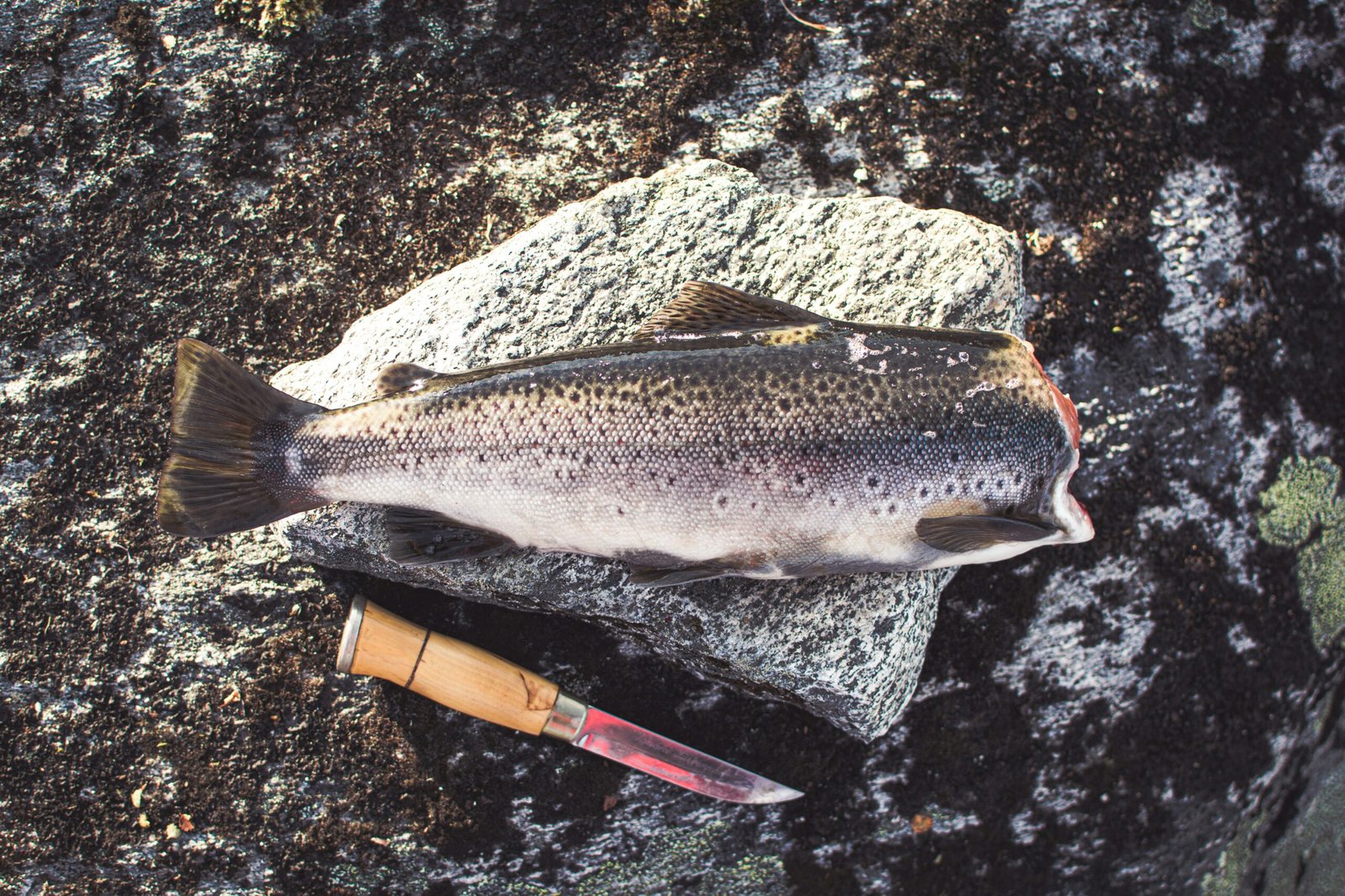
Table of Contents
What You Need — Cedar Planks and Fresh Trout
Before we get into the recipe let’s talk about the two things that matter most — the plank and the fish.
Choosing Your Cedar Plank
Not all cedar planks are created equal. Here’s what to look for:
Untreated western red cedar is what you want. It’s the standard for plank cooking — mild, slightly sweet smoke, food safe, and widely available. Avoid eastern red cedar which has a stronger more resinous smoke that can overpower delicate fish.
Size matters. A standard 5×11 inch plank fits a whole trout or two fillets comfortably. If you’re cooking for a crowd or have a larger trout, get the larger 7×15 inch planks or use two planks side by side.
Thickness matters. At least 1/2″-3/4″ inch thick — thinner planks burn through too quickly before the fish finishes cooking. A thick plank gives you more smoke time and more heat buffering.
Where to buy: Cedar grilling planks are available on Amazon, at most hardware stores, and at any Cabela’s or Bass Pro. Buy a pack of several — you’ll use them more than you think.
Choosing Your Trout
Any fresh trout works beautifully on a cedar plank:
- Rainbow trout — the most common and widely available. Mild, slightly sweet flesh. Perfect for this recipe.
- Brown trout — slightly more complex flavor than rainbow. Excellent on cedar.
- Brook trout — the most delicate of the three. Keep the seasoning simple to let the fish shine.
- Lake trout — fattier than stream trout. Takes the smoke especially well.
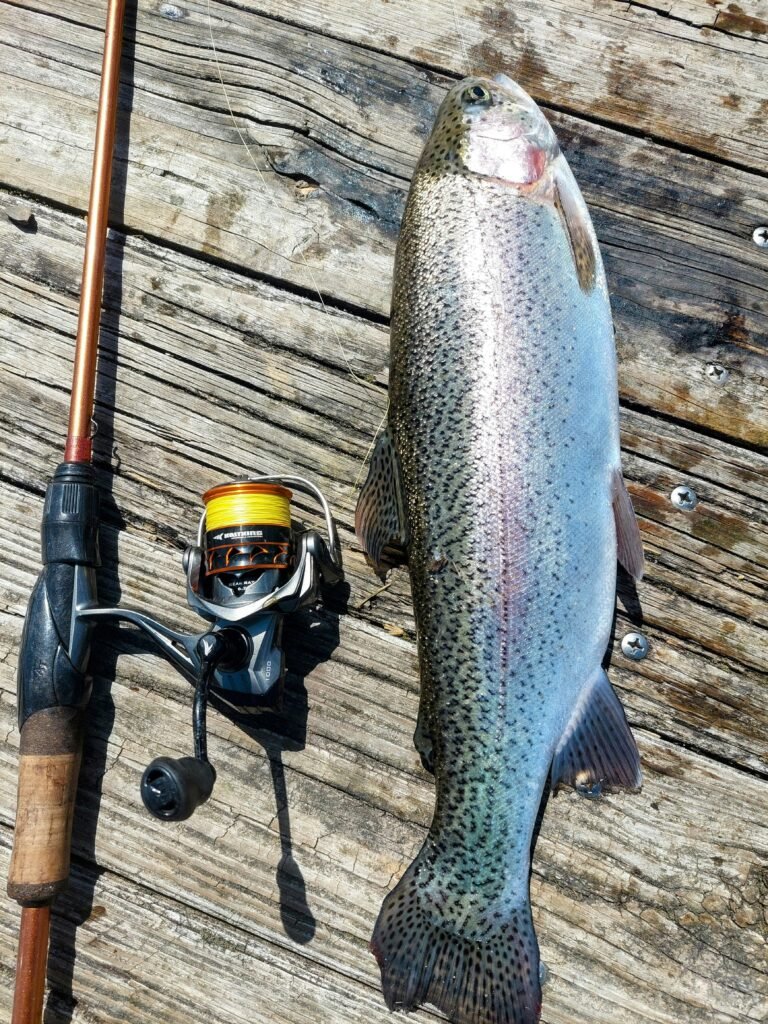
Whole fish vs fillets: Both work. Whole butterflied trout looks stunning and cooks beautifully on a plank. Fillets are easier to serve. This recipe works for both — I’ll note where the approach differs.
Fresh vs frozen: Fresh caught is always best. If using previously frozen trout thaw completely in the refrigerator overnight and pat completely dry before cooking — excess moisture steams rather than smokes.
Ingredients
For the trout:
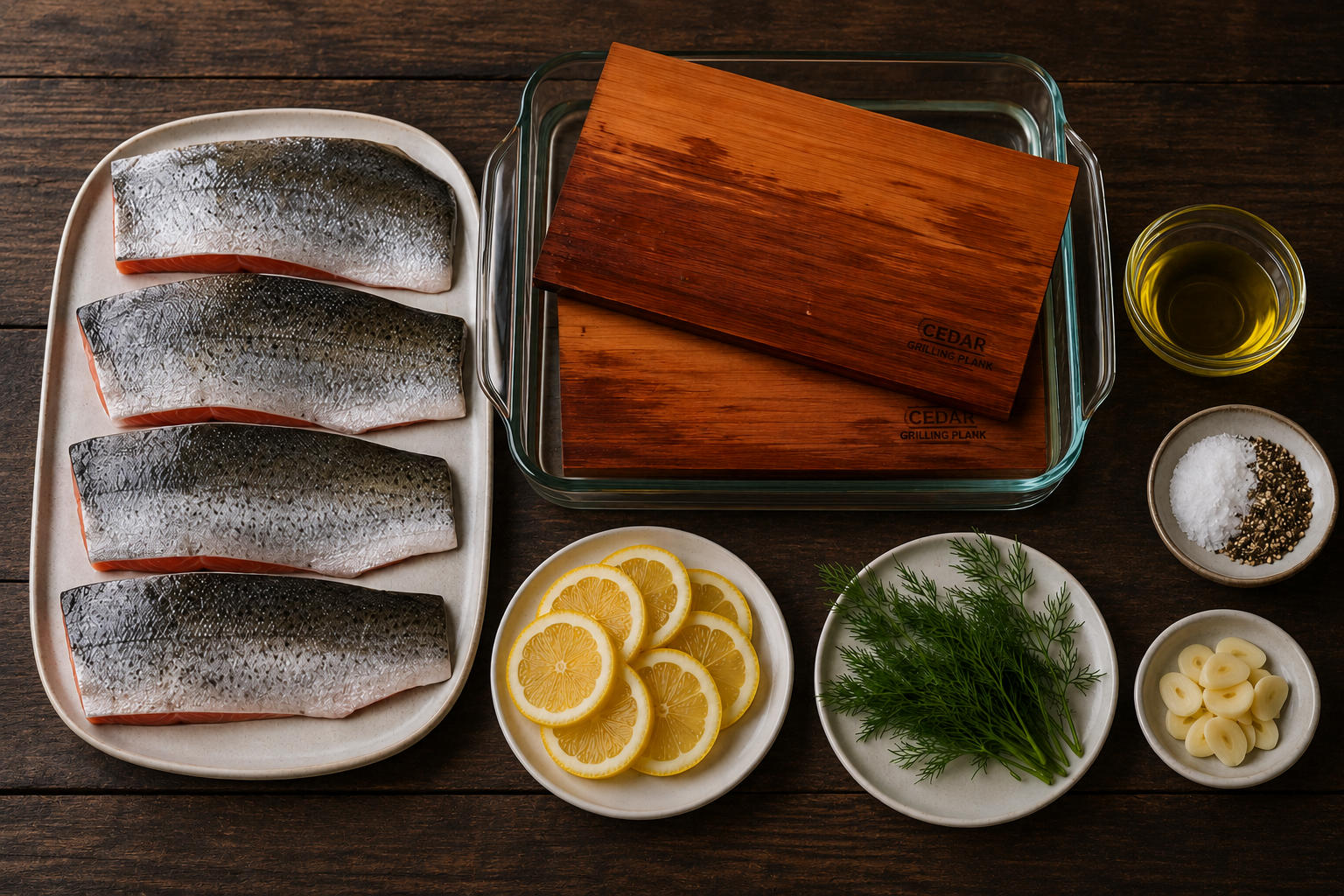
- 2 whole rainbow trout, cleaned and butterflied — OR 4 trout fillets skin on
- 2 untreated cedar grilling planks soaked in water
- 2 tablespoons olive oil
- Kosher salt and fresh cracked black pepper
- 1 lemon, thinly sliced
- 4 sprigs fresh dill or thyme
- 4 cloves garlic, thinly sliced
For the glaze (optional but excellent):
- 2 tablespoons honey
- 1 tablespoon whole grain Dijon mustard
- 1 tablespoon soy sauce
- 1 teaspoon fresh lemon juice
- ½ teaspoon smoked paprika
Equipment:
- Cedar grilling planks — at least 2, soaked for minimum 1 hour
- Grill (gas or charcoal) OR campfire with a grate
- Tongs
- Instant read thermometer
- Aluminum foil for tenting
Step 1 — Soak Your Cedar Planks
This is the step most people skip and immediately regret. A dry cedar plank will catch fire within minutes on a hot grill. A properly soaked plank smolders slowly, produces consistent smoke throughout the cook, and doesn’t burn through before your fish is done.
Minimum soak time: 1 hour submerged in water Ideal soak time: 2 hours Best soak time: Overnight in the refrigerator
Submerge the planks completely — they float so you’ll need to weigh them down. A heavy pan or a zip-lock bag filled with water works perfectly. The plank should feel waterlogged and heavy when you pull it out.
Flavor variations for the soak:
- Add a cup of white wine to the soaking water for a subtle wine smoke
- Add a handful of fresh herbs — dill, thyme, rosemary — to infuse the wood slightly
- Add the juice of one lemon for a citrus note that complements fresh trout beautifully
I almost always soak overnight in plain water with a few sprigs of dill thrown in. Simple, consistent, and the dill adds just enough to be interesting without being obvious.
Step 2 — Prepare the Trout
For whole butterflied trout:
- Rinse under cold water and pat completely dry with paper towels — inside and out
- Open the fish flat — skin side down — like a book
- Brush the flesh side generously with olive oil
- Season with kosher salt and fresh cracked black pepper
- Lay lemon slices across the flesh
- Add garlic slices and fresh herb sprigs
- If using the glaze brush a thin layer over the flesh now — save half for basting
For fillets:
- Pat completely dry — this is critical for a good result
- Check for pin bones by running your finger along the center of the fillet — remove any with tweezers or needle nose pliers
- Brush the flesh side with olive oil
- Season generously with salt and pepper
- Add lemon slices, garlic, and herbs on top
- Brush with glaze if using
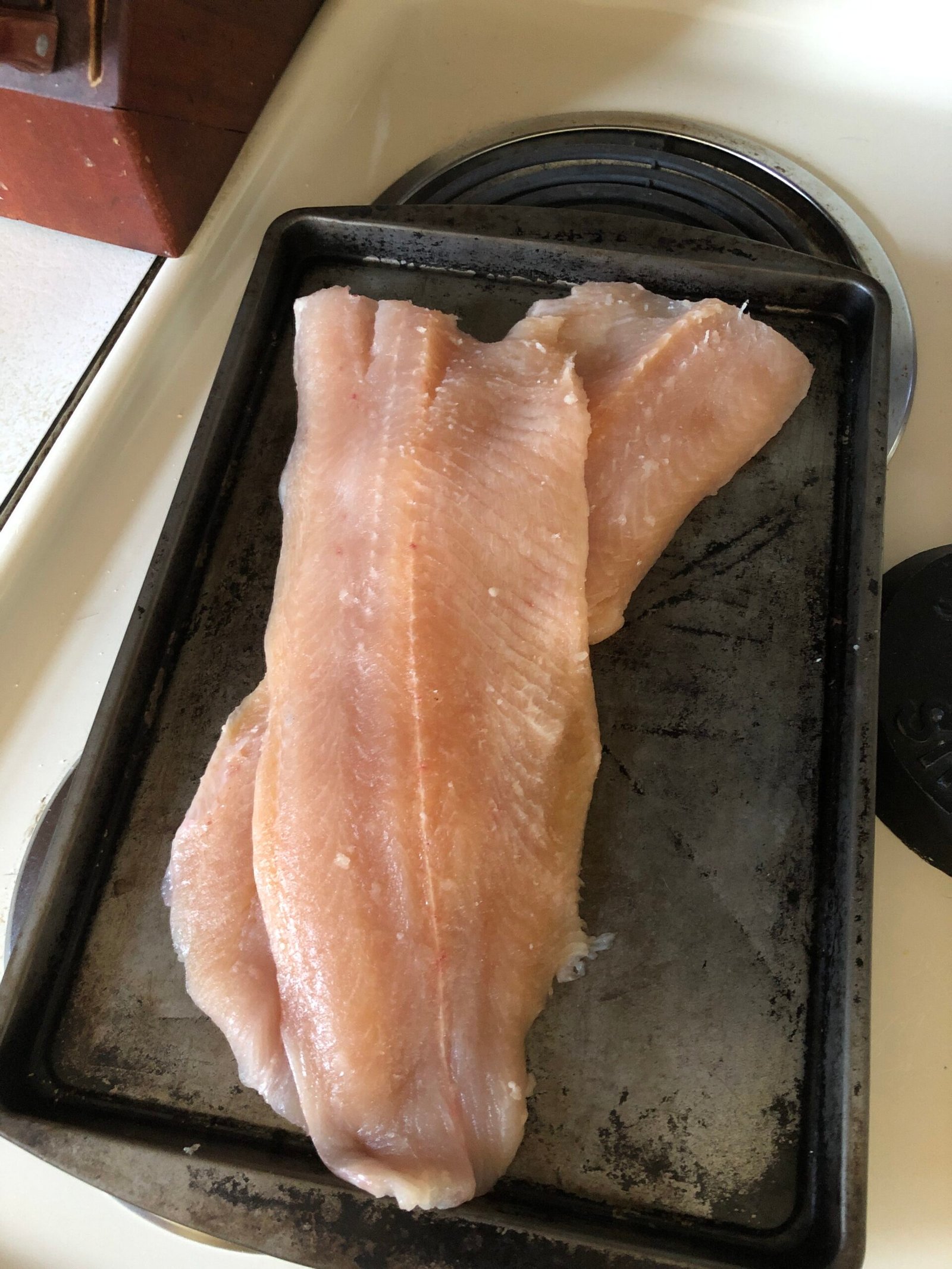
The dry brine option: For the absolute best result season the trout with kosher salt 30 minutes before cooking and leave it uncovered in the refrigerator. The salt draws out surface moisture and seasons the flesh all the way through — the same technique used for the venison backstrap. It makes a noticeable difference.
Step 3 — Make the Honey Mustard Glaze
This glaze is completely optional but I make it almost every time. It adds a layer of sweet savory complexity that plays beautifully against the cedar smoke and the natural sweetness of fresh trout.
Whisk together in a small bowl:
- 2 tablespoons honey
- 1 tablespoon whole grain Dijon mustard
- 1 tablespoon soy sauce
- 1 teaspoon fresh lemon juice
- ½ teaspoon smoked paprika
The glaze should be thick enough to coat the back of a spoon. If it’s too thin add a touch more honey. If it’s too thick add a few drops of lemon juice.
Brush half the glaze on the fish before it goes on the grill. Reserve the other half for basting at the halfway point and finishing just before serving.
Step 4 — Preheat Your Grill
Gas grill: Preheat to medium-high — 400°F to 450°F. You want enough heat to get the plank smoking quickly but not so hot it burns through before the fish cooks.
Charcoal grill: Set up a two-zone fire — coals banked to one side. Place the plank over indirect heat initially then move to direct heat once it starts smoking. This gives you more control.
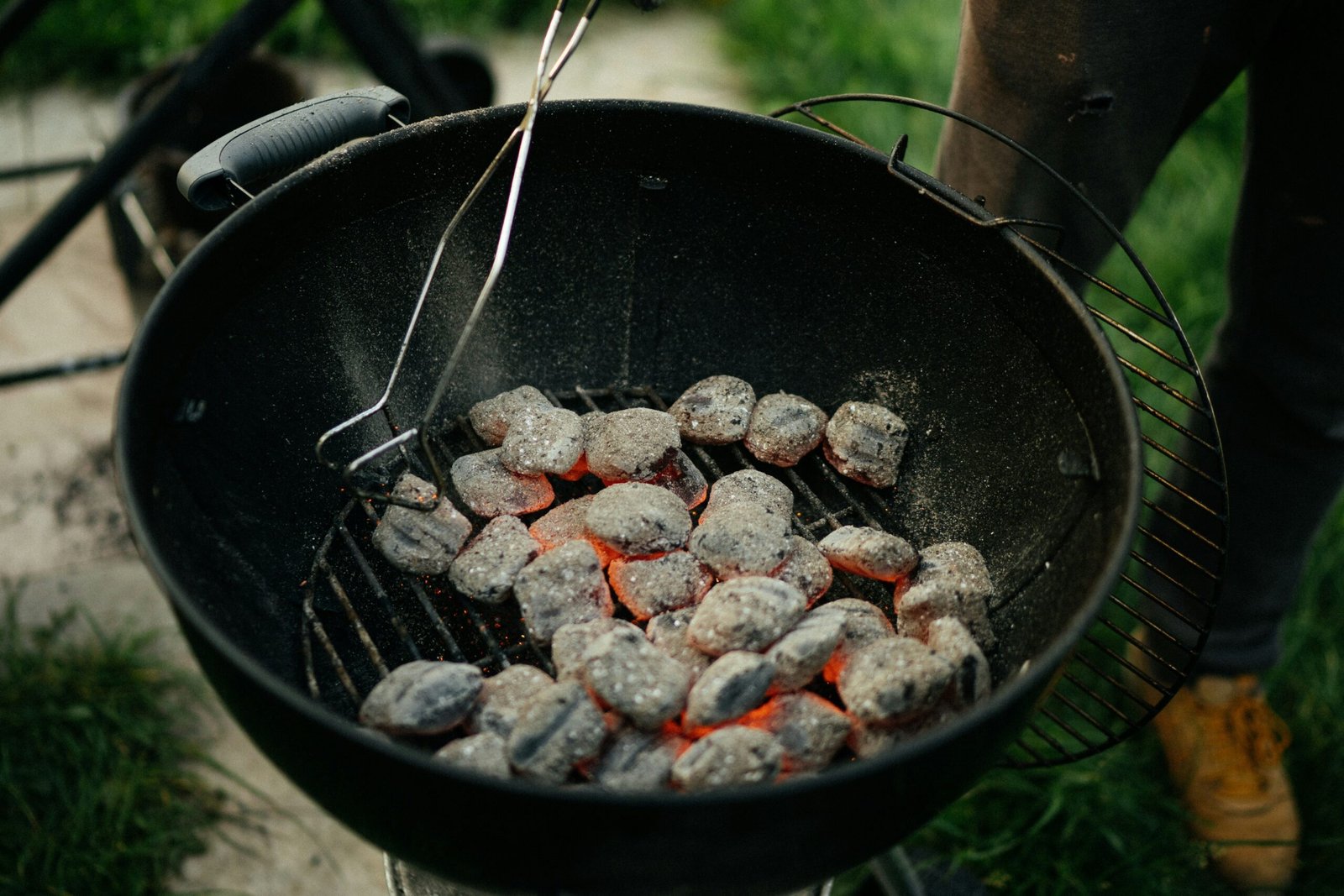
Campfire: Let the fire burn down to a strong bed of coals — not open flame. Place a grate over the coals and cook the plank on the grate. The coals should glow orange with minimal active flame for best results.
Regardless of heat source you want to see the plank smoking before you consider the cooking done. The smoke is the whole point.
Step 5 — Cook the Trout on the Plank
- Place the soaked cedar plank directly on the preheated grill grates
- Close the lid and let the plank heat for 3–4 minutes until it starts to smoke and crackle slightly
- Open the lid and place your prepared trout on the smoking plank — flesh side up for fillets, open side up for butterflied whole fish
- Close the lid immediately — you want to trap the smoke around the fish
- Cook without opening the lid for the first 10 minutes
The smell test: After 10 minutes you should smell sweet cedar smoke combined with the cooking fish and the honey mustard glaze caramelizing. That smell means everything is working exactly as it should.
Halfway baste: At the 10 minute mark open the lid quickly and brush the remaining glaze over the fish. Close the lid immediately and continue cooking.
Step 6 — Know When It’s Done
Trout is done when:
- The flesh has turned from translucent pink to opaque throughout
- It flakes easily when pressed gently with a fork
- Internal temperature reads 145°F at the thickest part
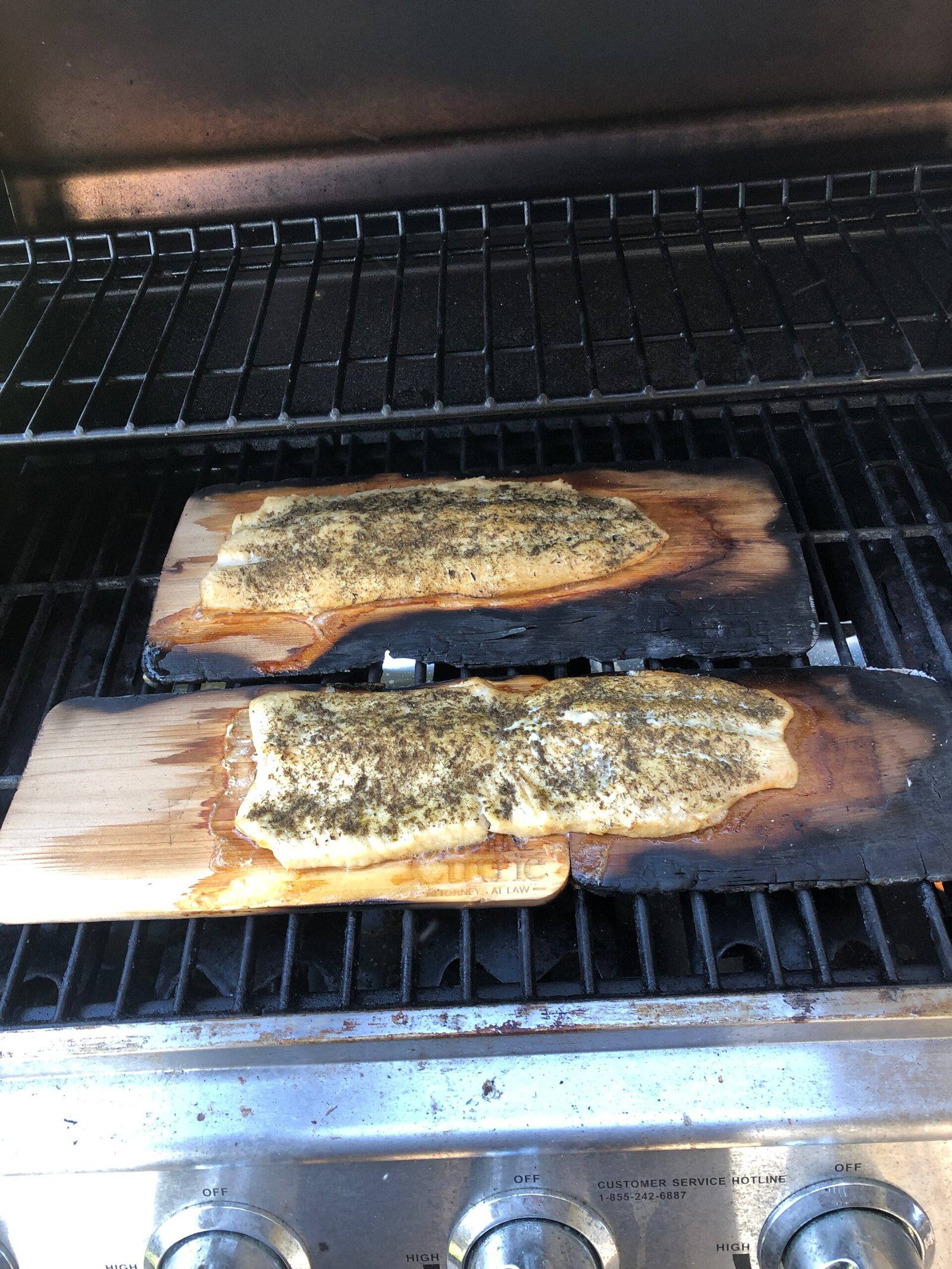
Total cooking time guidelines:
| Fish | Thickness | Approximate Time |
|---|---|---|
| Trout fillet — thin | ½ inch | 12–15 minutes |
| Trout fillet — thick | ¾ inch | 15–18 minutes |
| Whole butterflied trout | 1 inch at thickest | 18–22 minutes |
These are guidelines not guarantees. Every grill runs differently and fish thickness varies. Use your thermometer — pull it at 145°F.
The common mistake: Opening the lid too frequently. Every time you open the lid you lose smoke and drop the temperature. Open once at the halfway point to baste and then not again until you’re checking for doneness.
Step 7 — Rest and Serve on the Plank
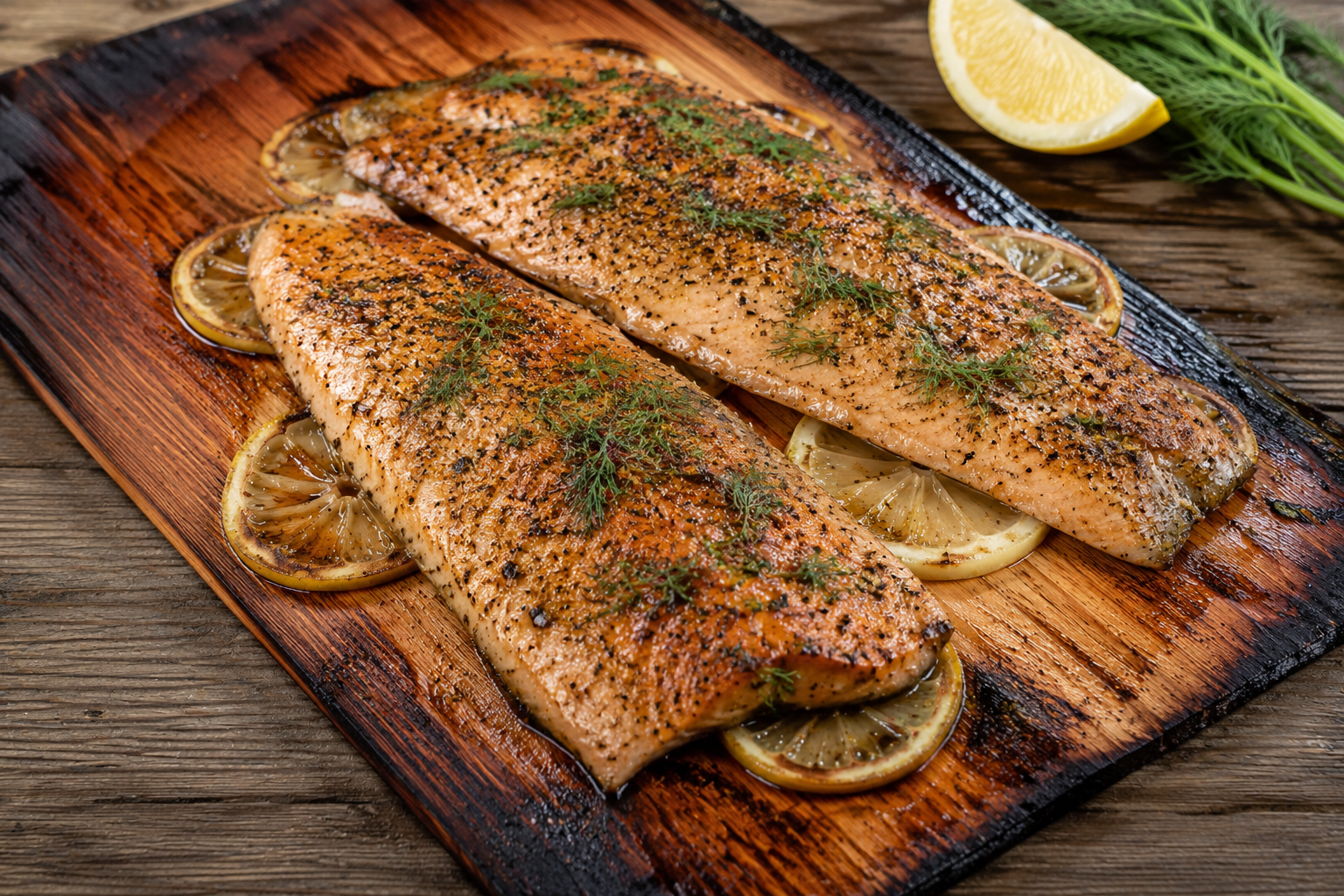
One of the best things about cedar plank cooking is the presentation — the fish comes off the grill still on the plank and goes straight to the table. It looks like something from a fishing lodge and it keeps the fish warm while you serve.
Rest the fish on the plank for 3–4 minutes before serving. This allows the juices to redistribute slightly and the glaze to set.
Serving directly on the plank:
- Bring the whole plank to the table on a heat-safe surface — the wood will still be hot
- Add a final squeeze of fresh lemon juice over the fish just before serving
- Garnish with fresh dill or flat leaf parsley and thin lemon slices
- Serve with a simple side and let the fish be the star
The smoky cedar plank as a serving vessel is one of those presentation details that costs nothing and impresses everyone at the table.
What to Serve with Cedar Plank Trout
Cedar plank trout is rich and smoky enough to hold its own against bold sides but clean enough that simple preparation lets the fish shine.
Perfect pairings:
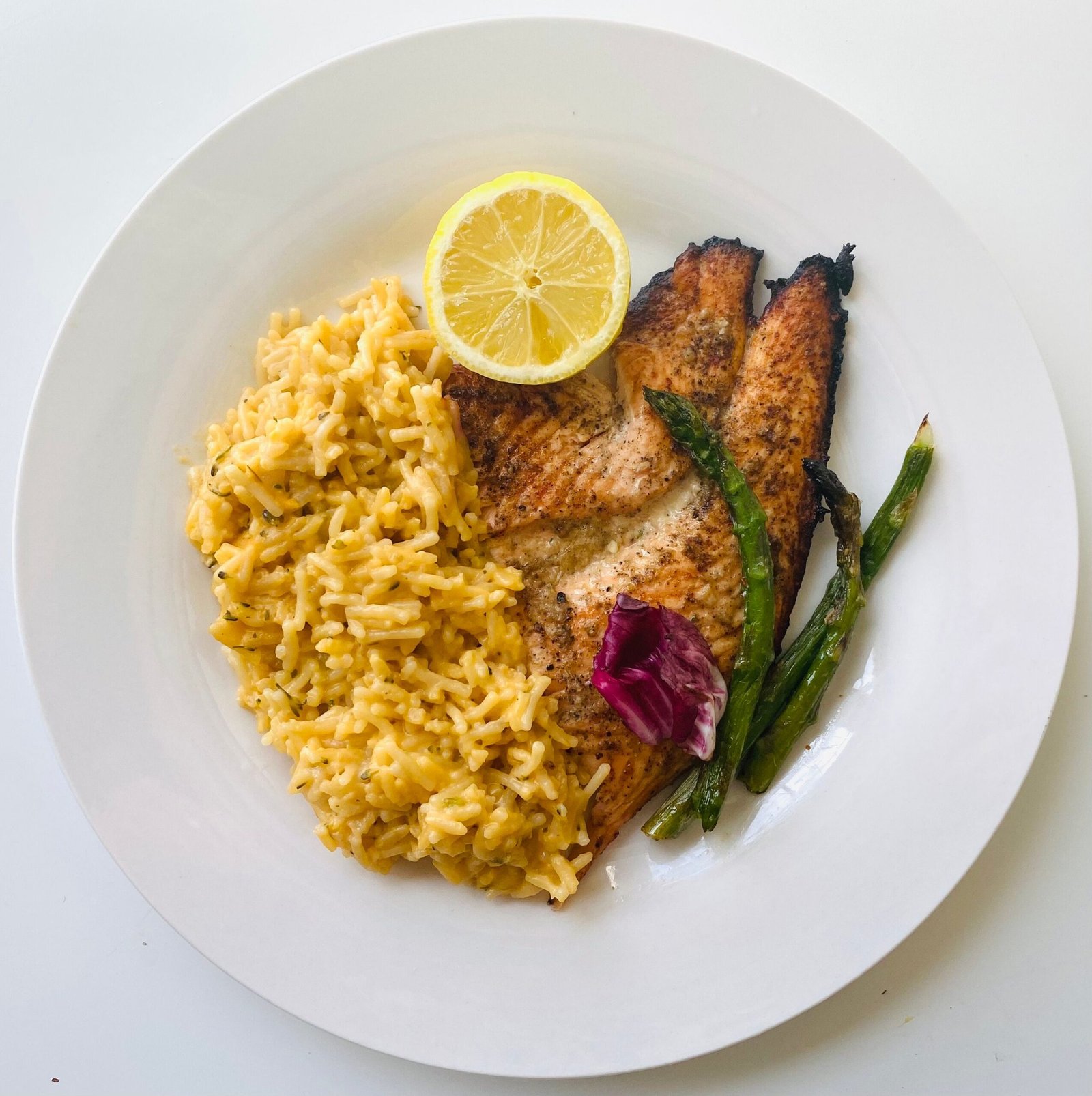
- Roasted asparagus with olive oil and sea salt — the classic fish pairing
- Wild rice with dried cranberries and toasted pecans — earthy and substantial
- Roasted baby potatoes with garlic and rosemary
- A simple cucumber and dill salad with white wine vinegar
- Grilled corn on the cob with herb butter
- Cast iron skillet cornbread — turns it into a full field to table feast
For a full outdoor entertaining spread: Cedar plank trout as the centerpiece with roasted asparagus, wild rice, and cast iron cornbread is one of the most impressive outdoor meals you can put together. It looks and tastes like it required professional skill — and it took about 30 minutes of active work.
Cedar Plank Trout Over a Campfire
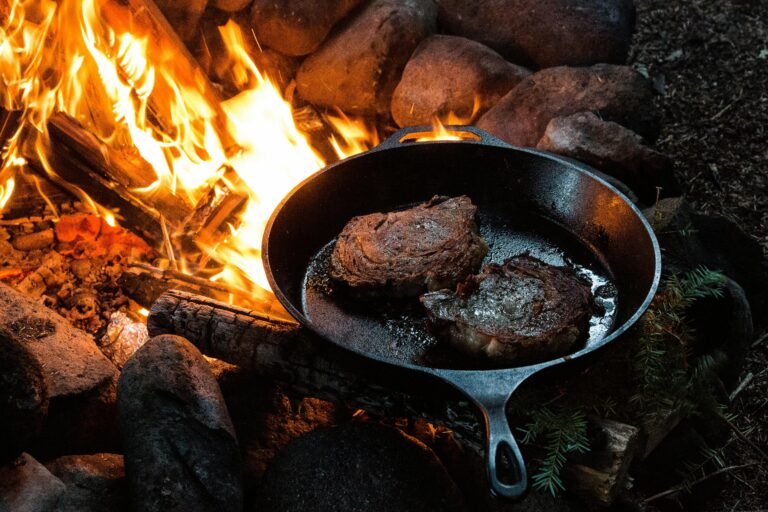
One of my favorite ways to cook cedar plank trout is over a campfire at the end of a day on the water. No grill required — just a fire grate, a soaked plank, and fish you caught a few hours ago.
The campfire method:
- Build your fire early and let it burn down to a strong bed of coals — this takes 45 minutes to an hour
- Place a campfire grate over the coals
- Soak your plank in the creek or river while you clean the fish — 30 minutes minimum
- Season the fish simply — olive oil, salt, pepper, a few lemon slices, fresh herbs from your kit
- Place the plank on the grate and let it heat until smoking
- Place the fish on the plank and cover loosely with foil to trap the smoke
- Cook 15–20 minutes until done
The foil tent is key for campfire cooking — without a grill lid you need something to keep the smoke around the fish. A loose foil tent does the job perfectly.
There is nothing better than eating trout you caught that morning cooked on cedar over a fire you built yourself. That’s field to table cooking at its most honest.
Can You Reuse Cedar Planks
Technically yes — but with conditions. A plank that hasn’t burned through can be used a second time if it was well soaked and lightly charred rather than deeply burned. Scrape off any fish residue, soak again, and it’ll produce less smoke than a fresh plank but still work for a second cook.
My honest recommendation: buy planks in multi-packs and use each one once. Fresh planks produce the best smoke, there’s no food safety concern about residue, and at $1–$2 per plank it’s not worth compromising the result to reuse.
Frequently Asked Questions
Can I use cedar plank trout in the oven? Yes — preheat your oven to 400°F, place the soaked plank on a rimmed baking sheet, heat the plank in the oven for 5 minutes until it starts to smoke slightly, then place the fish on the plank and cook for 15–20 minutes. You won’t get as much smoke as on a grill but the cedar flavor still comes through. Open a window — your smoke alarm may disagree with this method.
What if my plank catches fire? Keep a spray bottle of water near the grill. If the edges of the plank catch flame a quick spray puts it out immediately. This is normal — especially toward the end of cooking when the plank is drier. Don’t panic, just spray and keep cooking.
Can I use other wood planks? Yes — alder is the traditional Pacific Northwest choice for salmon and trout. It produces a lighter more neutral smoke than cedar. Maple produces a sweet subtle smoke. Cherry is slightly fruity. All work well with trout — cedar is just the most widely available and most distinctively flavored.
Do I need to remove the skin before cooking? No — cook skin side down. The skin protects the flesh from direct heat and peels away easily after cooking. Most people don’t eat the skin from cedar plank fish — it does its job during cooking and then separates cleanly from the flesh when you serve it.
How do I know if my trout is fresh enough to cook? Fresh trout should smell clean and like water — not fishy. The eyes should be clear not cloudy. The flesh should spring back when pressed. If it smells strongly of fish it’s past its prime. Fresh caught same day or day of purchase is always ideal for cedar plank cooking.
Can I do this with other fish? Absolutely. Cedar plank cooking works beautifully with salmon, walleye, and any other firm to medium fish. Adjust cooking time based on thickness — the 145°F internal temperature target stays the same regardless of species.
Conclusion
Cedar plank trout is one of those recipes that looks complicated and tastes like it took real skill — and it’s actually one of the most forgiving methods in the fishing kitchen. Soak the plank. Season the fish simply. Let the cedar do the work.
The honey mustard glaze is what takes it from good to genuinely memorable. The smoke is what makes it taste like the outdoor lifestyle it came from. And serving it straight from the plank to the table is the kind of detail that makes people talk about a meal long after they’ve finished eating.
Whether you’re cooking on a backyard grill, at a cabin, or over a campfire at the end of a day on the water — cedar plank trout is the field to table recipe that never fails to impress.
Got a favorite trout seasoning or a wood plank variation worth trying? Drop it in the comments.
If you liked this recipe, check out our venison chili and venison backstrap recipes.