Best Binoculars for Deer Hunting — Every Budget Covered
This post contains affiliate links. If you purchase through these links, I may earn a small commission at no extra cost to you.
Introduction
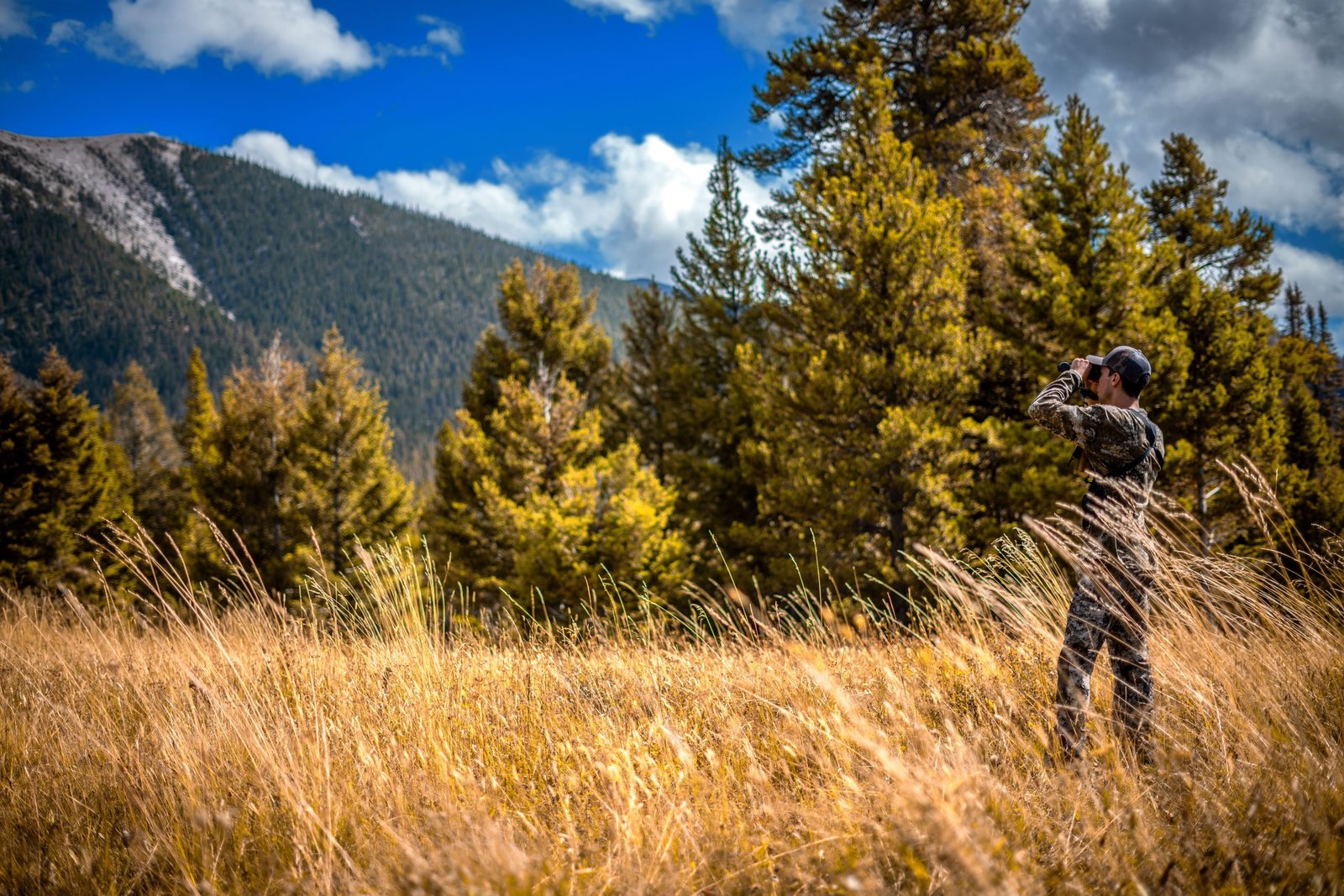
There is a moment every deer hunter knows. You are sitting on a ridge at first light watching a treeline 400 yards out. Something moves in the shadows. A flicker of brown against the dark timber. You raise your binoculars and in that moment the quality of the glass in your hands determines everything — whether you see antlers or a doe, whether you can judge the buck quickly enough to make a decision before he steps back into the woods, whether you even see him at all.
Binoculars are the piece of hunting equipment that most hunters underinvest in. They spend thousands on a rifle or bow, hundreds on clothing and boots, and then put a $50 pair of binoculars around their neck and wonder why the deer hunting is harder than it looks in the magazine photos. The glass you hunt through determines how much of what’s in front of you you actually see — and at dawn and dusk when deer move most actively the difference between good glass and great glass is the difference between seeing and not seeing.
According to the National Shooting Sports Foundation optics represent one of the fastest growing segments of hunting equipment spending — with hunters increasingly understanding that glass quality directly affects hunting success in a way that’s measurable in the field. This guide covers the best binoculars for deer hunting at every budget — from the entry level option that outperforms its price to the European glass that serious hunters save up for — with honest real world assessments of what each delivers in actual hunting conditions.
Table of Contents
Why Binoculars Matter More Than Most Hunters Think
Before getting into the specific recommendations let’s talk about why binoculars are worth taking seriously — because most hunters don’t fully understand what good glass actually changes in the field.
Dawn and dusk performance is everything. Deer are crepuscular animals — they move primarily in the low light windows of early morning and late evening. This is exactly when binoculars are most challenged and when the difference between budget and premium glass is most dramatic. Cheap optics in low light produce a dim, muddy image that makes identifying deer at distance genuinely difficult. Premium glass gathers and transmits light so efficiently that it extends your usable hunting light by 15–20 minutes on each end of the day — minutes that frequently contain the best deer movement of the entire hunt.
Eye relief and comfort affect how long you glass. Serious hunters spend hours glassing from a single position — scanning fields, watching funnels, reading terrain. Binoculars that cause eye strain, require constant refocusing, or produce image distortion at the edges make extended glassing uncomfortable and produce fatigue that degrades your ability to pick out the details that matter. Quality binoculars with generous eye relief and flat field optics can be used for hours without strain.
Magnification and objective lens work together. The two numbers on every pair of binoculars — 8×42 or 10×42 — describe magnification and objective lens diameter respectively. Higher magnification makes distant objects appear closer but reduces field of view and amplifies hand shake. Larger objective lenses gather more light which improves low light performance but adds weight. For deer hunting the 10×42 configuration is the standard sweet spot — enough magnification to judge antlers at distance, enough objective diameter for excellent low light performance, and a weight that’s manageable for a full day in the field.
Build quality determines reliability in hunting conditions. Hunting binoculars get wet. They get cold. They get dropped. They get fogged. They get used in conditions that range from 95°F opening day to 10°F rut hunting in November. The sealing, nitrogen purging, and rubber armoring on quality binoculars handle these conditions without performance degradation. Budget binoculars fog internally, develop moisture between the lenses, and lose their alignment when dropped — all failures that happen at exactly the wrong moment.
What to Look for in Deer Hunting Binoculars
Magnification — 8x or 10x for deer hunting: 8x binoculars offer a wider field of view and are more forgiving of hand movement — better for tracking moving deer through timber. 10x binoculars provide more magnification for judging antlers at distance — better for open country hunting and scouting. For whitetail hunters in timbered country 8×42 is often the better choice. For hunters who scout open fields, food plots at distance, or Western terrain 10×42 is the standard.
Objective lens diameter: 42mm is the sweet spot for hunting — enough light gathering for dawn and dusk performance without the weight penalty of 50mm glass. 50mm binoculars gather more light but weigh significantly more and are harder to hold steady in the field.
Glass quality and coatings: The quality of the glass elements and the anti-reflective coatings applied to each surface determine how much light reaches your eye and how accurately color and contrast are rendered. Fully multi-coated lenses — meaning every air-to-glass surface has multiple layers of anti-reflective coating — are the standard for quality hunting binoculars. Phase-corrected prisms produce sharper images with better contrast than non-corrected alternatives.
Field of view: Measured in feet at 1,000 yards. A wider field of view makes it easier to locate and track moving deer. A narrower field of view is the trade-off for higher magnification. For 10×42 binoculars a field of view of 330–350 feet at 1,000 yards is good. Under 300 feet feels noticeably narrow in the field.
Close focus distance: The minimum distance at which the binoculars focus clearly. For deer hunting a close focus of 6–10 feet is useful for identifying sign, reading tracks, and examining antler sheds. Some budget binoculars have close focus distances of 15–20 feet which limits their utility.
Waterproofing and fog proofing: Non-negotiable for hunting use. Waterproof binoculars are O-ring sealed against moisture entry. Fog proof binoculars are nitrogen or argon purged — the gas-filled interior prevents internal fogging when temperature changes rapidly. Any serious hunting binocular should have both.
Weight and ergonomics: A pair of binoculars that’s too heavy to wear comfortably all day around your neck will stay in the pack. The best binoculars are the ones you actually use — which means weight and ergonomics matter as much as optical performance for practical hunting use.
The Best Budget Pick — Under $250
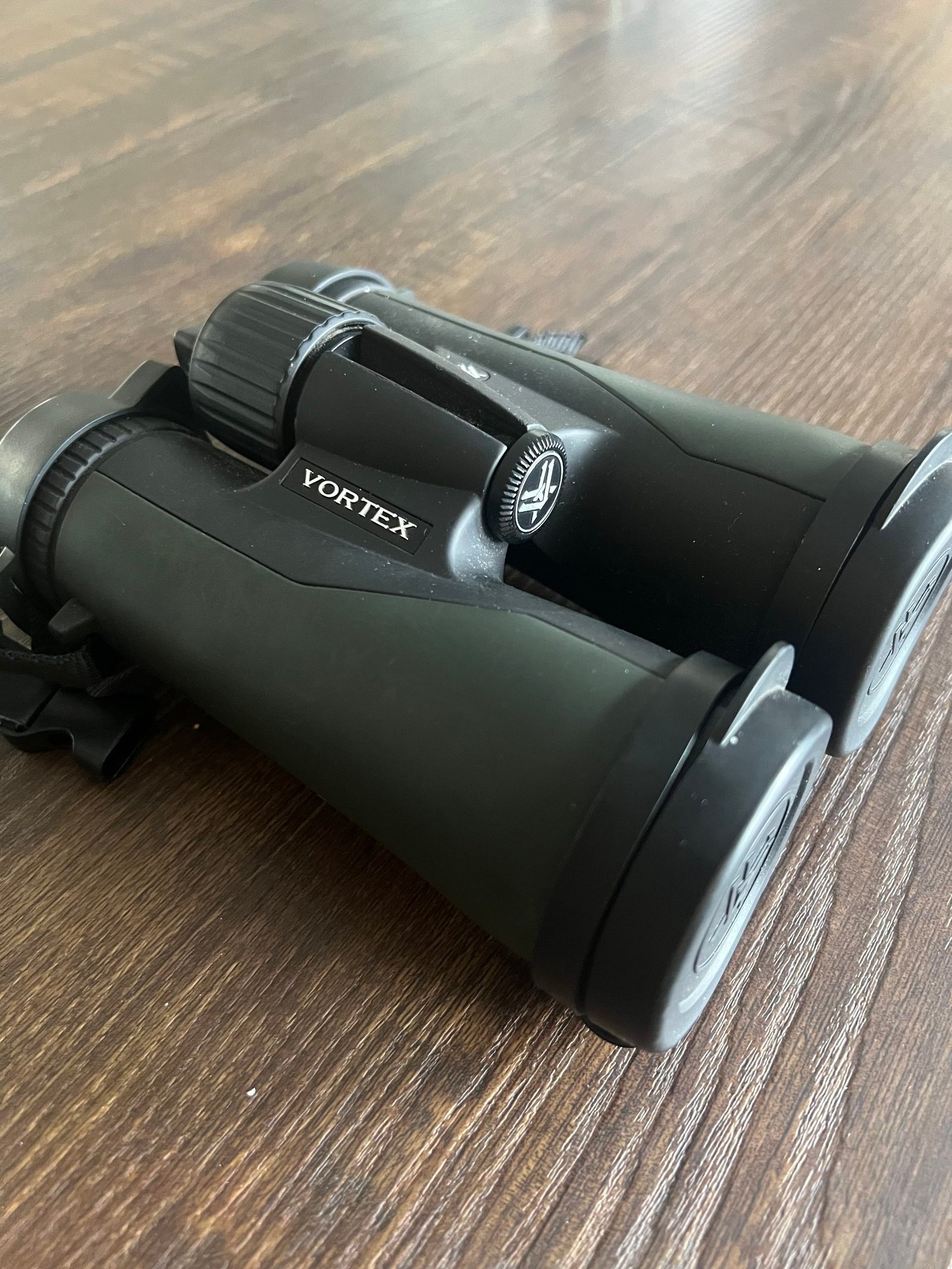
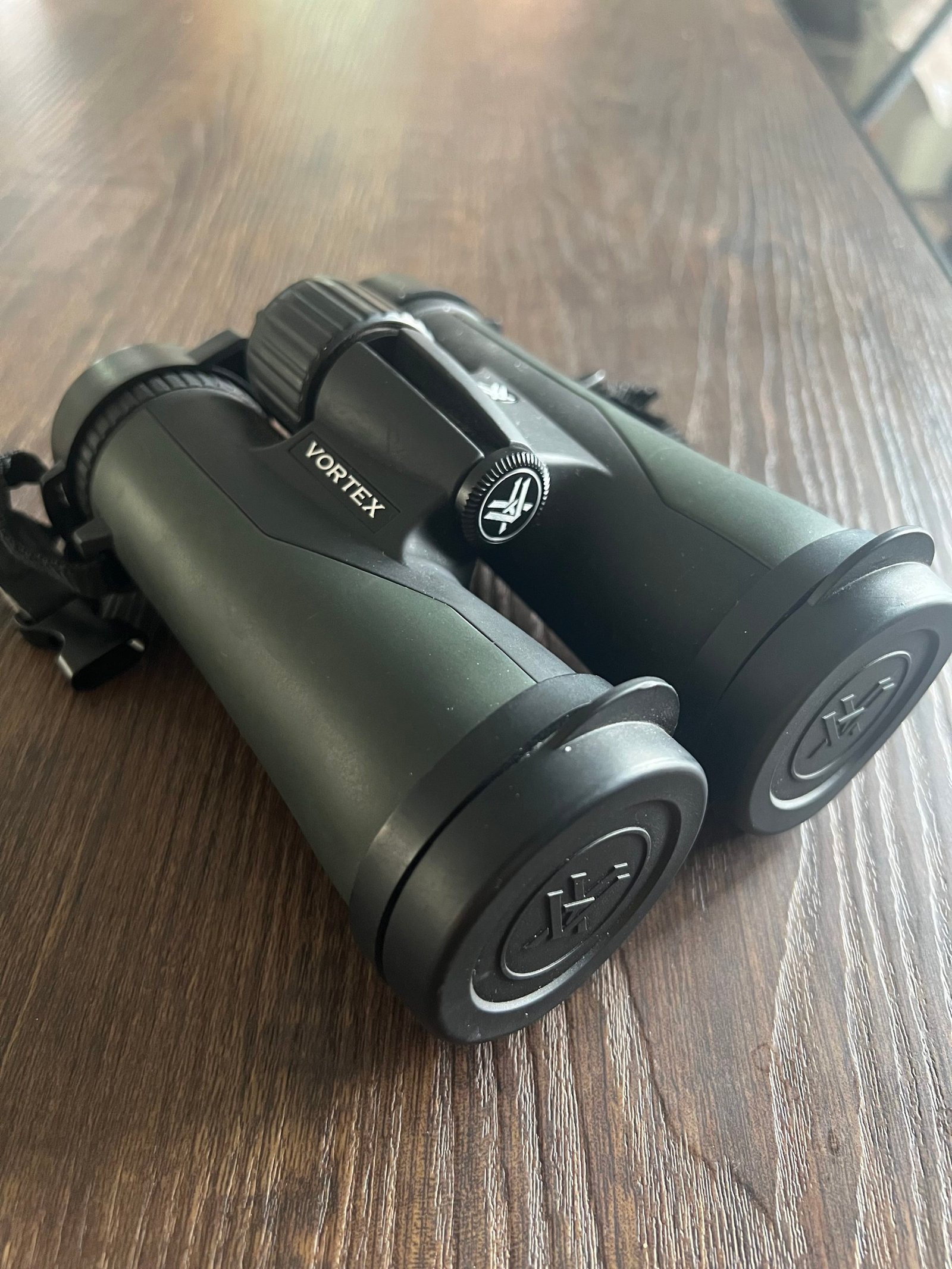
Vortex Optics Diamondback HD 10×42 — The Entry Point That Outperforms Its Price
The Vortex Diamondback HD 10×42 is the binocular that changed how hunters think about the budget optics category. At under $250 it delivers performance that was impossible at this price point five years ago — and it’s backed by Vortex’s unconditional lifetime warranty that covers everything including accidental damage with no questions asked.
What it does well:
The HD glass and fully multi-coated lenses produce a surprisingly bright and clear image for the price. In good light the Diamondback HD shows deer detail — coat color, antler configuration, body size — at distances that matter for hunting decisions. The image quality is genuinely good rather than just acceptable for the price.
The phase-corrected prisms are the most significant optical upgrade from the previous Diamondback generation — they produce better contrast and resolution than the non-corrected prisms in most competing binoculars at this price point. The difference is most noticeable in the shadows under treelines where deer tend to bed and travel.
The ArmorTek exterior coating protects the exterior lens surfaces from scratches, oil, and dirt — more important in hunting use than most optics marketing suggests. A scratched objective lens degrades image quality in a way that’s immediately noticeable and impossible to fix.
The magnesium chassis keeps the weight at 22.9 ounces — lighter than you’d expect at this size and price. A full day of hunting with Diamondback HDs around your neck doesn’t produce the neck fatigue that heavier glass creates.
The Vortex VIP warranty is worth discussing specifically because it genuinely matters for hunting equipment. No questions asked. No receipt required. No registration required. No cost for repair or replacement. If the binoculars break, fog, develop a problem, or get damaged — Vortex fixes or replaces them. For a hunter who uses binoculars hard in rough conditions this warranty has real dollar value.
Where it struggles:
Low light performance — specifically the 15–20 minutes of deep dusk and dawn that premium glass handles best — is where the Diamondback HD shows its limitations. The image dims and loses contrast faster than mid-range and premium alternatives as light fades. For a hunter who is consistently in the stand at first light and last light this limitation is real and noticeable.
The eye cups are functional but not exceptional — the adjustment mechanism is less precise than mid-range alternatives and the eye relief at 15.5mm is adequate but slightly shorter than premium options that provide more generous relief for eyeglass wearers.
Best use case for deer hunting: Food plot hunting at moderate distances in good to moderate light. Scouting from elevated positions. Tree stand hunting where the primary use is confirming deer identity at 100–300 yards rather than judging antlers at 500+ yards.
Who it’s for: The hunter who wants genuine optical quality at the lowest responsible price point. The new deer hunter building their first serious kit. The hunter who hunts primarily in timbered country at moderate distances where extreme low light performance matters less than value.
- Magnification: 10x
- Objective lens: 42mm
- Field of view: 341 feet at 1,000 yards
- Eye relief: 15.5mm
- Close focus: 5 feet
- Weight: 22.9 oz
- Waterproof: Yes — O-ring sealed
- Fog proof: Yes — nitrogen purged
- Warranty: Vortex VIP — unconditional lifetime
- Amazon or Vortex.com: Search “Vortex Diamondback HD 10×42”
- Price range: $200–$250
The Best Mid-Range Pick — Under $500
Vortex Viper HD 10×42 — The Sweet Spot for Serious Deer Hunters
The Vortex Viper HD 10×42 is where the step up in optical performance starts to feel genuinely meaningful in hunting conditions. The glass quality, low light performance, and ergonomics are all noticeably better than the Diamondback HD — and at around $500 the Viper HD represents the price point where most serious deer hunters find the best balance of performance and value.
What it does well:
The HD glass formulation in the Viper uses extra-low dispersion glass elements that reduce chromatic aberration — the color fringing that budget glass produces at high-contrast edges like deer antlers against a bright sky. The result is a sharper, cleaner image with better color accuracy that makes identifying deer features — antler tine count, body condition, age class — significantly easier than the Diamondback HD allows.
Low light performance is the most meaningful upgrade from the Diamondback. The Viper HD maintains a bright, usable image noticeably longer into dusk and earlier into dawn — the hunting windows where the best deer movement happens. In side-by-side field testing the Viper HD provides approximately 10–12 additional minutes of useful low light performance compared to the Diamondback HD. For a deer hunter those minutes are frequently the difference between seeing and not seeing the biggest buck of the season.
The XR anti-reflective coatings on the Viper are more fully developed than the Diamondback’s — producing better light transmission across the full spectrum including the low-contrast gray light of overcast hunting days that are common during the rut.
The ergonomics of the Viper HD are a meaningful step up. The focus wheel has better mechanical feel and more precise adjustment. The eye cups have more adjustment positions and hold their setting more securely. The overall handling of the binoculars in gloved hands — a real-world hunting consideration — is noticeably better.
The same Vortex VIP warranty applies to the Viper as to the Diamondback — unconditional lifetime coverage with no questions asked.
Where it struggles:
At $500 the Viper HD is not cheap — and hunters who are accustomed to budget glass sometimes struggle to justify the price increase for a performance improvement they haven’t experienced firsthand. The performance difference is real and significant in hunting conditions but it requires field experience with both to fully appreciate.
The weight at 24.2 ounces is slightly heavier than the Diamondback — a minor consideration but worth noting for hunters sensitive to pack weight.
Best use case for deer hunting: All deer hunting applications — timber hunting, food plot hunting, open country scouting, rut hunting in variable light conditions. The Viper HD is the right tool for most deer hunting situations the average serious hunter encounters.
Who it’s for: The serious deer hunter who wants genuine mid-range optical performance and is ready to invest in glass that improves their hunting in measurable ways. The hunter who has been using budget glass and wants to understand what the upgrade actually feels like in the field.
- Magnification: 10x
- Objective lens: 42mm
- Field of view: 330 feet at 1,000 yards
- Eye relief: 16mm
- Close focus: 5 feet
- Weight: 24.2 oz
- Waterproof: Yes — O-ring sealed
- Fog proof: Yes — argon purged
- Warranty: Vortex VIP — unconditional lifetime
- Amazon or Vortex.com: Search “Vortex Viper HD 10×42”
- Price range: $450-$500
The Best Upper Mid-Range Pick — $500 to $750
Leupold BX-4 Pro Guide HD 10×42 — American Made Premium Glass
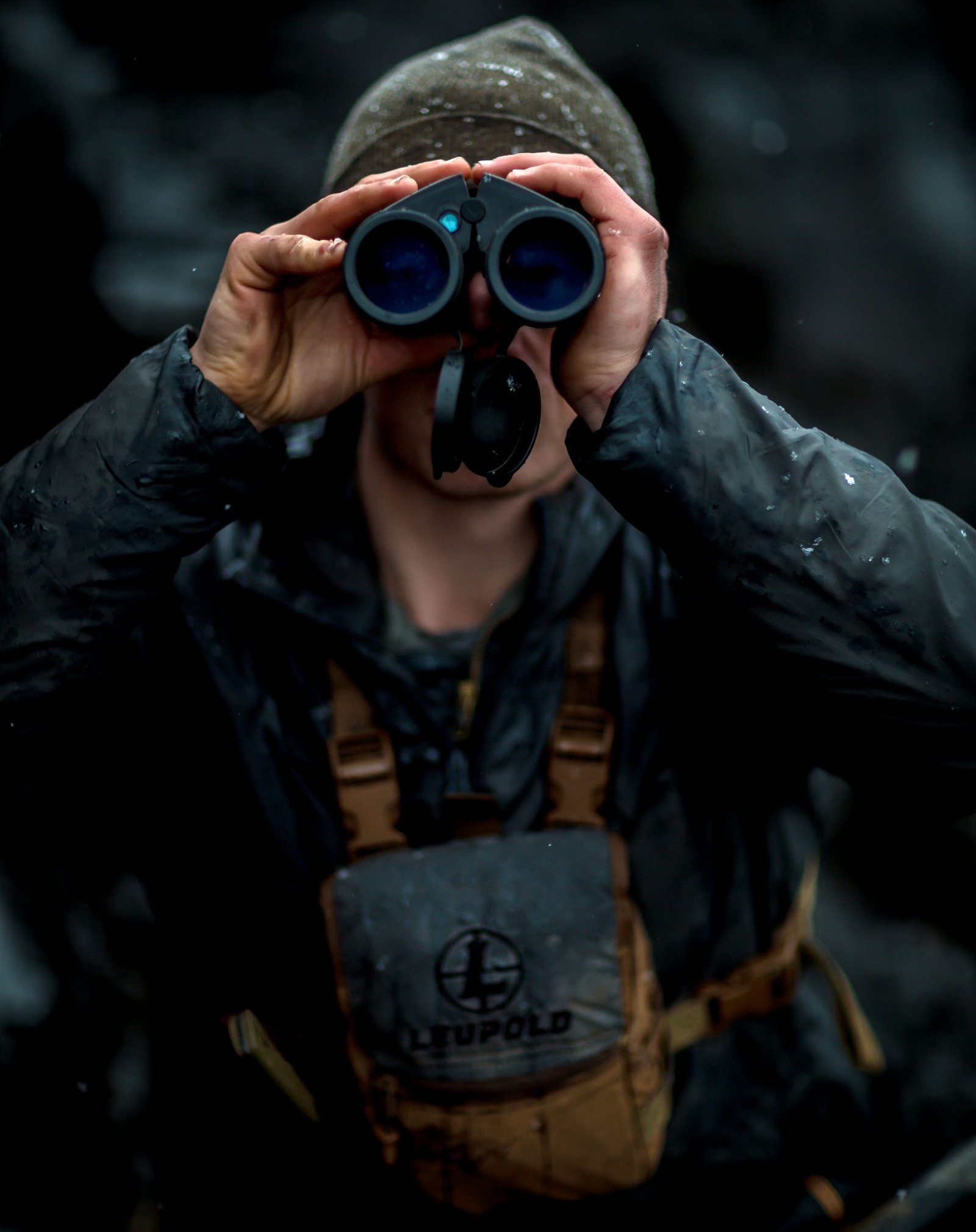
Leupold has been making optics in Beaverton Oregon since 1907 and the BX-4 Pro Guide HD is their current best expression of what American-made hunting optics can deliver. At $500–$700 the BX-4 competes directly with European glass at significantly higher price points and wins on several meaningful metrics.
What it does well:
The Twilight Max HD Light Management System is Leupold’s proprietary lens coating and prism technology designed specifically to maximize performance in the low light hunting windows that matter most for deer. In field testing the BX-4 Pro Guide HD consistently produces brighter, more detailed images at the extreme ends of legal hunting light than anything in its price class. The low light performance genuinely approaches what Swarovski and Zeiss deliver at two to three times the price.
The image quality in all light conditions is exceptional — sharp edge to edge with accurate color rendition and minimal chromatic aberration even at high-contrast edges. The flat field performance means the edges of the image are as sharp as the center — a detail that matters when scanning treelines and field edges for deer movement.
The build quality is the most robust on this list. The aluminum chassis is machined to tighter tolerances than the Vortex options — the focus wheel has a mechanical precision that communicates quality through every adjustment. The O-ring seals and nitrogen purging meet the same standard as optics costing significantly more. The rubber armoring is aggressive and functional — these binoculars survive drops that would damage less well-built alternatives.
Made in America with an American lifetime guarantee — Leupold’s warranty is comparable to Vortex’s in coverage and service quality. For hunters who prioritize American manufacturing the BX-4 is the obvious choice in this tier.
Where it struggles:
The field of view on the BX-4 Pro Guide at 305 feet at 1,000 yards is narrower than the Vortex options at the same magnification — a real trade-off for the optical performance gains. In timber hunting where tracking moving deer through cover is important the narrower field of view is a noticeable limitation.
At $600 the BX-4 is a meaningful investment — less than the European glass above it but more than most hunters expect to spend on binoculars. The performance justifies the price for hunters who hunt regularly in low light conditions — but the improvement over the Viper HD requires side-by-side comparison to fully appreciate.
Best use case for deer hunting: Low light deer hunting specifically — pre-dawn stand hunting and last-light field watching where the BX-4’s Twilight Max system provides its most meaningful advantage. Also excellent for open country hunting where image quality at distance matters more than field of view width.
Who it’s for: The serious deer hunter who hunts primarily in low light conditions and wants the best possible low light performance available below the premium European glass price point. The hunter who prioritizes American manufacturing. The hunter ready to invest in glass that will perform at the highest level for the rest of their hunting career.
- Magnification: 10x
- Objective lens: 42mm
- Field of view: 305 feet at 1,000 yards
- Eye relief: 15.4mm
- Close focus: 6.5 feet
- Weight: 23.3 oz
- Waterproof: Yes — O-ring sealed
- Fog proof: Yes — nitrogen purged
- Made in: USA — Beaverton Oregon
- Warranty: Leupold lifetime — full transferable
- Amazon or Leupold.com: Search “Leupold BX-4 Pro Guide HD 10×42″
- Price range: $500–$700
The Best Premium Pick
Swarovski EL 10×42 — The Glass That Ruins Everything Else
Swarovski makes the binoculars that hunters save up for, receive as retirement gifts, and pass down to their children. The EL 10×42 is the benchmark of premium hunting glass — not because of brand prestige but because it delivers optical performance that is measurably and dramatically better than anything below it in this guide.
What it does well:
The Swarovski EL’s low light performance is in a different category from anything else on this list. The SWAROVISION technology — field-flattening HD lenses, fluoride-containing HD glass, and multi-layer SWAROTOP and SWARODUR coatings — produces an image at deep dusk that has to be experienced to be understood. At the moment when Vortex and Leupold glass is showing a dim muddy image the Swarovski EL is still showing clear, bright, detailed deer at distance. The practical hunting value of this performance is measured in more deer identified, more shots assessed, and more clean ethical shots taken at animals that would otherwise have been invisible.
The image quality in all conditions is simply the best available in a hunting binocular at any price. Edge-to-edge sharpness with a field flattener lens that eliminates the image curvature that affects every other binocular on this list. Color accuracy that renders deer coat color, antler velvet, and terrain with photographic precision. Zero chromatic aberration at any contrast level.
The ergonomics of the Swarovski EL are legendary among hunters who have used them. The wrap-around grip, the perfectly weighted balance point, and the focus wheel with its precise mechanical feel make hours of glassing effortless in a way that cheaper binoculars never achieve. The twist-up eye cups hold their position securely across a full day of field use.
The EL’s field of view at 390 feet at 1,000 yards is the widest of any 10×42 binocular on this list — an extraordinary engineering achievement that most premium binoculars trade away for optical performance. The Swarovski gives you both.
Where it struggles:
Price. At around $2,000, the Swarovski EL is more than most hunters will ever spend on binoculars. The performance improvement over the Leupold BX-4 is real and significant — but it requires extensive field experience with both to fully appreciate. A hunter who has never used glass above $200 may not immediately perceive the difference that justifies the price.
Weight at 28.2 ounces is the heaviest on this list — a minor consideration that dedicated hunters don’t notice after a week in the field but worth mentioning for completeness.
Best use case for deer hunting: Every deer hunting situation at the highest possible level. Particularly transformative for low light hunting, long range glassing in open country, and any hunting situation where seeing more of what’s in front of you directly affects success.
Who it’s for: The hunter who is serious enough about deer hunting to invest in the best possible glass available. The hunter who has been using mid-range optics and is ready for the upgrade that changes how they hunt. Anyone who wants to buy binoculars once for the rest of their hunting career.
- Magnification: 10x
- Objective lens: 42mm
- Field of view: 390 feet at 1,000 yards
- Eye relief: 20mm — best on this list
- Close focus: 5 feet
- Weight: 28.2 oz
- Waterproof: Yes — O-ring sealed
- Fog proof: Yes — nitrogen purged
- Made in: Austria
- Warranty: Swarovski lifetime
- Amazon or Swarovski-optik.com: Search “Swarovski EL 10×42”
- Price range: $1,500–$2,500
Best 8×42 Option — For Timber Hunters
Vortex Viper HD 8×42 — When Field of View Matters More Than Magnification
For deer hunters who hunt primarily in thick timber — eastern hardwoods, river bottom cottonwoods, dense pine plantations — the 8×42 configuration often outperforms 10×42 for practical hunting use. The wider field of view makes tracking moving deer through cover easier. The lower magnification produces a steadier image at the ranges timber hunting actually involves — typically under 150 yards where 10x magnification is more than necessary.
The Vortex Viper HD 8×42 delivers the same optical quality as the 10×42 version with a field of view of 409 feet at 1,000 yards — the widest of any option in this guide. For a timber hunter who needs to track a buck moving through heavy cover at 80 yards that field of view is genuinely useful in a way that 10x binoculars can’t match.
- Magnification: 8x
- Objective lens: 42mm
- Field of view: 409 feet at 1,000 yards
- Weight: 23.8 oz
- Amazon or Vortex.com: Search “Vortex Viper HD 8×42”
- Price range: $450–$500
Binoculars Comparison Chart
| Model | Magnification | FOV at 1,000 yds | Low Light | Weight | Warranty | Price |
|---|---|---|---|---|---|---|
| Vortex Diamondback HD | 10×42 | 341 ft | Good | 22.9 oz | VIP lifetime | $200–$250 |
| Vortex Viper HD | 10×42 | 330 ft | Very Good | 24.2 oz | VIP lifetime | $450–$500 |
| Leupold BX-4 Pro Guide | 10×42 | 305 ft | Excellent | 23.3 oz | Lifetime | $500–$700 |
| Swarovski EL | 10×42 | 390 ft | Outstanding | 28.2 oz | Lifetime | $2,000 |
| Vortex Viper HD 8×42 | 8×42 | 409 ft | Very Good | 23.8 oz | VIP lifetime | $450–$500 |
8×42 vs 10×42 — Which Is Right for Your Hunting
This is the question most deer hunters ask when choosing binoculars and the honest answer depends entirely on how and where you hunt.
Choose 10×42 if:
- You hunt open fields, food plots, or ag country where deer are often 300–500+ yards away
- You scout from elevated vantage points glassing large areas
- You hunt in the West where terrain is more open
- Judging antler size at distance is a regular part of your hunting decisions
Choose 8×42 if:
- You hunt primarily in timber or dense cover where shots are under 150 yards
- You want a wider field of view for tracking moving deer through cover
- You hunt from a treestand in heavy woods where 10x magnification is more than you need
- Hand steadiness is a concern — 8x is more forgiving of movement
Most whitetail hunters in the eastern United States are better served by 8×42. Most whitetail hunters in the Midwest and open country regions are better served by 10×42.
How to Care for Hunting Binoculars
Quality binoculars are precision optical instruments that reward proper care with decades of reliable performance. Here’s what matters for hunting-specific maintenance:
Lens cleaning — do this right: Never wipe a dry lens with a dry cloth. Dust and grit on the lens surface acts like sandpaper when dragged across the glass coating. Always blow loose particles off the lens first — a lens blower brush is the right tool. Then apply a drop of lens cleaning fluid to a microfiber cloth and wipe in gentle circular motions from center to edge. Never use shirt fabric, paper towels, or household glass cleaner.
Storage: Store binoculars in their case with the lens caps on when not in use. Never store them in a damp area — even nitrogen-purged binoculars can develop internal issues over years of exposure to extreme moisture. A silica gel packet in the case prevents moisture accumulation.
Harness vs neck strap: A quality binocular harness distributes the weight of the binoculars across your chest rather than your neck — eliminating the neck fatigue that makes hunters reach for their binoculars less often. For serious hunters who glass for hours a harness is not optional. The Vortex and Leupold harnesses are both excellent — or look for a third-party harness from Hunter’s Specialties or Alps OutdoorZ.
Drop protection: The most common way to damage hunting binoculars is dropping them. A harness keeps binoculars secure against your chest rather than dangling from a neck strap where a branch or awkward movement can send them swinging into a tree. If you hunt in a treestand use a binocular retention leash as a secondary security measure.
Essential Binocular Accessories for Deer Hunters
Binocular Harness — Non-Negotiable: A chest harness keeps binoculars accessible and protects them from swinging into objects. Makes a full day of hunting with binoculars around your neck genuinely comfortable. Marsupial Gear, Vortex, and Leupold all make excellent hunting-specific harnesses.
- Amazon: Search “binocular harness hunting”
- Price: $30–$80
Lens Cleaning Kit: A proper lens cleaning kit — blower brush, microfiber cloths, lens cleaning fluid — protects your optics investment. One scratch on an objective lens from improper cleaning degrades image quality permanently.
- Amazon: Search “camera lens cleaning kit”
- Price: $10–$20
Tripod Adapter: For extended glassing sessions — scouting from a ridge, watching a food plot before a hunt — a tripod adapter mounts your binoculars on a lightweight tripod and eliminates hand fatigue entirely. At 10x magnification hand movement becomes visible as image shake during extended use. A tripod stabilizes the image completely.
- Amazon: Search “binocular tripod adapter”
- Price: $10–$25
Lens Caps: Replacement objective and ocular lens caps — the ones that come with binoculars frequently get lost in hunting packs. Having a spare set ensures your lenses stay protected between uses.
- Amazon: Search binocular lens caps for your specific model
- Price: $10–$20
Frequently Asked Questions
What magnification is best for deer hunting? 10×42 is the standard for most deer hunting applications — enough magnification to judge antlers at distance, enough objective diameter for good low light performance, and a weight that’s manageable all day. 8×42 is better for timber hunters who primarily track deer at close to moderate distances in heavy cover. Avoid 12x and higher for handheld use — the image shake at those magnifications makes sustained glassing difficult without a tripod.
Is there a noticeable difference between a $200 and $500 pair of binoculars? Yes — and the difference is most apparent at dawn and dusk which is exactly when deer hunting matters most. The low light performance difference between budget and mid-range glass is the most practically significant optical improvement a deer hunter can make. If you currently hunt with binoculars under $150 the upgrade to Vortex Viper HD territory will change how much you see in the first and last 20 minutes of shooting light.
Are Vortex binoculars as good as Swarovski? No — but they’re significantly better than most hunters expect at their price point and the VIP warranty removes any durability risk from the purchase. The optical gap between Vortex Viper HD and Swarovski EL is real and meaningful in field conditions. Whether that gap justifies a $2,000+ price difference depends entirely on your hunting situation and how much you hunt.
What does ED or HD mean on binocular specifications? ED stands for extra-low dispersion glass. HD is a marketing term various manufacturers use to indicate higher-quality glass elements. Both refer to glass formulations that reduce chromatic aberration — the color fringing that appears at high-contrast edges in standard glass optics. ED and HD glass produce sharper images with more accurate color rendition — particularly noticeable at the edges of the field of view and in low contrast conditions.
Do I need binoculars if I hunt from a treestand at close range? Yes — even for treestand hunters at 20–80 yards binoculars serve important functions. Confirming that a deer is legal to harvest before it’s in shooting range. Judging antler characteristics at a distance that allows time to decide. Watching deer behavior and body language that determines shot opportunity. A deer hunter without binoculars is hunting with significantly less information than one who uses them consistently.
How do I know if my binoculars are collimated? Binoculars that are out of collimation — where the two optical tubes are misaligned — produce eyestrain and headaches during use rather than a comfortable fused image. Test by looking through the binoculars at a distant object and slowly pulling them away from your eyes while continuing to look through them. If the two images separate cleanly to the left and right the binoculars are in collimation. If the images separate vertically or diagonally the binoculars need service.
The Bottom Line — Which Binoculars Should You Buy
Starting out — want quality without significant investment: → Vortex Diamondback HD 10×42 — $200–$250. Best optical performance available under $250. VIP warranty removes all risk.
Ready for a serious upgrade — the sweet spot for most hunters: → Vortex Viper HD 10×42 — $450–$500. Meaningful step up in low light performance and image quality. The right answer for most serious deer hunters.
Want the best American-made option with exceptional low light: → Leupold BX-4 Pro Guide HD 10×42 — $500–$700. Twilight Max low light system approaches European glass performance at half the price.
Want the best hunting binoculars available regardless of price: → Swarovski EL 10×42 — $2,000. The benchmark. Buy once for a lifetime of hunting.
Hunt in heavy timber and want maximum field of view: → Vortex Viper HD 8×42 — $450–$500. Widest field of view on the list. The timber hunter’s choice.
Conclusion
The binoculars you hunt through determine how much of what’s in front of you you actually see. At dawn on opening morning with a shooter buck moving through the shadows at the edge of your food plot — in that moment the glass in your hands is the difference between a successful season and a story about the one that got away.
Every pair of binoculars on this list represents a meaningful upgrade from hunting without quality glass or with the gas station optics that most beginning hunters start with. The Diamondback HD gives you a legitimate entry point. The Viper HD gives you the sweet spot. The BX-4 gives you American-made excellence. The Swarovski gives you the best available.
Choose the pair that fits where you are in your hunting journey. Use them every time you’re in the field. Glass more than you think you need to. The deer you see because of better glass are the ones that make the season.
If you enjoyed this review, be sure to head over and check out our Best Coolers for Hunters article.
What are you hunting through this fall? Drop it in the comments — always looking for what serious hunters are running in the field.