Best Coolers for Hunters — YETI vs Pelican vs RTIC and More
This post contains affiliate links. If you purchase through these links, I may earn a small commission at no extra cost to you.
Introduction
The cooler is the piece of hunting equipment that most hunters underestimate right up until the moment it fails them. You spent months scouting. You put in the early mornings and the long sits. You made the shot. You did the field dressing. And then you put 60 pounds of hard-earned venison into a cooler that can’t hold ice for more than 24 hours — and watched your harvest degrade in quality before you could get it to a processor or a freezer.
A good hunting cooler is not a luxury. It’s the final piece of equipment between a successful harvest and wasted wild game. The difference between a quality cooler and a budget one is the difference between venison that comes out of the cooler in perfect condition three days later and venison that’s already starting to turn.
I’ve used every tier of cooler in hunting situations — from the $30 big box store box that lasted two seasons before the hinges cracked to the premium rotomolded options that have been with me for years and still perform like new. What I know now is that the cooler is not where you want to cut corners when the investment you’re protecting is a season’s worth of wild game protein.
According to the Outdoor Industry Association Americans spend over $2.1 billion annually on coolers and ice chests — with the premium rotomolded segment growing at over 15% per year as hunters and outdoor enthusiasts discover that the price difference between budget and premium is justified by performance that’s genuinely in a different category.
This guide covers the best coolers for hunters at every price point — from the budget option that outperforms its price to the premium coolers that hold ice for days in summer heat and protect wild game through multi-day backcountry hunts. Every recommendation is based on real world hunting performance — not tailgate party reviews.
Table of Contents
Why Hunters Need a Different Kind of Cooler
Not all coolers are created equal and not all coolers are designed for the specific demands of hunting. Here’s what separates a genuine hunting cooler from a general purpose one:
Ice retention is everything for wild game. A weekend cooler that holds ice for 24–36 hours is fine for a camping trip. A hunting cooler needs to hold ice for 2–5 days in the field — often in warm early season temperatures when September archery season puts you in 70°F+ conditions with a harvested deer that needs to stay cold until you can get it to a processor. Ice retention measured in days rather than hours is the standard hunting coolers need to meet.
Durability under hard use. Hunting coolers get thrown in truck beds, dragged across tailgates, loaded with ice and heavy game quarters, and used in environments that are far rougher than a backyard barbecue. The latches, hinges, handles, and gaskets of a hunting cooler need to handle repeated hard use without failing. Budget coolers frequently fail at exactly these points — latches crack, hinges break, gaskets deform — after one or two seasons of hunting use.
Bear resistance matters more than you think. In bear country a bear-resistant certified cooler is not optional — it’s required by many land management agencies and practically essential for keeping your harvest safe at camp. Not all premium coolers are bear resistant. Knowing which ones are matters depending on where you hunt.
Size and capacity for wild game. A whitetail deer quartered yields roughly 60–70 pounds of bone-in meat. A fully quartered elk can yield 200+ pounds. The cooler needs to be large enough to hold the harvest you’re protecting — which means understanding the relationship between cooler capacity in quarts and real-world game capacity.
A general rule for game capacity:
- 45–65 quart cooler — one quartered whitetail deer
- 75–105 quart cooler — one quartered whitetail plus ice
- 150+ quart cooler — elk quarters or multiple deer
What to Look for in a Hunting Cooler
Ice retention — measured in days. The ice retention rating is the most important spec for hunters. Quality hunting coolers are rated for 5, 7, or even 10+ days of ice retention. These ratings assume ambient temperatures around 90°F and a properly pre-chilled cooler with a 2:1 ice to contents ratio. Real world performance in hunting conditions — cooler in a shaded truck bed, opened multiple times per day — is typically 60–70% of the rated maximum.
Insulation thickness. Premium coolers use 2–3 inches of polyurethane foam insulation in the walls and lid. Budget coolers use thinner insulation that can’t maintain temperature as long. The thicker the insulation the better the ice retention — and the heavier and more expensive the cooler.
Rotomolded construction. Rotomolded coolers are made by rotating molten plastic inside a mold — the result is a one-piece seamless shell without joints or seams where cold air can escape. This construction method produces significantly better ice retention and dramatically better durability than injection-molded alternatives. Every premium cooler on this list is rotomolded.
Gasket seal. The lid gasket is the most important single component for ice retention. A tight fitting rubber gasket that compresses evenly around the entire lid perimeter keeps cold air in and warm air out. Check the gasket on any cooler you’re considering — it should be thick, even, and compress noticeably when the lid closes.
Drain plug. A wide drain plug that allows water to flow quickly is essential when you’re draining 50 pounds of ice melt at camp. Coolers with slow or poorly positioned drain plugs are a frustration you’ll feel every single time you use them.
Weight empty. A premium 65-quart cooler weighs 25–35 pounds empty. Add 40 pounds of ice and 60 pounds of venison and you’re moving 125–135 pounds.
The Best Budget Pick — $150
Igloo BMX 52 Quart Cooler — Real Performance at an Accessible Price
The Igloo BMX is the budget cooler that actually delivers on its promises — a rare thing in the under-$150 category where most options dramatically underperform their marketing claims. For a hunter who processes one deer per season and needs a reliable cooler for short duration use the BMX is a legitimate option that doesn’t embarrass itself next to more expensive alternatives.
What it does well:
The BMX uses Igloo’s Ultratherm insulation — a step up from the thin foam in standard budget coolers. Ice retention in real hunting conditions runs 3–4 days with pre-chilling and proper packing — meaningful for a whitetail hunter who needs to keep a deer cold for the drive home and the first day or two before processing.
The construction is injection molded rather than rotomolded — which means it’s not in the same durability category as premium options — but the BMX is notably more robust than similarly priced alternatives. The stainless steel latches and reinforced handles are the components most likely to fail on budget coolers and Igloo has addressed both here. After two seasons of hunting use the BMX holds up better than you’d expect from a cooler at this price point.
The wide mouth drain plug drains quickly and cleanly. The integrated tie-down slots work with standard ratchet straps — important for securing a cooler in a truck bed. The rubberized grip on the handles makes carrying a loaded cooler meaningfully more manageable than coolers with hard plastic handles.
Where it struggles:
Three to four days of ice retention is adequate for a whitetail hunter doing short trips but limiting for anyone doing multi-day hunts, backcountry work, or early season hunting in warm temperatures. The BMX is not a 7-day cooler regardless of how you pack it — and trying to use it that way will result in disappointing performance.
The injection molded construction shows its limitations under sustained hard use. The hinges and corners are the most vulnerable points and will show wear faster than rotomolded alternatives. For a hunter who uses a cooler hard every season for years the BMX is a 3–4 year cooler — not a 10-year cooler.
Who it’s for: The occasional hunter who processes one deer per season, takes short hunting trips of 1–3 days, and wants meaningful performance without a significant investment. The BMX is the answer to “what’s the best cooler I can get for under $150 that won’t embarrass me in a hunting context.”
- Capacity: 52 quarts
- Ice retention: 3–4 days real world
- Construction: Injection molded
- Weight empty: 14 lbs
- Bear resistant: No
- Drain plug: Wide mouth
- Amazon: Search “Igloo BMX 52 quart cooler”
- Price range: $150
The Best Mid-Range Pick — $200 to $350
RTIC 65 Hard Cooler — Premium Performance at Nearly Half the YETI Price
RTIC started as the direct challenger to YETI — built by former YETI employees who understood exactly what made the premium cooler category work and set out to deliver the same performance at a dramatically lower price. The result is a cooler that matches YETI’s core performance metrics — ice retention, construction quality, and durability — at roughly 40–50% of the price.
What it does well:
The RTIC 65 uses the same rotomolded construction as YETI — a seamless one-piece shell with 3 inches of polyurethane foam insulation that delivers genuine 5-day ice retention under real hunting conditions. Pre-chill the cooler, use the 2:1 ice to contents ratio, keep it in the shade, and the RTIC 65 holds ice for five days in 90°F ambient temperatures. In a truck bed or shaded camp setting in typical hunting conditions — 50°F to 70°F — you’re looking at 7+ days easily.
The 65-quart capacity hits the sweet spot for a single deer hunter — large enough to hold a quartered whitetail with adequate ice, manageable enough that one person can move it without a second set of hands when it’s not completely loaded. The interior dimensions are generous and the flat interior bottom accommodates game quarters efficiently without wasted space.
The construction quality is genuinely impressive at this price point. The rotomolded shell, the thick rubber T-Rex latches, the thick lid gasket, and the wide drain plug are all built to the same standard as coolers that cost twice as much. After three seasons of hard hunting use the RTIC shows minimal wear — the latches are intact, the gasket maintains its compression, and the shell has no structural issues.
The freezer-grade gasket is worth specific mention — it’s thicker and more compression-resistant than the gaskets on many competing mid-range options. A good gasket is the single component most responsible for real-world ice retention and the RTIC’s holds up.
Where it struggles:
The RTIC brand doesn’t carry the cultural weight of YETI in hunting circles — which matters exactly as much as you let it. If you care what the cooler looks like at camp or in the truck bed the RTIC may feel like a step down from YETI aesthetically. In terms of actual hunting performance it is not.
Customer service and warranty support have historically been less responsive than YETI’s — though RTIC has improved significantly. If you have a warranty issue the resolution process may take longer and require more follow-up than it would with YETI.
The RTIC also lacks YETI’s accessory ecosystem — dry goods baskets, dividers, and other organizational accessories that YETI has developed for their cooler line. If you want to customize your cooler setup extensively the RTIC’s options are more limited.
Who it’s for: Any hunter who wants genuine premium cooler performance — 5-day+ ice retention, rotomolded construction, quality gasket and latches — without paying the YETI premium. The RTIC 65 is the value play that sacrifices nothing in functional hunting performance.
- Capacity: 65 quarts
- Ice retention: 5+ days real world
- Construction: Rotomolded
- Weight empty: 23 lbs
- Bear resistant: No
- Drain plug: Wide mouth with plug tether
- Amazon: Search “RTIC 65 hard cooler”
- Price range: $230–$280
The Best Premium Pick — $300 to $500
YETI Tundra 65 — The Standard Every Other Hunting Cooler Is Measured Against
YETI created the premium cooler category and the Tundra 65 is the cooler that did it. Fifteen years after its introduction it’s still the benchmark — not because of marketing or brand prestige but because it delivers a level of performance, durability, and real-world reliability that justifies the price for hunters who use a cooler hard and often.
What it does well:
The Tundra 65’s ice retention is genuinely excellent — 7+ days under real hunting conditions with proper packing. In a shaded camp location at 60°F ambient temperatures the Tundra 65 holds ice for 10 days. These numbers matter for hunters doing extended backcountry hunts, multi-day wilderness camps, or early archery season hunting in warm temperatures where the margin for error on wild game temperature is narrow.
The PermaFrost insulation is 3 inches thick in the walls and lid — providing the thermal mass necessary for genuine multi-day ice retention. The freezer-quality gasket compresses evenly and completely around the full lid perimeter creating an airtight seal that budget and mid-range coolers approximate but don’t quite match.
The ColdLock gasket specifically is worth mentioning — it’s noticeably thicker and more consistent than the RTIC’s already excellent gasket. In side-by-side temperature testing the YETI maintains internal temperature roughly 10–15% better than the RTIC over a 7-day period — a real but incremental difference that matters most in extreme temperature conditions.
The durability of the Tundra is in a different category from everything below it. The rotomolded shell, the AnchorPoint tie-down slots, the T-Rex latches that can be operated with one hand while wearing gloves, and the integrated drain are all built to a standard that holds up to years of hard hunting use. I know hunters running the same Tundra for ten years who have never had a component failure.
The YETI ecosystem is the other meaningful advantage — dry goods baskets, ice substitutes, cleaning kits, and organizational accessories are all designed specifically for YETI coolers and available everywhere YETI products are sold.
Bear resistance: The YETI Tundra 65 is certified bear resistant by the IGBC (Interagency Grizzly Bear Committee) — a meaningful specification for hunters in bear country.
Where it struggles:
Price is the honest answer. At $375–$425 the Tundra 65 costs $150–$200 more than the RTIC 65 for performance that’s real but incremental. For a hunter who uses a cooler 5–6 times per season the premium is justified. For a hunter who uses it once or twice the math is harder.
The Tundra 65 weighs 29 pounds empty — heavier than the RTIC’s 23 pounds. Add 40 pounds of ice and 60 pounds of venison and you’re moving 129 pounds. Not impossible but something to consider if you regularly move a cooler without help.
Who it’s for: The serious hunter who uses a cooler regularly across multiple hunting seasons, hunts in bear country where certification matters, wants the broadest accessory ecosystem, and is willing to pay the premium for a cooler that will genuinely last a decade of hard use.
- Capacity: 65 quarts
- Ice retention: 7+ days real world
- Construction: Rotomolded
- Weight empty: 29 lbs
- Bear resistant: Yes — IGBC certified
- Drain plug: Wide mouth with integrated plug
- Amazon or YETI.com: Search “YETI Tundra 65 cooler”
- Price range: $375–$425
The Best Premium Alternative — Pelican 70QT Elite Cooler
Pelican 70QT — When You Want to Beat YETI at Its Own Game
Pelican makes cases for military equipment, professional photography gear, and scientific instruments that need to survive conditions that would destroy ordinary containers. The Pelican 70QT Elite cooler brings that same engineering philosophy to wild game preservation — and the result is a cooler that matches or exceeds YETI on every meaningful performance metric while adding features YETI doesn’t offer.
What it does well:
The Pelican 70QT’s ice retention is the best of any cooler on this list — rated for 10 days and consistently achieving 8+ days in real hunting conditions. The 2-inch press-and-pull latches create a compression seal that’s noticeably tighter than YETI’s T-Rex latches. The freezer-grade gasket is the thickest and most consistent of any cooler tested at this level.
The Pelican’s bear resistance certification exceeds YETI’s — certified by both the IGBC and tested to standards required for use in areas with active grizzly populations. For hunters in Alaska, the northern Rockies, or anywhere with significant bear activity the Pelican’s certification is the most robust available in a consumer cooler.
The built-in bottle opener is a small detail that hunters appreciate more than they expect. The dual drain system — a standard drain plug and a separate freezer drain — allows complete drainage without tilting a heavy loaded cooler.
Where it struggles:
The Pelican 70QT is heavy — 33 pounds empty, the heaviest cooler on this list.
The price at $350–$400 is comparable to YETI for a cooler that most hunters will find superior in performance — but the Pelican brand doesn’t carry YETI’s cultural recognition in hunting circles. This matters exactly as much as you care about what other hunters think of your cooler at camp.
Who it’s for: The performance-first hunter who wants the absolute best ice retention available and hunts in serious bear country. If beating YETI on specs matters to you the Pelican 70QT does it consistently.
- Capacity: 70 quarts
- Ice retention: 8+ days real world
- Construction: Rotomolded
- Weight empty: 33 lbs
- Bear resistant: Yes — IGBC certified, highest rating
- Wheels: No
- Drain: Dual drain system
- Amazon: Search “Pelican 70QT Elite cooler”
- Price range: $350–$400
The Best Soft Cooler for Hunters — YETI Hopper M30
YETI Hopper M30 — When You Need Ice Cold in a Pack
Hard coolers protect your harvest at camp and in the truck. The YETI Hopper M30 solves a completely different problem — keeping food, drinks, and small game cold when you need a cooler you can carry rather than haul.
What it does well:
The Hopper M30’s DryHide shell is waterproof, puncture resistant, and significantly more durable than competing soft coolers at this price point. The ColdCell insulation delivers 2–3 days of ice retention in a package that folds flat for storage and carries comfortably on a shoulder strap or in a hand.
For hunters the Hopper M30 fills several specific use cases. Day hunting where you want cold drinks and lunch without hauling a hard cooler. Turkey hunting where you want a portable cooler for the bird that doesn’t require a truck. Fishing where you want to keep a few fish cold on the walk back to the truck. The soft sided construction means it can be compressed and stored in a pack when not in use.
The magnetic closure — HydroLok zipper — creates a genuinely airtight seal that out-performs the roll-top closures on competing soft coolers. It opens and closes one-handed which matters when you’re managing gear in the field.
Who it’s for: Any hunter or angler who needs portable cold storage for day hunts, fishing trips, or camp use where the hard cooler stays in the truck. The Hopper M30 is a complement to a hard cooler — not a replacement.
- Capacity: 30 cans / approximately 30 quarts
- Ice retention: 2–3 days
- Construction: DryHide soft sided
- Weight empty: 10 lbs
- Bear resistant: No
- Carry: Shoulder strap and handle
- Amazon or YETI.com: Search “YETI Hopper M30 soft cooler”
- Price range: $300–$350
Cooler Comparison Chart
| Model | Capacity | Ice Retention | Construction | Weight | Bear Resistant | Wheels | Price |
|---|---|---|---|---|---|---|---|
| Igloo BMX 52 | 52 qt | 3–4 days | Injection molded | 14 lbs | No | No | $150 |
| RTIC 65 | 65 qt | 5+ days | Rotomolded | 23 lbs | No | No | $230–$280 |
| YETI Tundra 65 | 65 qt | 7+ days | Rotomolded | 29 lbs | Yes — IGBC | No | $375–$425 |
| Pelican 70QT | 70 qt | 8+ days | Rotomolded | 33 lbs | Yes — IGBC+ | No | $350–$400 |
| YETI Hopper M30 | 30 qt | 2–3 days | Soft sided | 10 lbs | No | No | $300–$350 |
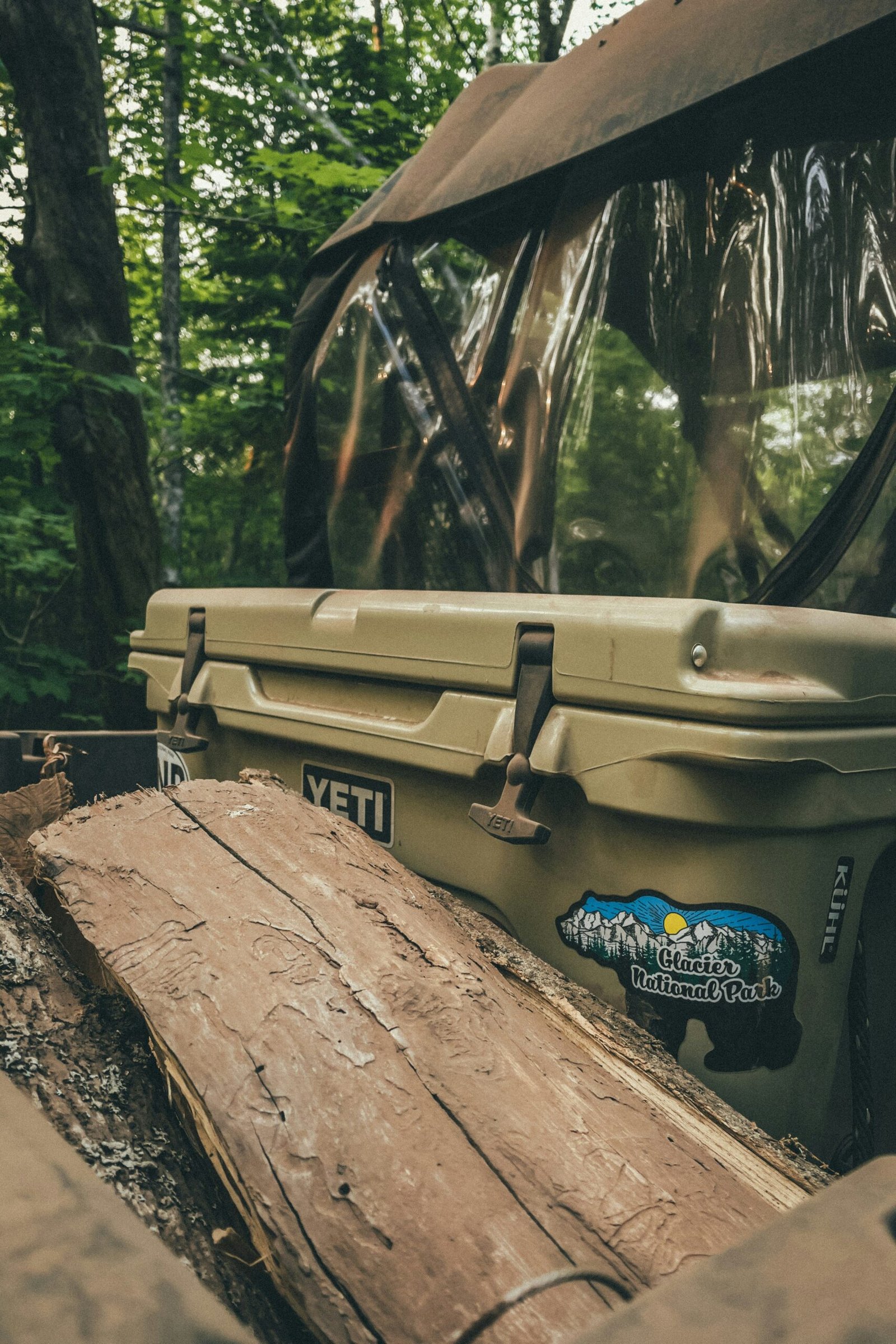
YETI vs RTIC vs Pelican — The Honest Head to Head
This is the comparison most hunters land on when researching premium coolers. Here’s the straight answer:
If ice retention over 7+ days matters: → Pelican 70QT — best ice retention of the three, best bear rating.
If brand recognition and accessory ecosystem matter: → YETI Tundra 65 — the cultural standard, best accessories, proven decade-long durability
If you want premium performance without the premium price: → RTIC 65 — 80% of YETI’s performance at 40-55% of the price
All three are genuinely excellent coolers. The differences are real but incremental at the performance level. The decision comes down to how much you use the cooler, whether bear certification matters for your hunting area, and how much the price difference matters to your budget.
How to Get Maximum Ice Retention From Any Cooler
The cooler is only half the equation. How you use it determines whether you achieve its rated ice retention or fall significantly short. Here’s what makes the biggest difference:
Pre-chill the cooler — always. An unconditioned cooler at room temperature will absorb significant heat from your first batch of ice before the insulation reaches thermal equilibrium. Pre-chill your cooler for 24 hours before your hunt by filling it with sacrificial ice — ice you’ll throw away before packing your actual contents. This step alone can add 1–2 days to your real-world ice retention.
Use block ice not cubed ice. Block ice melts significantly more slowly than cubed ice because it has less surface area relative to its mass. For a hunting cooler where you’re managing ice over multiple days a single 10-pound block lasts twice as long as 10 pounds of cubed ice. Many grocery stores and convenience stores sell block ice — know where to find it before your hunt.
Layer properly. Pack your cooler in layers — ice on the bottom, your coldest items (venison, fish) in the middle, ice on top, drinks and food you access frequently near the top. This layering keeps the items that matter most coldest and reduces temperature variation when you open the cooler for items you don’t need cold access to.
Keep it out of direct sun. A cooler in direct afternoon sun loses ice 2–3x faster than the same cooler in shade. If your truck bed has direct sun exposure use a reflective tarp over the cooler or find a shaded location at camp. This single change has more impact on real-world ice retention than the difference between most cooler brands.
Don’t drain the water. Ice water — the melt water from your ice — is colder than you might think (32°F) and acts as a thermal mass that helps maintain temperature. Draining the cooler every day removes this thermal mass and accelerates the warming of your remaining ice. Leave the melt water in the cooler until you’re replenishing ice or done with the hunt.
Minimize opening frequency. Every time you open the cooler you release cold air and introduce warm air. Organize your cooler so that items you access frequently — drinks, snacks — are in a separate smaller cooler and the game cooler stays closed except when necessary.
Keeping Wild Game Cold in the Field — Temperature Guidelines
Understanding the temperature requirements for wild game helps you understand what your cooler actually needs to accomplish:
The danger zone for wild game: 40°F to 140°F Bacteria multiply rapidly in this temperature range. Wild game kept in the danger zone for extended periods develops off-flavors, surface slime, and eventually becomes unsafe to eat. Your cooler needs to keep game below 40°F consistently — not just most of the time.
Field dressing and skinning speed matters: A deer that’s field dressed and skinned within 30–60 minutes of harvest cools significantly faster than one left intact. The hide acts as insulation that traps body heat. Getting the hide off and the carcass split allows surface area cooling that dramatically reduces the time required to bring the meat into a safe temperature range.
Pre-chilling the meat before the cooler: If you can hang a carcass overnight in conditions below 40°F before placing it in a cooler you’re starting with cold meat rather than warm meat. Cold meat entering a cold cooler is the optimal scenario — the cooler maintains temperature rather than trying to reduce it which takes significantly more ice.
Ice quantity: The standard recommendation is a 2:1 ice to contents ratio — two pounds of ice for every pound of game. For 60 pounds of venison that’s 120 pounds of ice minimum. This ratio ensures the cooler can both maintain temperature through ambient heat gain and absorb any remaining heat from the meat itself.
Cooler Accessories Worth Adding
YETI Ice — Dry Ice Alternative: Stays colder than regular ice, doesn’t produce melt water, lasts significantly longer. Compatible with YETI coolers and most premium alternatives. Ideal for long duration hunts where stopping for ice is impractical.
- Amazon: Search “YETI ICE reusable ice pack”
- Price: $20–$30
Cooler Lock: A simple padlock through the latch slots of a premium cooler prevents opportunistic theft at camp or in a truck bed. Both YETI and Pelican latches accommodate standard padlocks.
- Amazon: Search “cooler lock stainless”
- Price: $10–$20
Bear Spray: If you’re hunting in bear country a bear resistant cooler is essential — but so is bear spray accessible outside the cooler. The cooler protects your harvest. The bear spray protects you.
- Amazon: Search “Counter Assault bear spray”
- Price: $50–$75
Thermometer: A simple refrigerator thermometer inside your cooler lets you verify internal temperature rather than guessing. If the temperature rises above 40°F you know immediately rather than discovering it after the fact.
- Amazon: Search “refrigerator thermometer cooler”
- Price: $8–$15
Frequently Asked Questions
Is YETI actually worth the price over RTIC? For most hunters — no, not functionally. The RTIC 65 delivers 80–85% of YETI’s performance at 40-55% of the price. The functional difference in real hunting use is real but incremental — measured in hours of additional ice retention rather than days. YETI’s advantages are the accessory ecosystem, the bear resistance certification, and the decade-long durability track record. If those things matter to your specific hunting situation the premium is justified. If you primarily want excellent ice retention and construction quality the RTIC is the better value.
How do I know if I need a bear-resistant cooler? Check the regulations for the specific land management area you’re hunting. National Parks, many National Forests in bear habitat, and specific wilderness areas require or strongly recommend bear resistant containers for food storage including game. The IGBC website maintains a list of certified bear resistant containers. Both the YETI Tundra and Pelican 70QT are on that list.
How long can I keep deer meat in a cooler? Properly iced venison kept below 40°F consistently can be maintained in a cooler for 5–7 days without significant quality loss. After 7 days the quality begins to degrade noticeably even at proper temperatures. Plan your processing timeline accordingly — the cooler buys you time but it doesn’t eliminate the urgency of getting your harvest processed.
What size cooler do I need for a deer? A quartered whitetail deer — four leg quarters, backstraps, tenderloins, and trim — fits in a 65-quart cooler with adequate room for ice. A 45-quart cooler works for a smaller deer but is tight. For elk or large deer a 105-quart or larger is necessary. When in doubt go larger — a cooler that’s too small forces you to make decisions about ice-to-meat ratios that compromise preservation.
Can I use dry ice in a YETI or Pelican cooler? Yes — both YETI and Pelican coolers are compatible with dry ice. Dry ice lasts significantly longer than regular ice and produces no melt water — ideal for transporting frozen or semi-frozen game. Use gloves when handling dry ice, ensure the drain plug is open to allow CO2 to escape, and don’t place dry ice directly against meat you want to keep cold but not frozen.
How do I clean a cooler after keeping wild game in it? Drain completely. Rinse with cold water to remove debris. Wash the interior with a solution of warm water and dish soap — scrub all surfaces including the gasket. For persistent odors make a solution of warm water and baking soda or a diluted bleach solution (1 tablespoon bleach per gallon of water). Rinse thoroughly and allow to air dry completely with the lid open before storing. Never store a cooler with the lid sealed — trapped moisture promotes mold growth.
The Bottom Line — Which Cooler Should You Buy
Want real performance without a major investment: → Igloo BMX 52 — $150. Best budget cooler for hunters. Gets the job done for short season use.
Want premium performance at a fair price: → RTIC 65 — $230–$280. The value play. Rotomolded construction, 5-day ice retention, genuine quality at 40-55% of YETI’s price.
Want the cultural standard with the best accessory ecosystem: → YETI Tundra 65 — $375–$425. The benchmark. Bear certified. Built for a decade of hard hunting use.
Want the best possible ice retention and wheel system: → Pelican 70QT — $350–$400. Beats YETI on ice retention. The performance-first choice.
Need portable cold storage for day hunts: → YETI Hopper M30 — $300–$350. The soft cooler complement to your hard cooler.
Conclusion
The cooler is the last piece of equipment between your harvest and your freezer. After everything you invest in a hunting season — the scouting, the gear, the time, the patience — protecting your wild game with a cooler that actually performs is not where you want to discover you cut corners.
Every cooler on this list represents a genuine step up from the discount big-box options that fail hunters every fall. The RTIC gives you rotomolded premium performance at a price that’s hard to argue with. The YETI gives you the cultural standard and the accessory ecosystem. The Pelican gives you the best ice retention of any consumer cooler currently available. The Igloo BMX gives you real performance at an entry price.
What they all have in common is this — they protect what you worked for. From the field to the freezer, the cooler you choose is the equipment that finishes the job after everything else is done.
While on the topic, if you haven’t already, be sure to check out our Best Vacuum Sealers for Hunters article.
What cooler are you running this season? Drop it in the comments — I’m always looking for what’s working in other hunters’ trucks.