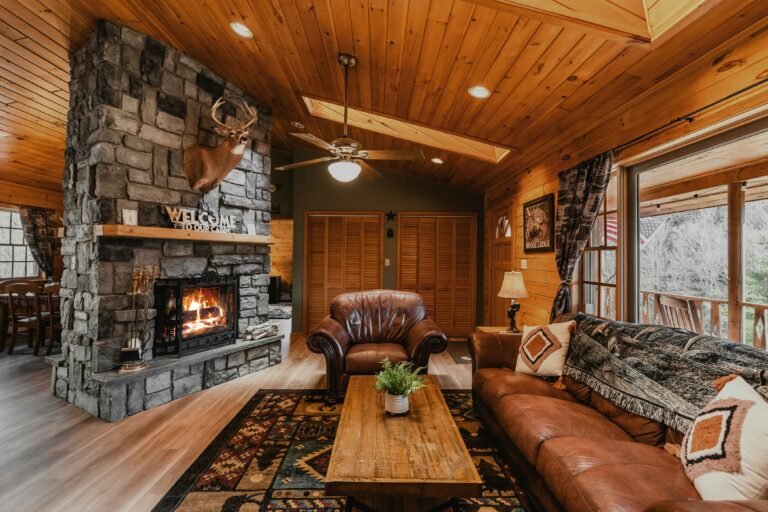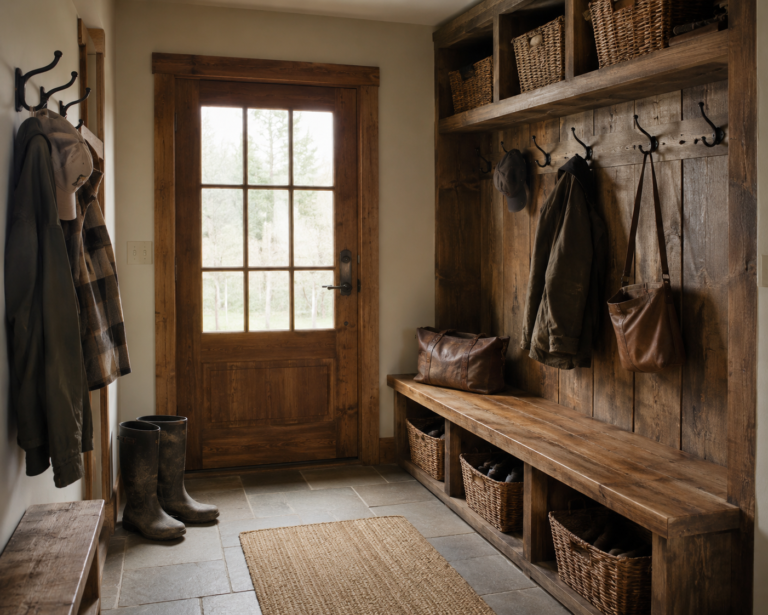
Hunting Cabin Bedroom Ideas — 10 Rustic Lodge Designs That Make You Never Want to Leave
This post contains affiliate links. If you purchase through these links, I may earn a small commission at no extra cost to you.
Introduction
There’s a specific feeling that the best hunting cabin bedrooms have. You walk in after a long day in the field — cold hands, tired legs, the kind of satisfied exhaustion that only comes from a morning well spent outside — and the room wraps around you like it was built exactly for this moment. Dark walls. Heavy bedding. The smell of cedar and wood smoke. A window that faces east so the morning light wakes you up before the alarm does.
That feeling doesn’t happen by accident. It’s the result of intentional design decisions — materials, colors, textures, and details that work together to create a space that feels genuinely like a hunting cabin rather than a hotel room with some deer prints on the wall.
I’ve spent a lot of time thinking about what makes a hunting cabin bedroom actually work — both aesthetically and practically. The ideas in this guide are specific, actionable, and designed around how outdoors men and women actually live in their cabins.
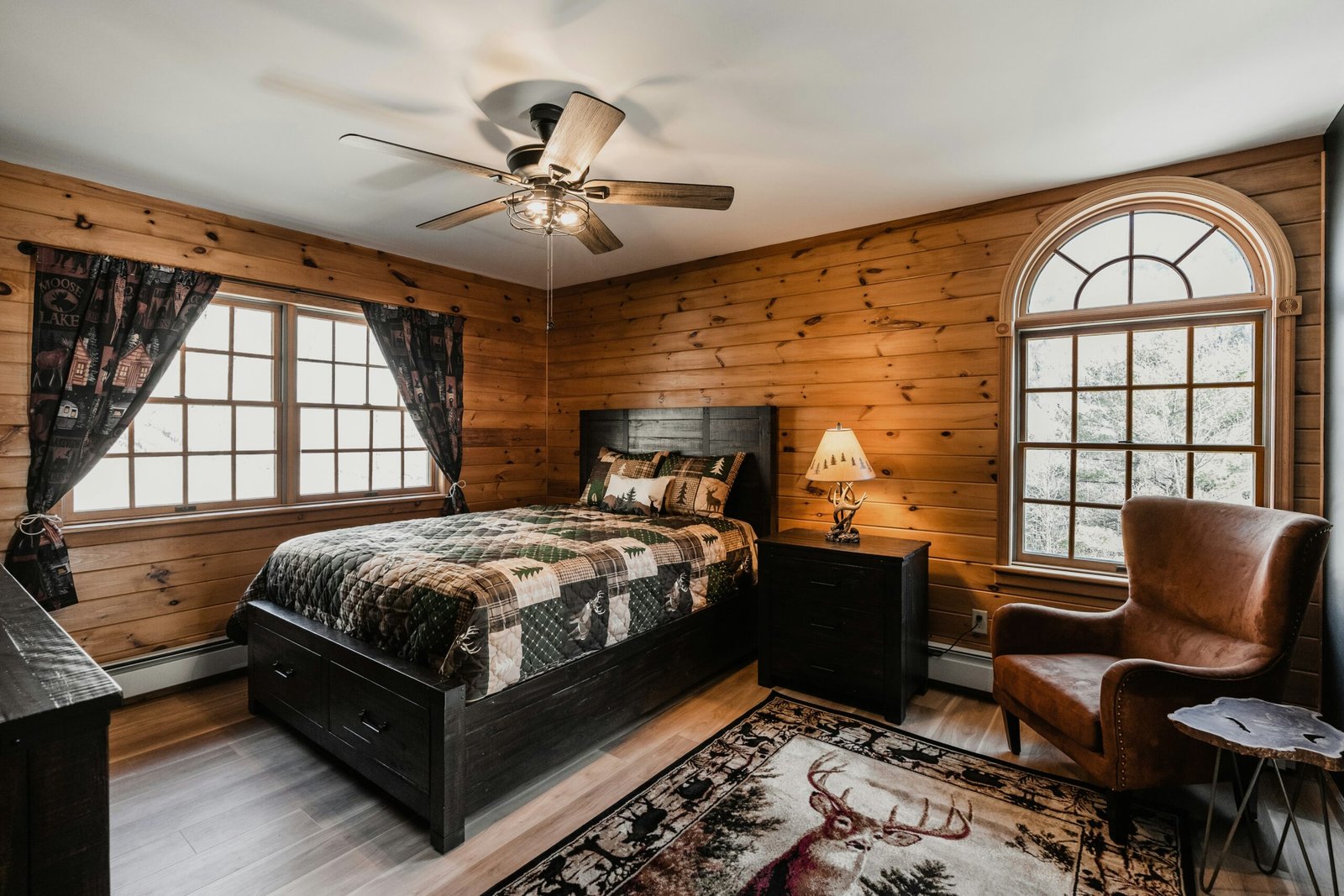
Table of Contents
What Makes a Hunting Cabin Bedroom Different
Before getting into the specific ideas let’s talk about what separates a genuinely good hunting cabin bedroom from one that just looks like it’s trying to be one.
Authenticity over decoration. The best cabin bedrooms don’t feel decorated — they feel accumulated. Like the room has been lived in, layered over time, and reflects the actual life of the people who sleep there. A mounted buck above the bed means something when it came from this property. A wool blanket at the foot of the bed means something when it’s been on every hunting trip for ten years. That’s the feeling to chase.
Function alongside aesthetics. A hunting cabin bedroom needs to work as hard as it looks good. Storage for gear that needs to be accessible before first light. Blackout capability for late summer when it stays light until 9 PM. Alarm clock placement that doesn’t require fumbling in the dark at 4 AM. These practical details are what separate a cabin bedroom that photographs well from one that actually works.
Dark and warm over light and bright. The design instinct for most bedrooms is light — white walls, natural light, airy fabrics. The hunting cabin bedroom goes the opposite direction. Dark walls, warm wood, heavy textiles, low amber lighting. It should feel like a den — a place to burrow in after hard days outside.
1. Dark Paint Colors — The Single Most Impactful Change
I cannot overstate how much a dark paint color transforms a cabin bedroom. It is the single highest impact change you can make to any bedroom that aspires to a lodge aesthetic — and it costs almost nothing compared to new furniture or flooring.
Dark walls do three things in a cabin bedroom simultaneously. They make the room feel smaller in a good way — intimate and cocooning rather than vast and hotel-like. They make everything else in the room — the wood tones, the warm bedding, the amber lighting — pop against the dark background. And they signal immediately that this is a deliberate design choice rather than a default.
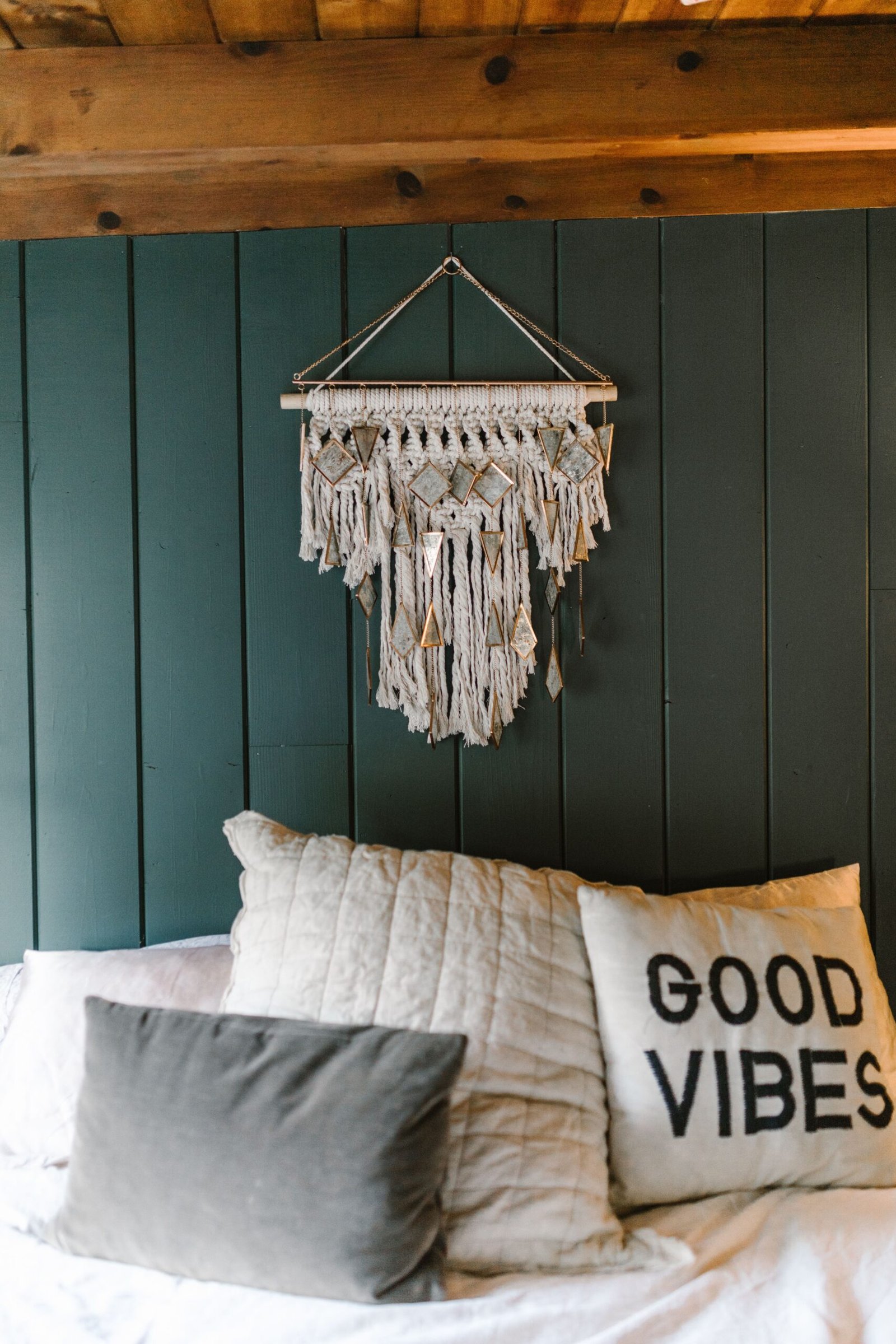
The colors that work best for hunting cabin bedrooms:
Deep forest green is the first choice for a reason — it connects the interior to the landscape outside in a way no other color does. Benjamin Moore’s Tarrytown Green and Sherwin Williams Hunt Club are both excellent options. Rich charcoal — almost black but warmer — is the second choice and works especially well in bedrooms with significant wood paneling. Deep navy works beautifully in fishing cabins specifically. Dark brown is the most traditional cabin color and the safest choice if you’re uncertain. You can also use natural wood walls if dark colors are not your vibe.
What to paint: Paint all four walls the same dark color. Don’t do an accent wall — that’s a different aesthetic entirely. In a cabin bedroom all four walls dark creates the den effect you’re after. If the room has a wood beam ceiling leave it natural — the contrast between dark walls and warm wood ceiling is one of the best combinations in cabin design.
One practical note: Dark paint shows scuffs and fingerprints more readily than light paint. Use an eggshell or satin finish rather than flat — it’s easier to wipe clean and holds up better in a space that gets rough use.
Cost range: $50–$150 for paint and supplies for a standard bedroom. Not sure what to get? You can grab this entire 10-piece painting kit that has everything to get you started.
2. Wood Panel Ceiling — The Lodge Detail That Changes Everything
If dark walls are the most impactful paint decision in a cabin bedroom, then a wood panel ceiling is the most impactful architectural decision. Nothing reads “lodge” faster than looking up and seeing warm natural wood overhead.
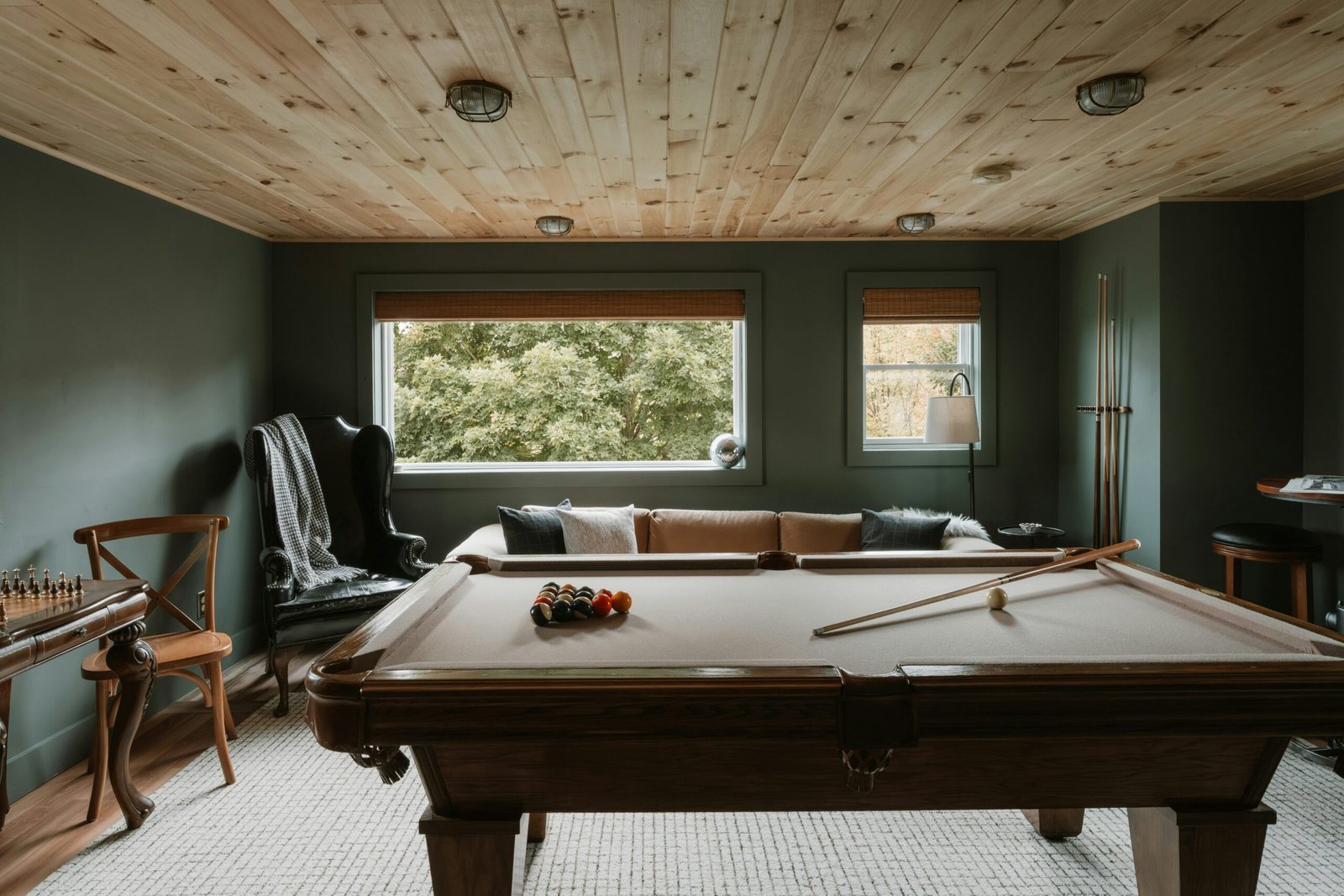
Tongue and groove pine is the classic choice — affordable, widely available, and beautiful when finished with a clear coat that lets the natural grain and knots show through. Cedar is more expensive but adds a subtle natural scent that makes the bedroom smell like the outdoors. Reclaimed barn wood is the most characterful option — the weathering and age marks tell a story that new wood never can.
The installation options by budget:
Real tongue and groove ceiling boards installed by a carpenter are the best option but require significant investment — $2,000–$6,000 for a standard bedroom. Shiplap installed horizontally on the ceiling gives a similar effect at lower cost and is a genuine DIY project for someone comfortable with basic carpentry — $500–$1,500. Faux wood ceiling planks have improved dramatically — the best ones are nearly indistinguishable from real wood in a cabin setting. These lightweight planks install directly over existing drywall and cost a fraction of real tongue and groove — $200–$500
The finish matters: Leave the ceiling wood natural or use a very light clear coat. The natural warm honey tone of pine against dark green walls is the combination to protect.
Cost range: $200–$6,000 depending on material and whether you DIY or hire out.
3. Layered Bedding — How to Build a Bed That Looks and Feels Like a Lodge
The bed is the visual centerpiece of any bedroom and in a hunting cabin bedroom the bedding is where you have the most opportunity to create that layered lived-in look that separates authentic lodge style from a themed imitation.
The key word is layered. A lodge-style cabin bed doesn’t have one duvet and two throw pillows — it has multiple layers of different weights, textures, and patterns that look like they’ve been added over time for function as much as aesthetics.
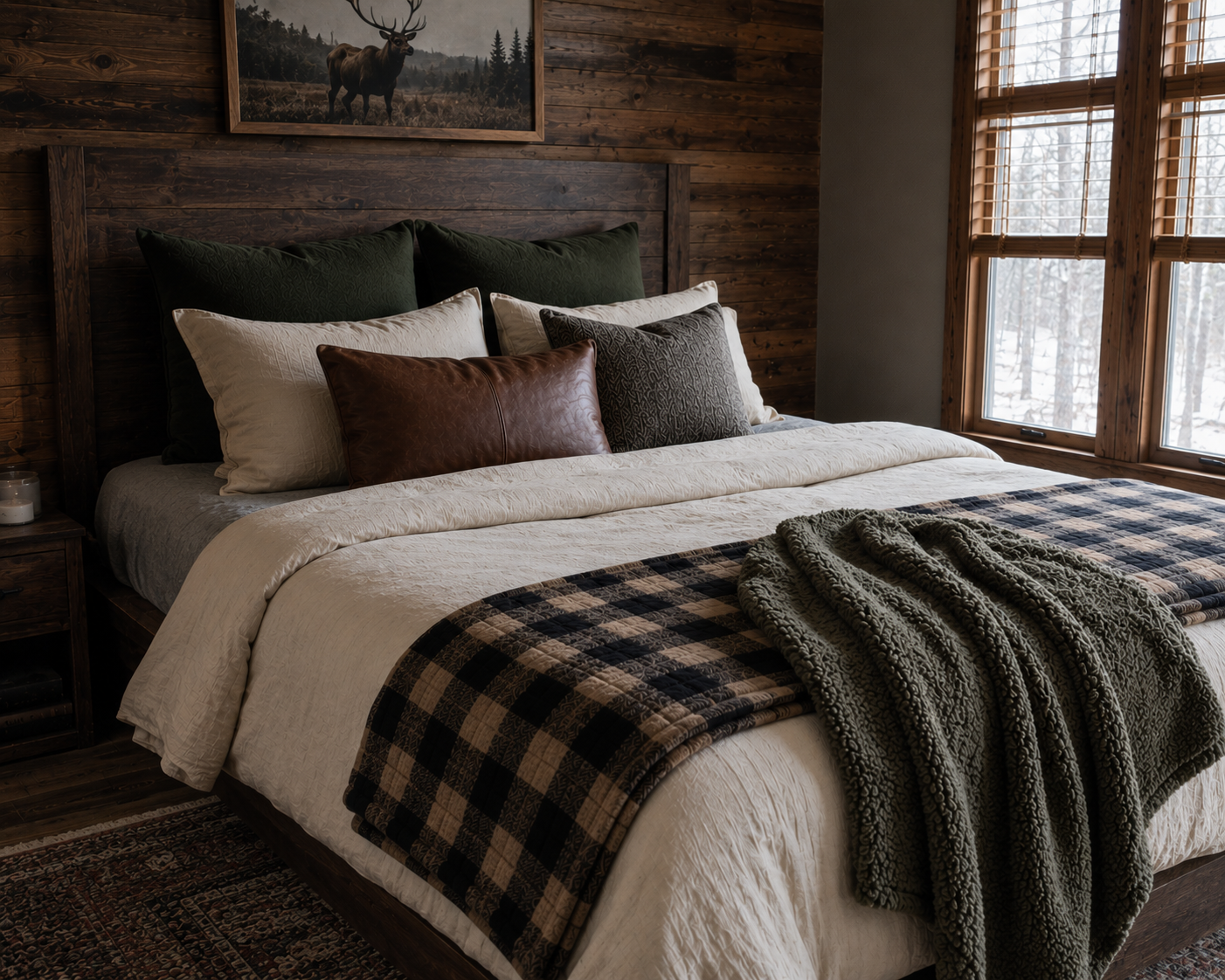
The layering system that works:
Start with a base layer — a simple solid colored duvet in a neutral tone. Cream, oatmeal, or warm white. Add a quilt folded at the foot of the bed in a buffalo check or plaid pattern. Layer a chunky knit or sherpa throw over one corner. Finally add three to four pillows in a mix of solid and textured covers — no matching sets, no decorative pillows that serve no purpose.
The patterns that work: Buffalo check is the most recognizable and versatile cabin pattern. Houndstooth is slightly more refined and works well in master bedrooms. Plaid in earthy tones reads rustic without being costume-y.
What to avoid: Matching bedding sets. Camo print. Too many decorative pillows. A hunting cabin bed should look like someone actually sleeps in it — not like it’s waiting for a photo shoot.
Cost range: $150–$500 for a complete layered bedding setup
4. Trophy Mount Display — Doing It Right
The trophy mount is the most distinctly hunting-specific element in a cabin bedroom and the one most likely to be done wrong. Done right a trophy display is a meaningful, intentional part of the room’s design. Done wrong it looks like a hunting store rather than a home.
The principles of a good trophy display:
Placement is everything. A single significant mount — your best buck, a memorable turkey, a fish that took 45 minutes to land — hung above the bed or on the focal wall commands attention and tells a story. Multiple mounts on the same wall need to be arranged with intention — odd numbers, varying heights, breathing room between them. Never line them up in a row at the same height.
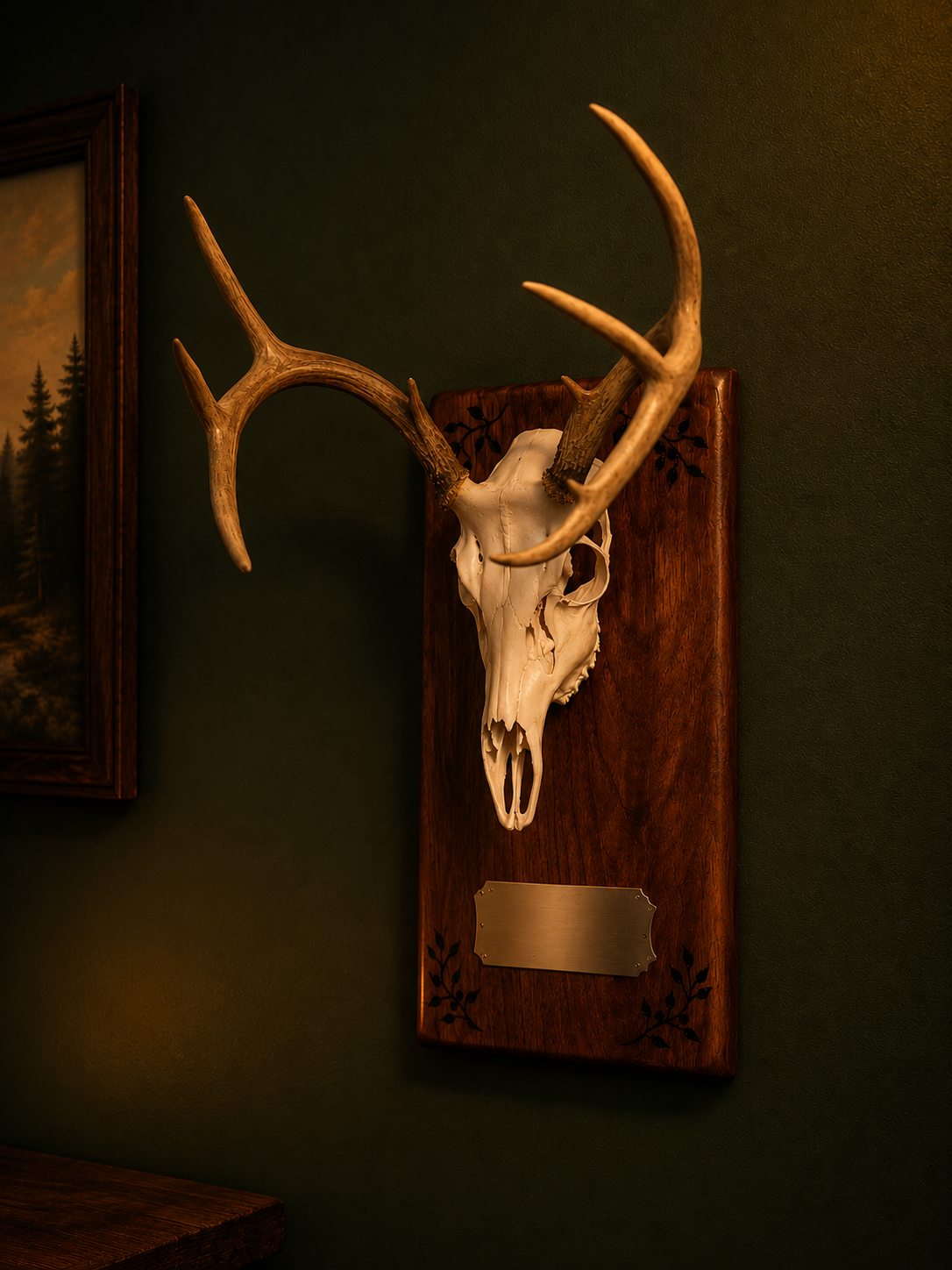
European mounts vs full shoulder mounts:
European mounts — the skull and antlers cleaned and whitened — are having a moment in cabin design for good reason. They’re cleaner and more architectural than full shoulder mounts and work in contemporary and traditional spaces equally well. A collection of European mounts in varying sizes on a dark wall is one of the most striking things you can do in a cabin bedroom.
Full shoulder mounts are more traditional and more dramatic. One excellent full shoulder mount is better than three mediocre ones. Personally, I prefer the shoulder mounts in the living room and European mounts in the bedroom. Be sure to check out our hunting cabin living room ideas article for inspiration in the living room.
Lighting the display: Add a small picture light above any significant mount. The light draws the eye, adds drama, and treats the mount like the piece of art it actually is.
Cost range: European mount DIY kit $40–$80. Picture light $20–$50.
5. Reclaimed Wood Headboard — The Focal Point That Ties Everything Together
The headboard is the first thing you see when you walk into a bedroom and the last thing you see before you close your eyes. In a hunting cabin bedroom a reclaimed wood headboard does more design work per dollar than almost any other single element.
Reclaimed barn wood has a quality that’s impossible to replicate with new materials — the weathering, the nail holes, the color variation, the grain patterns all tell a story of a previous life and add a depth of character that new wood spends decades trying to develop.
DIY options: A reclaimed wood headboard is one of the most achievable DIY projects in a cabin renovation. Source weathered barn boards from a local salvage yard or Craigslist seller. They are even available on Amazon. Cut to the width of your bed frame plus six to twelve inches on each side. Mount directly to the wall with heavy-duty anchors. The whole project costs $50–$200 in materials and an afternoon of work.
Purchased options: Etsy sellers and local furniture makers produce excellent reclaimed wood headboards at prices well below retail furniture stores.
The finish: Leave reclaimed wood raw or seal with a clear matte finish only. Staining reclaimed wood defeats the purpose — the natural variation and weathering is the point.
Cost range: $50–$200 DIY. $300–$800 purchased.
6. Antler Chandelier or Pendant Light — The Signature Cabin Lighting Piece
Lighting is the detail that makes everything else in a room look better or worse — and in a hunting cabin bedroom the right light fixture does more work than almost any other decorative element.
An antler chandelier is the most distinctly lodge-specific lighting choice available. The natural forms of the antlers create shadow patterns on the ceiling and walls when lit that no manufactured fixture can replicate. The amber glow of the bulbs inside an antler chandelier at 10 PM in a dark-walled cabin bedroom is one of the most genuinely beautiful things in interior design.
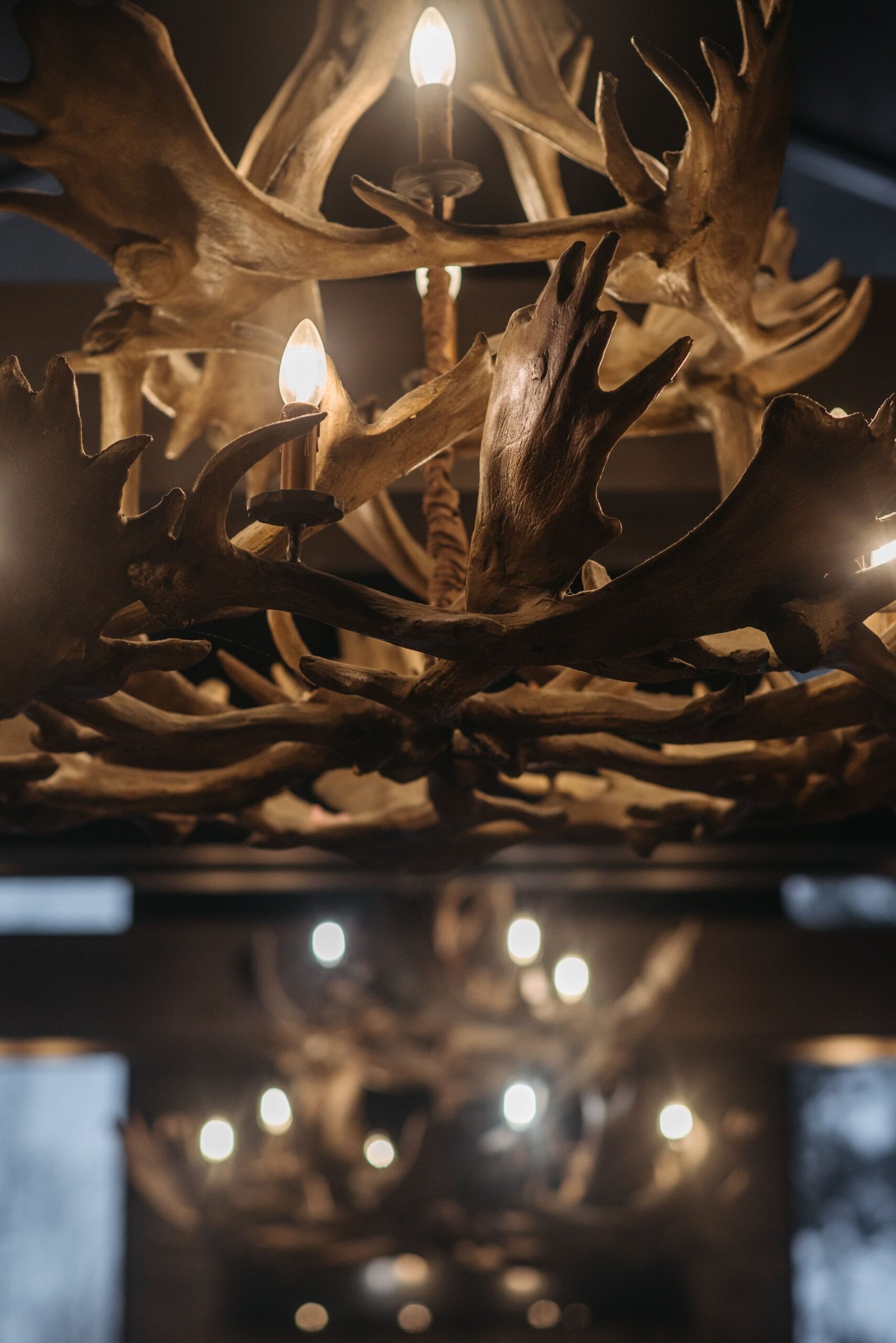
Real antler vs faux antler: Real shed antler chandeliers are available from specialty makers on Etsy — $300–$1,500 depending on size. Faux resin antler chandeliers have improved significantly and at a distance are nearly indistinguishable from real — $100–$400 on Amazon and Wayfair.
The bulb matters: Use Edison-style filament bulbs at 2200K–2700K color temperature. The warm amber light is essential — LED white bulbs ruin an antler chandelier completely.
Alternative: A simple wrought iron or dark bronze ceiling fixture with Edison bulbs achieves the warm amber glow at a fraction of the cost and works beautifully without the drama of a full antler chandelier.
Cost range: $100–$1,500 depending on real vs faux and size
7. Plaid Wool Blanket at the Foot of the Bed — The Detail That Reads Instantly
This might be the most underrated item in the entire cabin bedroom toolkit. A heavy plaid wool blanket folded and draped at the foot of the bed costs almost nothing, takes ten seconds to place, and immediately transforms how a bed reads in a room.
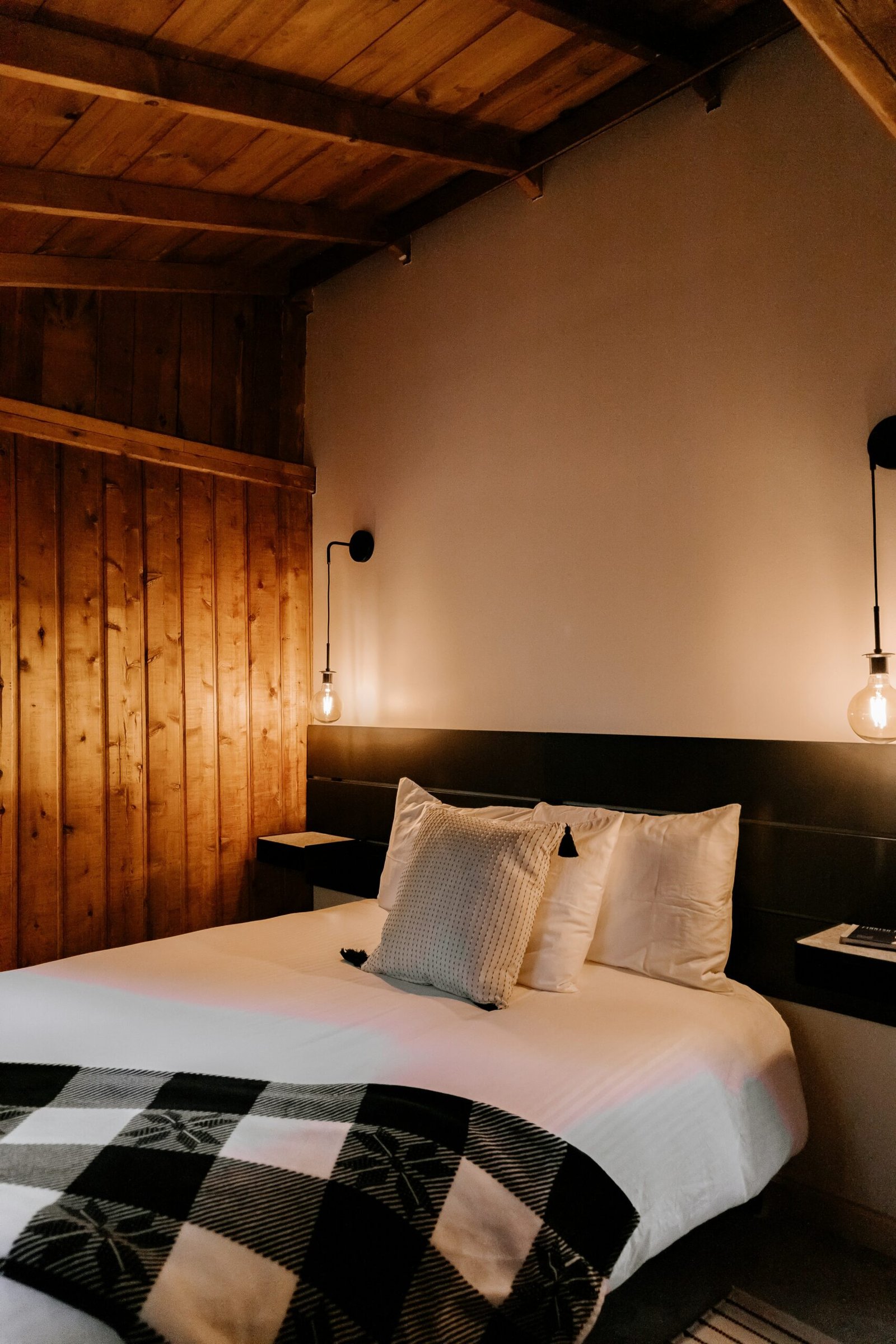
It signals warmth, practicality, and the specific kind of comfort that cabin bedrooms are built on. It also serves a genuine function — on cold mornings in the field season it’s the thing you reach for when you’re not ready to fully commit to being out of bed yet.
The patterns and colors that work: Traditional tartan in deep red and black. Buffalo check in forest green and cream. A simple bold stripe in navy and cream.
The brands worth knowing: Pendleton is the American standard for quality wool blankets and their plaid patterns are exactly right for a hunting cabin. Faribault Woolen Mill makes excellent American wool blankets at a slightly lower price point. Both are available on Amazon and worth the investment over cheaper alternatives that pill quickly.
Cost range: $60–$180 for a quality wool throw blanket
8. Blackout Curtains in a Natural Fabric — Sleep and Aesthetics Together
Blackout capability in a hunting cabin bedroom isn’t a luxury — it’s a function. Early summer hunts, late evenings on the water, afternoon naps between morning and evening sits — all of them benefit from the ability to make the bedroom genuinely dark regardless of what time it is outside.
But standard blackout curtains look exactly like what they are — functional and institutional. The solution is layered window treatment — a blackout liner behind a natural fabric curtain that looks beautiful from the room while blocking light completely when needed.
The combination that works: Heavy linen or burlap-textured curtains in a natural or dark tone as the face fabric. A separate blackout liner panel behind the decorative curtain — this is where the function lives and it’s completely hidden when the curtains are open.
The hardware matters: Use a simple iron or dark bronze curtain rod. Extend the rod 6–8 inches beyond the window frame on each side so the curtains fully clear the window when open and let maximum light in during the day.
Cost range: $60–$200 per window for curtains and hardware
9. Hardwood or Reclaimed Wood Flooring With an Area Rug
The floor is the foundation of every room’s design and in a hunting cabin bedroom the right flooring decision sets the tone for everything that goes on top of it.
The flooring that works: Dark stained hardwood is the gold standard — a jacobean or ebony stain on oak or walnut creates a floor that looks like it belongs in a proper lodge. Reclaimed barn wood flooring has the same character advantage as reclaimed wood in other applications. Stained concrete is an excellent option in slab-on-grade cabins — practical, durable, and beautiful with the right rug on top.
The area rug: Any cabin bedroom floor benefits from a significant area rug under and around the bed. A cowhide rug is the most distinctly hunting-specific option — natural, beautiful, and durable. A wool area rug in earthy tones is more traditional and equally appropriate. A jute or sisal rug adds texture at a more accessible price point.
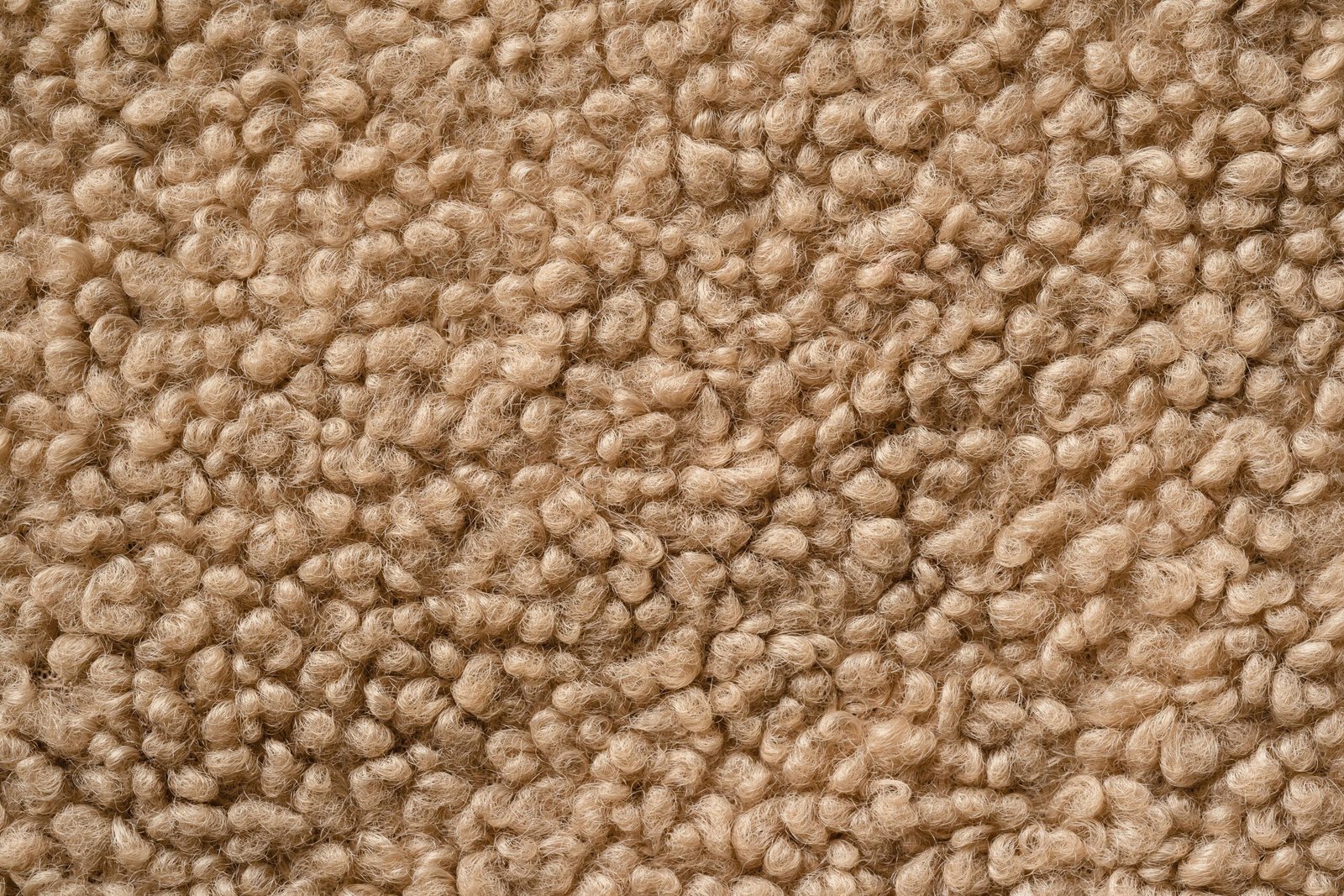
The rug should be large enough that you step onto it when you get out of bed — a rug that only partially fits under the bed looks like an afterthought.
Cost range: $3–$12 per square foot for flooring. $100–$600 for a quality area rug.
10. The Details That Make It Feel Real — Small Touches That Add Up
The difference between a cabin bedroom that looks designed and one that looks authentic almost always comes down to the small details accumulated over time. These are the things that cost almost nothing and make the biggest difference in how the room feels.
A hook on the back of the bedroom door: A heavy-duty wrought iron hook handles the hunting pack, the day’s jacket, and the hat that need to be accessible but off the floor. Functional and intentional.
Vintage hunting and fishing prints: Frame vintage prints — original lithographs, antique magazine covers, hand-drawn wildlife illustrations — in simple dark wood frames. Etsy has an enormous selection of original and high-quality reproduction vintage outdoor prints at every price point. A simple dark walnut frame on a vintage trout fishing print hung on a dark green wall is one of the most visually satisfying combinations in cabin bedroom design.
Beeswax candles: A pair of cream or ivory pillar candles on the dresser or nightstand add warm light and the subtle honey scent of beeswax. Light them in the evening and the room smells like a well-maintained lodge.
A stack of field guides or hunting books: A small stack of relevant books — a regional bird guide, Aldo Leopold’s Sand County Almanac, a well-worn hunting memoir — on the nightstand adds character and invites the kind of quiet reading that cabin evenings are made for.
A cedar-lined closet: Lining your cabin bedroom closet with aromatic cedar repels moths, keeps stored hunting clothing smelling natural rather than like household odors, and makes the closet smell like the outdoors every time you open the door. Cedar closet lining panels install directly over existing surfaces in an afternoon — $100–$300 for a standard closet.
Cost range: $20–$300 for all of these details combined
The Complete Hunting Cabin Bedroom — Putting It All Together
A fully realized hunting cabin bedroom brings all of these elements together into a space that functions as well as it looks and feels as authentic as the life it reflects. Here’s what the complete version includes:
Walls and ceiling: Dark forest green or charcoal walls — all four. Tongue and groove pine or cedar ceiling — natural finish. Simple baseboards and window trim in white or cream for contrast.
Bed and bedding: Reclaimed wood headboard. Layered bedding in neutral base with plaid or buffalo check accent pieces. Heavy wool throw at the foot. Simple platform or traditional frame in dark wood.
Lighting: Antler chandelier or dark bronze ceiling fixture with Edison bulbs. Warm amber table lamps on nightstands. Picture light above any significant trophy mount.
Furniture: Raw edge wood or vintage nightstands. Dark wood dresser. Cedar-lined closet.
Decor: One significant trophy mount — full shoulder or European. Vintage hunting and fishing prints in dark frames. Small meaningful objects on dresser and nightstand.
Textiles: Plaid wool blanket. Natural linen curtains with blackout liner. Cowhide or wool area rug.
Details: Wrought iron door hook. Beeswax candles. Stack of field guides.
Conclusion
The hunting cabin bedroom at its best is one of the most genuinely comfortable rooms in any home. Not comfortable in the hotel sense — thread count and blackout curtains and perfect climate control. Comfortable in the way that a worn leather chair by a fire is comfortable. In the way that a wool blanket that’s been on a dozen hunting trips is comfortable.
The ten ideas in this guide are all working toward the same thing — a bedroom that feels like the outdoor life you actually live rather than a catalog version of what someone thinks that life should look like. Dark walls that make the room feel like a den. Wood overhead that connects you to the materials of the landscape. Layered textiles that have weight and warmth and genuine function. A trophy mount that means something.
Start with the paint. Add the bedding. Hang the trophy mount properly and light it well. The rest follows from there.
What’s the detail in your cabin bedroom that makes it feel most like yours? Drop it in the comments — I’m always looking for the next idea!