Mudroom Ideas — 20 Designs That Work for Hunters, Families, and Everyone In Between
This post contains affiliate links. If you purchase through these links, I may earn a small commission at no extra cost to you.
Introduction
The mudroom is the hardest working room in any home. It’s where the outside world meets the inside one — where muddy boots get pulled off, wet jackets get hung, backpacks get dropped, and the chaos of coming home gets contained before it spreads through the rest of the house.
Done right a mudroom saves you from that chaos permanently. Done wrong it becomes the room everyone walks through as fast as possible because there’s nowhere to put anything. I’ve seen both versions — and the difference almost always comes down to whether the space was designed with intention or just assembled from whatever was available.
Here’s something worth knowing: according to the National Association of Home Builders mudrooms are now one of the top five most requested features in new home construction. And it makes complete sense. Whether you’re a hunter coming in from the field with wet waders and a full pack, a parent managing school bags and sports equipment, or just someone who wants a clean organized entry — a well-designed mudroom changes how your home functions every single day.
This guide covers 20 mudroom ideas that work for everyone — from the everyday family home to the dedicated hunting cabin. Practical, specific, and designed around how people actually live rather than how a catalog thinks they should.
Jump To:
What Makes a Great Mudroom — The Foundation
Before getting into specific ideas let’s talk about what every great mudroom has in common regardless of who lives there.
Function before aesthetics. The most beautiful mudroom that doesn’t have enough hooks, adequate boot storage, or proper drainage is just an expensive entryway. Get the function right first and the aesthetics will follow naturally.
Designed for how you actually live. A mudroom for a family with three kids looks different from one for a hunter who comes home with wet gear every morning from October through December. Know your specific needs before you design the space.
Durable materials throughout. The mudroom is the most abused room in the house. Every surface — floor, wall, bench, hooks — needs to handle real life without showing it.
Enough storage for everything. The golden rule of mudroom design: double the storage you think you need. You will fill it. Every time.
Everyday Mudroom Ideas — For Any Home
1. The Classic Hook and Bench — Simple Done Right
The simplest mudroom setup that works for almost everyone is a built-in bench with storage underneath and a row of hooks above. It sounds basic because it is — and when it’s executed well it solves 80% of everyday mudroom problems with one wall of thoughtfully designed furniture.
The key is getting the proportions right. Most people install benches that are too short, hooks that are too few, and cubbies that are too small for how they actually live. Here’s what actually works:
- Bench height: 18 inches — comfortable for sitting while putting on shoes without being too low to stand up from easily
- Bench depth: 16–18 inches — deep enough for storage cubbies that fit a backpack or shoe basket
- Hook height: 60–72 inches from the floor for adult coats — add a lower row at 40–48 inches for kids
- Hooks per person: minimum 3 — one for an everyday coat, one for a heavy coat, one for a bag or backpack
- Cubby width: 14–16 inches each — wide enough for a pair of shoes plus a small basket
A bench with three cubbies and nine hooks handles a family of three comfortably. Scale up from there. The biggest mistake is underbuilding and having to redo it in two years.
Material recommendations:
- Painted MDF for a clean contemporary look — durable and easy to touch up
- Solid pine or oak stained dark for a rustic or lodge aesthetic
- A combination — painted upper case work with a stained wood bench top
Cost range: $300–$1,500 DIY. $800–$3,000 professionally built.
2. The Drop Zone — Containing Daily Chaos
The drop zone concept is simple — designate one specific place for everything that comes in the door daily and make it impossible not to use. Phone chargers, keys, mail, sunglasses, the things that normally end up on the kitchen counter or the dining room table.
A successful drop zone has:
- A wall-mounted key holder — simple hooks or a key cabinet with a small mirror
- A shallow tray or bowl for everyday carry items — wallet, sunglasses, watch
- A charging station with a power strip and cable management built into the wall or bench
- A small bulletin board or chalkboard for notes, mail, and reminders
- Adequate lighting — you need to be able to find your keys at 6 AM
The drop zone works best at the end of the bench nearest the door — the first thing you reach when you come in. Make it the natural landing spot rather than fighting human nature by expecting things to be put away perfectly.
Cost range: $50–$300 depending on how built-in you make it
3. Open Cubbies vs Closed Cabinets — Know the Difference
One of the most important design decisions in any mudroom is whether to use open cubbies or closed cabinets — and the right answer depends entirely on who uses the space.
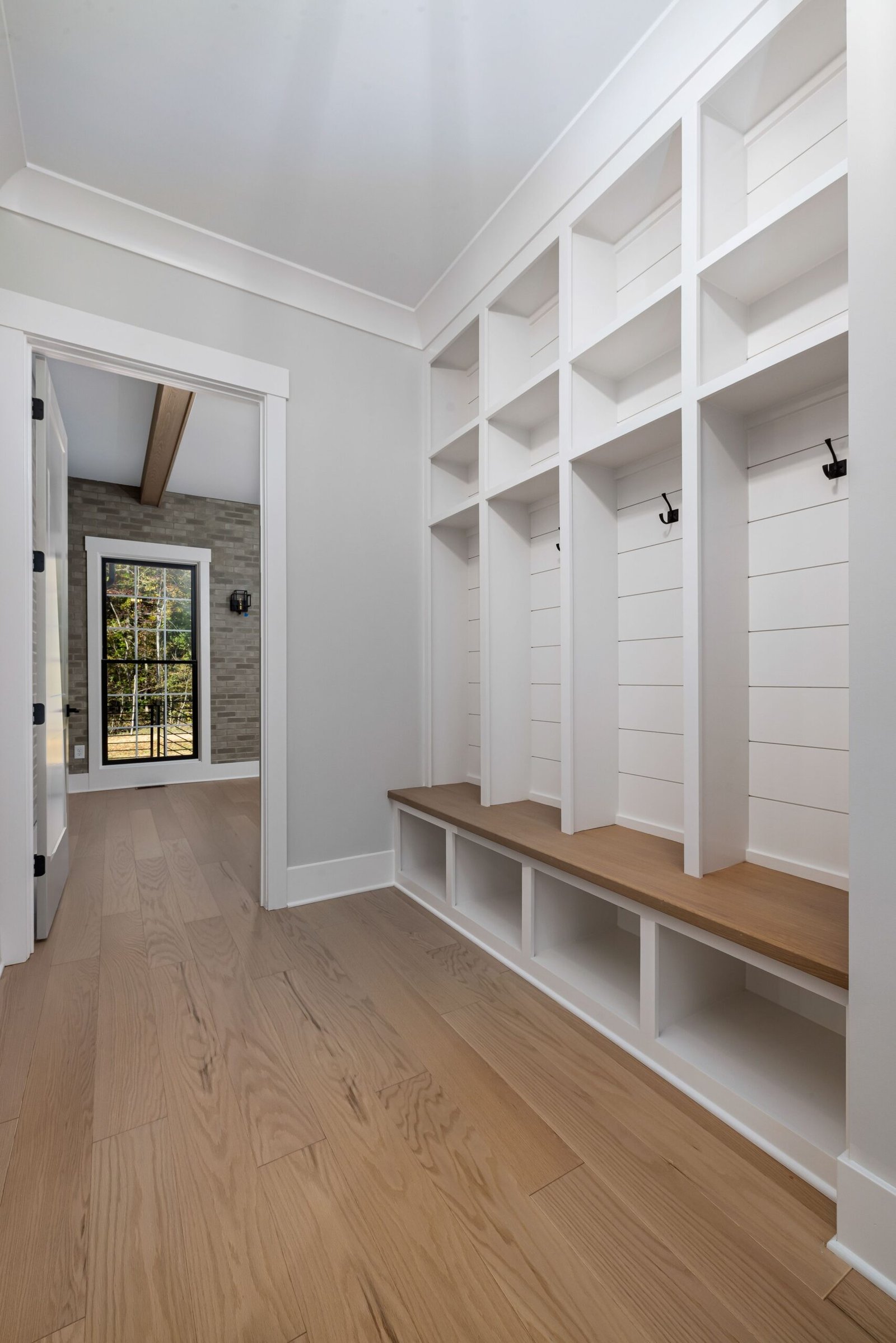
Open cubbies work best when:
- Kids are involved — they can see what belongs where
- Gear needs to air out — hunting gear, sports equipment, wet items
- You want easy grab-and-go access
- You trust the people using the space to keep it tidy
Closed cabinets work best when:
- The mudroom is visible from the main living area
- You want a cleaner more polished look
- Off-season storage is part of the plan
- Guests will see the space regularly
The hybrid approach: Most successful mudrooms use a combination — open cubbies at floor level for everyday shoes and bags, closed upper cabinets for off-season gear and items you want out of sight. This gives you the function of open storage and the aesthetics of closed cabinetry simultaneously.
Cost range: Open cubbies $200–$600. Closed cabinets add $300–$800 to the total.
4. Mudroom Locker System — Individual Zones for Each Person
A locker-style mudroom assigns each family member their own dedicated vertical zone — from floor to ceiling — with their own hooks, shelf, and cubby. It’s the most organized system available for a family of two or more because everything has a designated owner and a designated place.
Each locker typically includes:
- A tall upper hook for coats and bags
- A shelf at mid-height for hats, gloves, and small items
- A lower cubby for shoes or boots
- Optional: a small door on the upper section for a cleaner look
For the hunting family: One locker can be dedicated entirely to hunting gear — scent-controlled clothing hung separately from everyday wear, hunting boots in the lower cubby, pack on the tall hook. This creates a natural scent control zone without requiring a separate cabinet.
Labeling: Label each locker clearly — names, initials, or even a photo for younger kids. Sounds simple. Makes a real difference in whether the system actually gets used.
Cost range: $150–$400 per locker unit. Full systems run $600–$2,000 for a family of four.
5. The Mudroom Bench with Hidden Storage — Maximize Every Inch
A mudroom bench with a hinged top that opens to reveal storage inside is one of the most space-efficient designs available — especially for smaller mudrooms where floor space is limited.
The hidden storage is perfect for:
- Off-season items — summer shoes in winter, winter gloves in summer
- Sports equipment that doesn’t fit in the cubbies
- Pet leashes, pet gear, and outdoor dog accessories
- Extra outdoor blankets and throws for the porch or patio
- Emergency items — flashlight, jumper cables, first aid kit
Design considerations:
- The hinge mechanism needs to be heavy-duty — this bench gets sat on daily
- Gas lift hinges make opening easy even when items are stacked on top
- Line the interior with cedar — it repels moths and keeps contents smelling fresh
- A soft-close mechanism prevents the lid from slamming
Cost range: $200–$600 DIY. $500–$1,200 from a furniture retailer.
6. Small Mudroom Ideas — When Space Is Limited
Not every home has a dedicated mudroom. Sometimes it’s a narrow hallway, a corner of the laundry room, or just the space between the garage door and the kitchen. Small spaces can still be highly functional with the right approach.
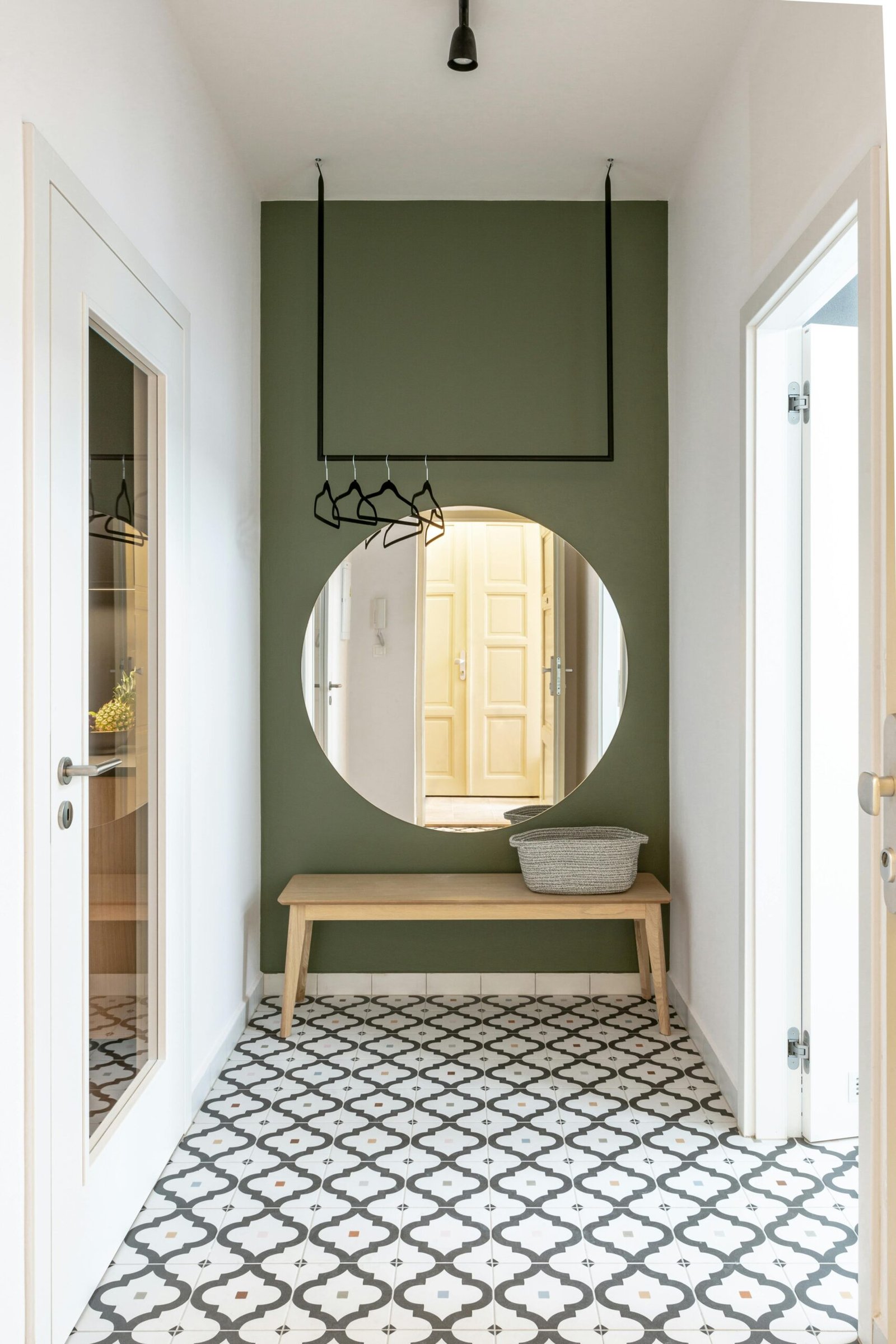
The best small mudroom strategies:
Go vertical. When floor space is limited take the storage up the wall. Tall narrow units that reach the ceiling use the most overlooked storage space in any home — the area above eye level. Upper shelves store seasonal items, lower areas handle daily use.
Use the back of the door. An over-door organizer on the mudroom door or the door leading to the garage adds significant storage without taking any floor or wall space. Hooks for bags, pockets for shoes and small items, racks for hats and gloves.
Choose furniture that does double duty. A narrow bench with storage underneath. A mirror with built-in hooks. A slim console table with baskets underneath. Every piece should serve more than one function in a small space.
Keep it edited. A small mudroom cannot store everything. Decide what genuinely needs to live there — daily use items only — and find storage elsewhere for everything else. Off-season gear, sports equipment, and rarely used items should live in a closet or garage.
Cost range: $100–$500 for a well-executed small mudroom setup
7. Mudroom Laundry Room Combination — Double the Function
Combining the mudroom with the laundry room is one of the most practical layouts available especially for hunting families and active households. Dirty gear comes off at the door and goes directly into the washer — it never enters the main house.
What makes the combination work:
- A front-loading washer and dryer stacked or side by side at one end of the mudroom
- Folding counter above or beside the machines
- Upper cabinets for detergent and laundry supplies
- A utility sink nearby for pre-treating stains and rinsing gear
- A hanging rod for air-drying items that can’t go in the dryer
For hunters specifically: A dedicated front-loading washer used only for hunting clothing with scent-free detergent is the gold standard for scent control. Having it in the mudroom rather than the main laundry means hunting clothing never passes through the house picking up household odors.
Cost range: $800–$3,000 for a combined mudroom-laundry depending on appliances and buildout
8. Mudroom Flooring — Getting It Right
The floor is the most important material decision in any mudroom because it’s the first thing that gets abused and the hardest to change after the fact. Get this right from the start.
Best mudroom flooring options:
Porcelain tile: The gold standard for mudrooms. Completely waterproof, extremely durable, easy to clean, and available in styles that complement any aesthetic from contemporary to rustic lodge. Choose a textured matte finish — polished tile is dangerously slippery when wet. Large format tiles (12×24 or larger) are easier to keep clean because fewer grout lines collect dirt.
Sealed concrete: The most durable option available. Stained or painted concrete with a sealed finish handles everything — water, mud, pet accidents, cleaning products. Easy to mop. The industrial look complements a rustic or cabin aesthetic naturally and costs less than tile in most markets.
Luxury vinyl plank: A practical option for budget-conscious mudroom builds. Waterproof (choose 100% waterproof not just water resistant), comfortable underfoot, and available in wood-look styles that complement a lodge aesthetic. Not as durable as tile or concrete but significantly less expensive.
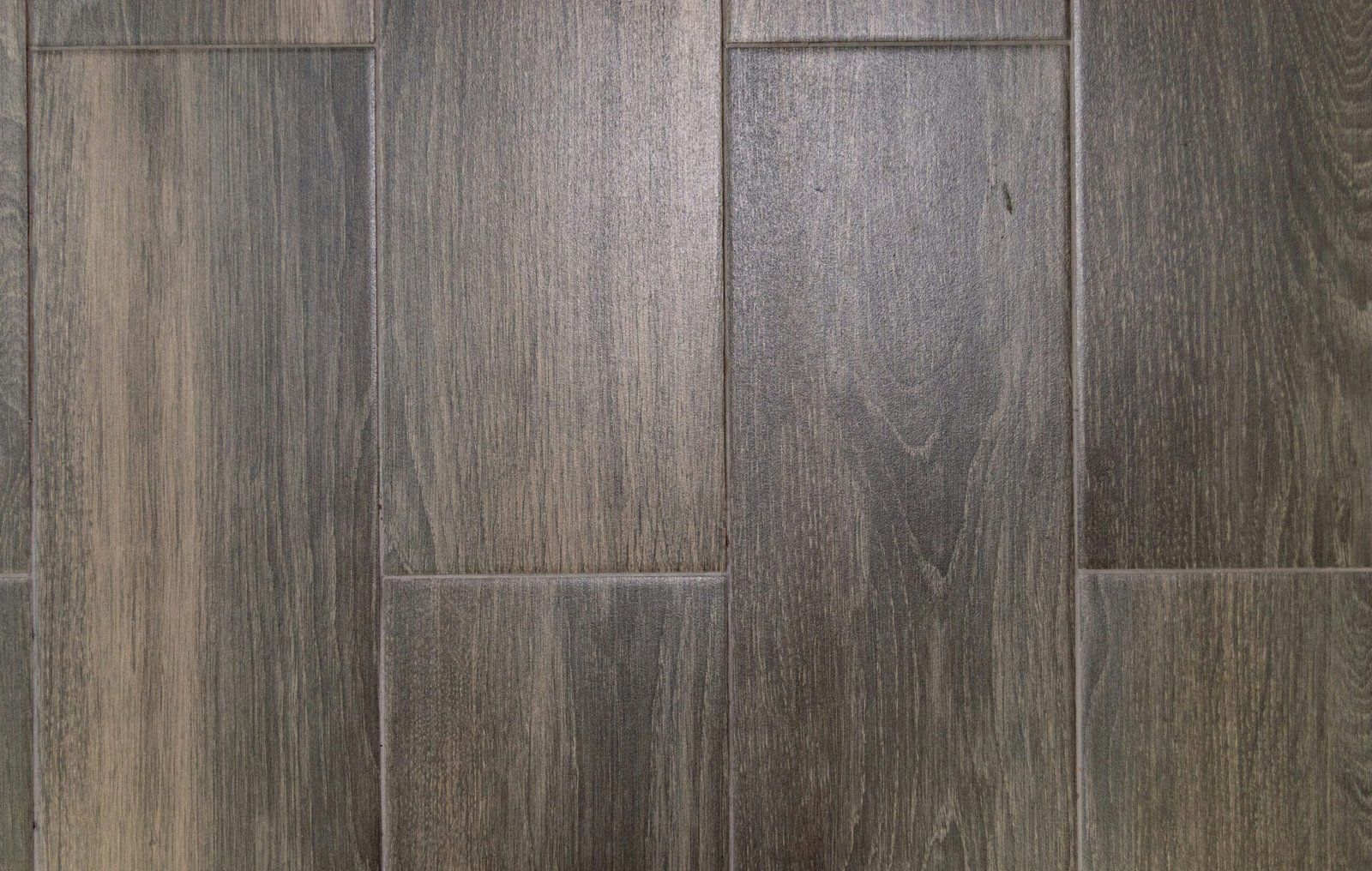
What to avoid: Hardwood floors — warp and buckle with repeated water exposure. Carpet — absorbs moisture, odors, and stains permanently. Standard laminate — not truly waterproof at the seams.
Cost range: $3–$8 per square foot for vinyl. $5–$12 for tile. $4–$10 for sealed concrete.
Hunter-Specific Mudroom Features
9. The Boot Drying Station — A Hunter’s Most Important Feature
If there’s one thing that separates a hunter’s mudroom from a standard entryway it’s the boots. Multiple pairs. Regularly wet. Need to dry completely between uses or they deteriorate fast and smell even faster.
A proper boot drying station has three components:
- An open slat rack that allows airflow around every surface of the boot — never solid shelving which traps moisture
- A removable drip tray underneath to catch water without creating a puddle
- A PEET boot dryer for wet season hunting — runs quietly overnight and completely dries even the wettest insulated boots by morning
The scent consideration for hunters: Keep hunting boots completely separate from everyday footwear. Hunting boots that absorb household odors — cooking, pets, cleaning products — carry those odors into the field. A dedicated hunting boot section on the opposite side of the mudroom from everyday shoes solves this permanently.
Cost range: $50–$300 for boot rack and dryer combined
10. Wader Hanging System — Protect Your Most Expensive Gear
Neoprene waders left crumpled on the floor develop mold, hold moisture in the folds, and deteriorate significantly faster than waders that are properly hung and dried. A dedicated wader hanging system is one of the highest return investments an angler or waterfowl hunter can make in their mudroom.
Waders should hang from the suspender straps — not folded over a hook which creases the neoprene permanently. A wide horizontal bar or dedicated wader hangers allow the full wader to hang freely with maximum airflow.
- Mount a 2-inch diameter wooden dowel or galvanized pipe at ceiling height — waders hang full length without touching the floor
- Add S-hooks for the suspender straps
- Position near a floor drain or waterproof mat — waders drip when first hung
- Allow at least 24 inches of horizontal space per pair of waders
- A fan mounted above accelerates drying significantly
Cost range: $20–$150 depending on setup complexity
11. Scent Control Zone — The Feature Serious Hunters Need
Scent-controlled hunting clothing cannot be stored near household odors without compromising the treatment. This is the mudroom feature that separates serious hunters from casual ones.
A dedicated section of the mudroom — ideally a sealed cabinet — where scent-treated clothing is stored away from cooking smells, pet odors, and cleaning products makes a measurable difference in field performance.
- A sealed cabinet or locker dedicated solely to scent-controlled hunting clothing
- Activated carbon panels on the cabinet interior absorb residual odors
- Scent-lock storage bags inside for each clothing item
- Keep this cabinet away from the kitchen side of the mudroom
- Never store regular clothing in this zone
Cost range: $50–$500 depending on how seriously you take scent control
12. High-Capacity Hook Wall — For Serious Gear Loads
The standard four-hook entryway organizer is completely inadequate for a hunter’s gear load. During season you’re hanging a pack, a jacket, a base layer, a hat, binocular straps, and a dozen other things every single day. A serious hook wall handles it all.

- A full wall of horizontal boards with hooks every 8–10 inches
- Multiple rows at different heights — tall hooks at ceiling height for packs and long items, mid-height for jackets and gear, lower hooks for day bags
- Heavy duty hooks rated for at least 25 lbs each — hunting packs are heavy
- A mix of single hooks and double hooks
The lodge style hook wall: For a true Field & Ember Co. aesthetic use wrought iron or antler-style hooks on reclaimed wood boards. The hardware signals the outdoor lifestyle immediately and looks intentional rather than utilitarian.
Cost range: $100–$400 for a full hook wall
13. Dedicated Pack Station — Repack Fast Before Dawn
A specific area where your pack lives, gear is organized by category, and repacking takes 10 minutes rather than 45 — that’s the pack station. Every hunter who has scrambled to repack a bag at 4 AM understands its value immediately.
- A heavy-duty hook or shelf at the right height to hang or set the open pack
- Shelving or bins organized by gear category — navigation, first aid, calls, optics, food
- A charging station for electronics — headlamps, rangefinders, GPS units
- A laminated gear checklist on the wall above — reusable every morning
- Good dedicated lighting above the pack station
The category system: Organize surrounding shelves in the exact order you pack your bag — bottom of pack items on lower shelves, top of pack items on upper shelves. Repacking becomes working down the shelves in order.
Cost range: $100–$300 for shelving, hooks, and organization bins
14. Bow and Weapon Storage — Safe and Accessible
Weapon storage in a mudroom requires balancing security and accessibility. Your rifle or bow needs to be accessible enough to grab quickly before first light but secure enough to meet legal requirements.
Bow storage:
- A wall-mounted bow rack — horizontal pegs that cradle the limbs without stressing the string
- Position at eye level for easy access
- Include a separate arrow quiver holder beside the bow rack
- A bow press mounted nearby keeps everything in one place
Rifle and shotgun storage:
- A locking gun cabinet mounted to the wall stud
- Include a dehumidifier rod inside to prevent moisture damage
- A separate locked compartment for ammunition
Cost range: $150–$800 depending on capacity and security level
Lodge Style and Aesthetic Mudroom Ideas
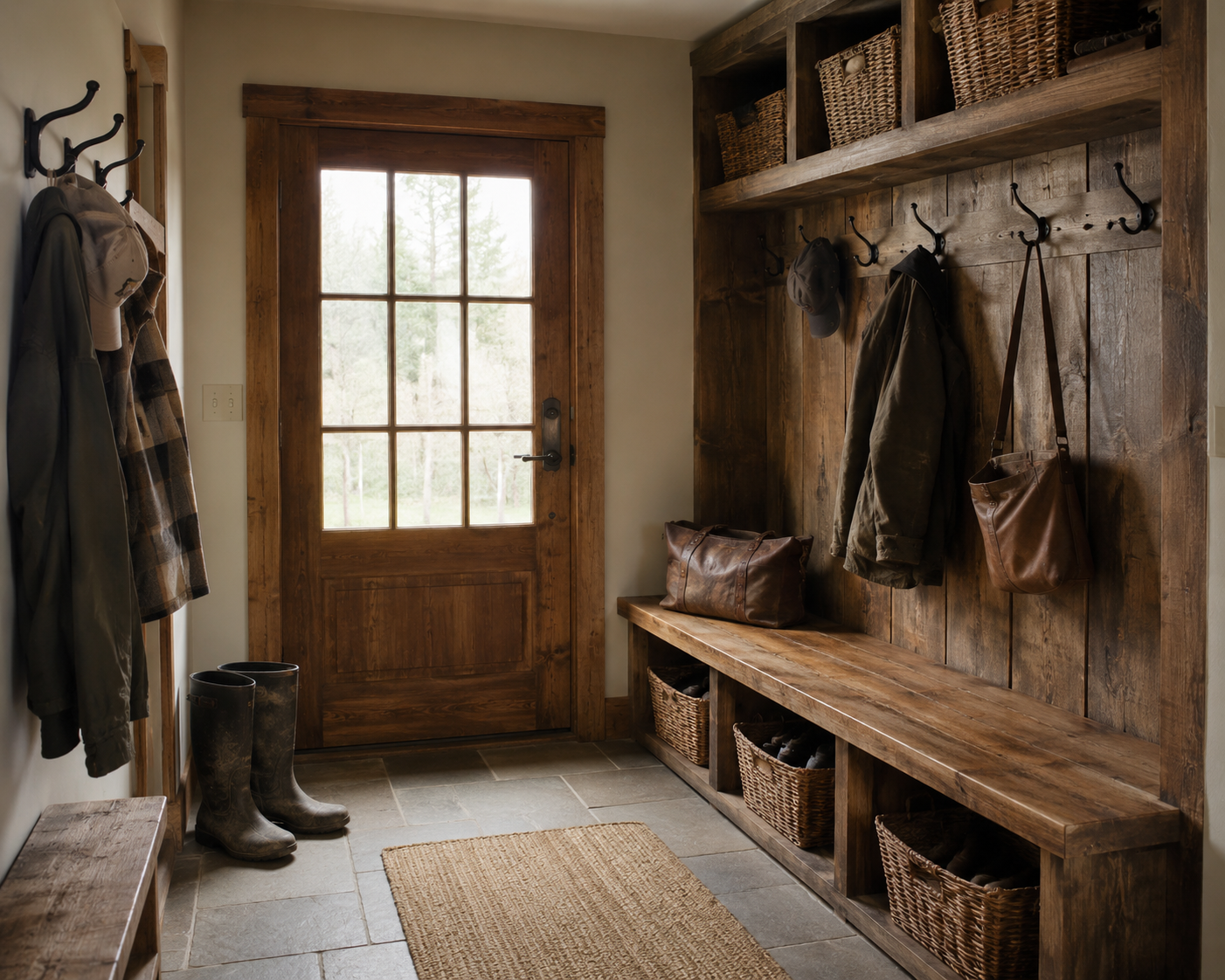
15. Reclaimed Wood and Lodge Finishes — Making It Look Intentional
A mudroom doesn’t have to look utilitarian. The best ones look like they belong in the same home as everything else — intentional, warm, and reflective of the people who live there.
Materials that create a lodge aesthetic:
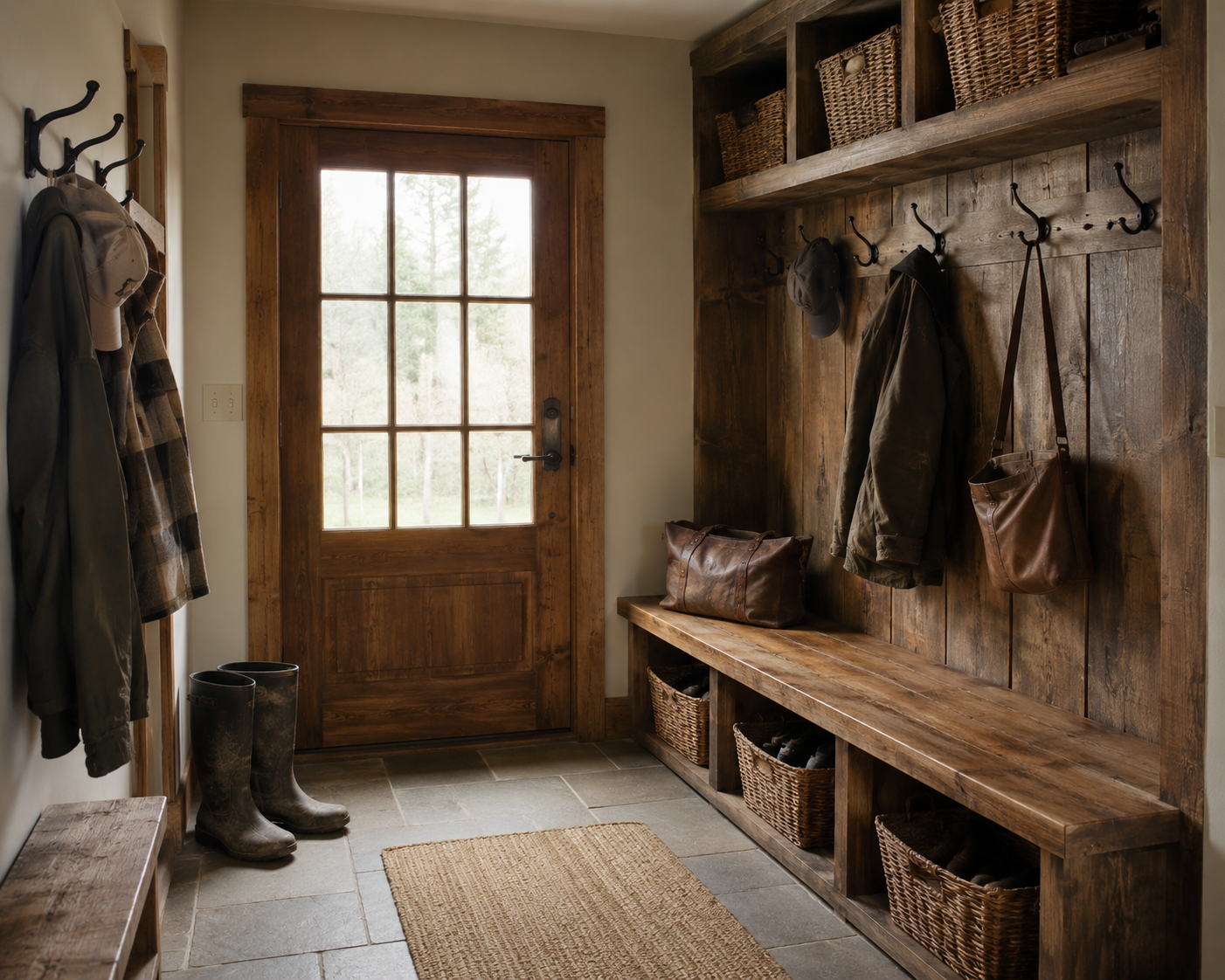
- Reclaimed barn wood on the wall behind the hook system — texture and character new wood never replicates
- Shiplap on the lower half of the walls — painted forest green or left natural
- Dark stained wood bench and shelving — contrasts beautifully with lighter wall colors
- Wrought iron or blackened steel hardware throughout — hooks, bin pulls, light fixtures
- Antler hooks — genuine shed antlers repurposed as coat hooks are one of the most distinctive details in any outdoor lifestyle mudroom. These could also work for the cabin living room aesthetic.
Color palette for a lodge mudroom: Forest green, warm charcoal, natural wood tones, and cream. The same palette that anchors the rest of a cabin or outdoor lifestyle home carried into the most functional room.
Cost range: $200–$1,000 for finishing materials depending on scope
16. Mudroom Lighting — Good Light Changes Everything
A mudroom used before dawn — which is every hunting mudroom during season — needs excellent lighting. The standard single overhead fixture that comes with most entryways is completely insufficient.
- Overhead LED fixtures providing even bright light across the whole space
- Under-shelf lighting above the boot area and pack station
- A motion-activated light that turns on automatically at 4 AM without fumbling for a switch
- Warm color temperature — 2700K–3000K — maintains the lodge aesthetic while providing functional light
The lodge style option: A wrought iron or aged bronze pendant above the bench area adds warmth and character while providing task lighting where you need it most. Pair with recessed LED lights overhead for overall brightness.
Cost range: $150–$600 depending on fixture quality and number of lights
17. Mudroom Dog Station — For Working Dogs and Family Pets
Whether it’s a hunting dog that earns their keep in the field or a family pet that comes in from the yard — a dedicated dog station in the mudroom contains the mess and keeps it out of the main house.
The dog station components:
- A dog washing station — a low utility sink or built-in dog wash with a hand-held sprayer
- A dog drying area — a raised platform with drainage and a towel hook nearby
- Dog gear storage — leads, collars, training equipment, treat bags
- A built-in kennel or crate space under the bench — uses space that would otherwise be wasted
The built-in dog wash: A floor-level built-in dog wash — essentially a tiled shower at dog height — is one of the most requested features in hunting cabin mudrooms. It contains the mess, protects your bathroom, and makes after-hunt cleanup significantly faster.
Cost range: $200–$1,500 depending on whether a dedicated dog wash is added
18. Utility Sink — The Most Underrated Mudroom Feature
A utility sink in the mudroom is one of those features you don’t think you need until you have one. Cleaning fish, rinsing muddy boots, washing hands before entering the main house, pre-treating laundry stains — all of it happens at the utility sink without contaminating the kitchen.
- Deep basin — at least 12 inches deep — for rinsing large items
- A side sprayer or pull-down faucet with good reach
- Cold and hot water connections — hot water matters for cleaning gear
- A utility-grade finish — stainless steel or cast iron — that handles rough treatment
Cost range: $200–$600 for sink and installation
19. Gear Drying Area — Beyond Just Boots
Rain jackets, base layers, gloves, hats, face masks — everything that was out in wet conditions needs to dry before it goes back in storage. A dedicated drying area handles this without wet gear spreading through the house.
- A series of open hooks specifically designated for wet gear — separate from dry storage hooks
- A heated towel rack or small wall-mounted heater nearby — accelerates drying significantly
- Adequate ventilation — a small exhaust fan or nearby window prevents mold
- A drip tray or rubber mat under the drying area to catch water
Cost range: $100–$400 for a drying area setup
20. The Complete Mudroom — Putting It All Together
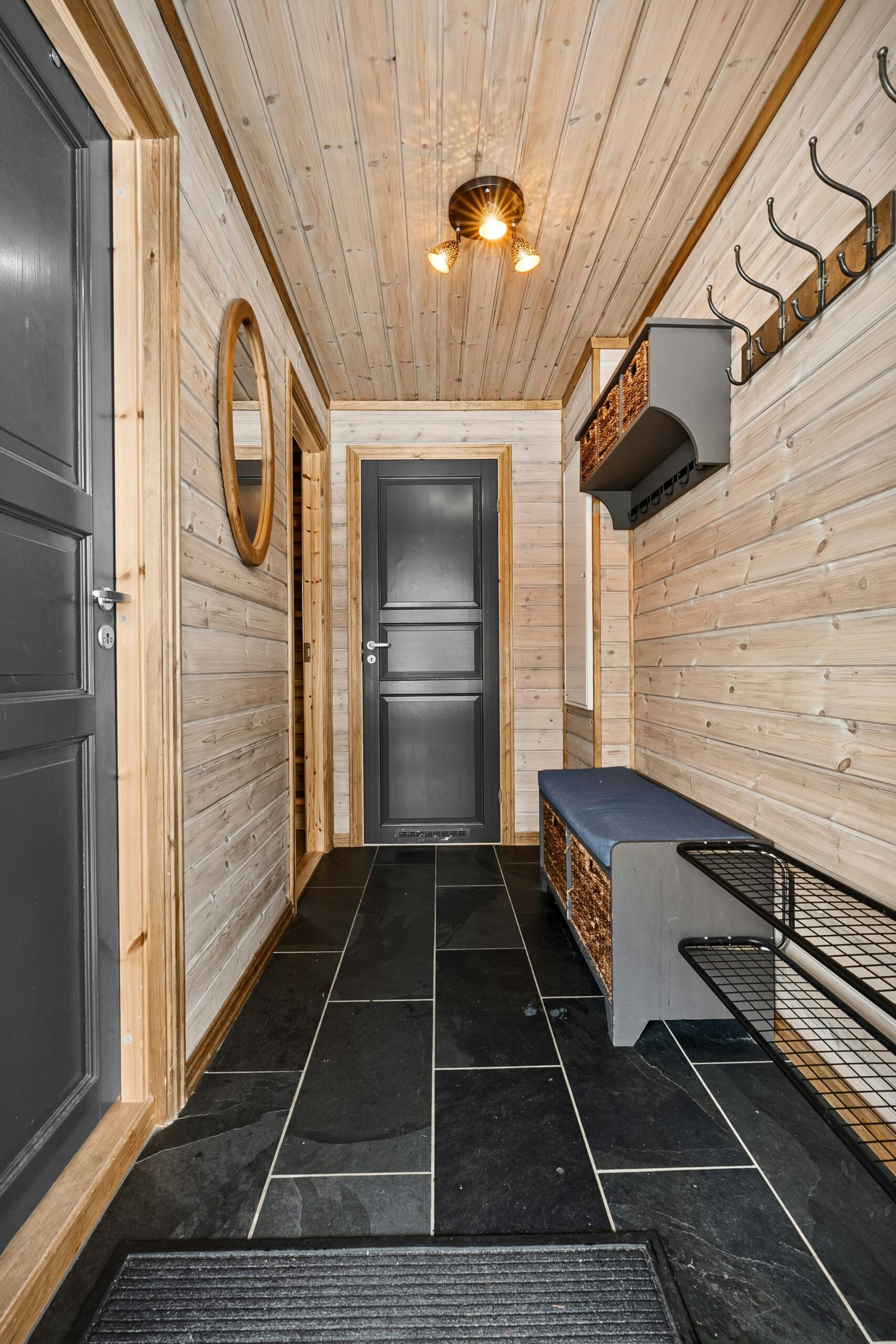
A fully designed mudroom brings all these elements together into a space that functions as well as it looks. Here’s what the complete version includes:
At the door:
- Waterproof rubber mat just inside the door
- Boot scraper mounted outside
- Overhead motion-activated lighting
Boot and wet gear zone:
- Floor level open slat boot rack with drip tray
- Boot dryer mounted to the wall
- Wader hanging system above (hunting homes)
- Utility sink at the far end
Hook and gear wall:
- Full-width hook system at multiple heights
- Built-in bench with open cubbies below
- Pack station at one end with surrounding shelves
- Charging station integrated into shelving
- Drop zone for keys, wallet, phone
Storage zone:
- Closed upper cabinets for off-season gear
- Scent control cabinet (hunting homes)
- Bow rack mounted above at eye level (hunting homes)
- Locking gun cabinet (hunting homes)
Dog station:
- Built-in kennel under the bench
- Dog washing station if space allows
Overhead:
- LED recessed lighting across full ceiling
- Exhaust fan for ventilation
- Pendant light above the bench area
Flooring:
- Sealed concrete or large format porcelain tile
- Rubber mat in the boot zone
- Floor drain near the wader hanging area
How to Prioritize Your Mudroom Build
Whether you’re starting from scratch or upgrading an existing space here’s the order that gives the most immediate improvement:
| Priority | Feature | Why First |
|---|---|---|
| 1 | Boot storage and drying | Daily use — immediate quality of life |
| 2 | High capacity hook wall | Solves the pile-by-the-door problem |
| 3 | Waterproof flooring | Foundation everything else depends on |
| 4 | Bench with storage | Sitting, organizing, containing clutter |
| 5 | Drop zone | Stops the kitchen counter chaos |
| 6 | Gear drying area | Extends the life of expensive gear |
| 7 | Dog station | Quality of life for pet owners |
| 8 | Utility sink | Requires plumbing — plan ahead |
| 9 | Scent control zone | Hunting homes specifically |
| 10 | Finishing and aesthetics | Function before form always |
Mudroom Shopping List — Amazon Affiliate Products
Everything you need to get started — all available on Amazon:
| Product | Use |
|---|---|
| PEET boot dryer | Overnight boot drying |
| Wooden shoe rack w/ bench | Boot storage with airflow |
| Heavy duty wall hooks — wrought iron | High capacity hook wall |
| Shaker peg rail | Lodge style hook system |
| Waterproof rubber floor mat | Boot zone protection |
| Open wire shelving | Gear organization |
| Under shelf LED lighting | Task lighting |
| Scent-Safe storage bags | Hunting clothing storage |
| Storage totes | Dry storage/organization |
| Over door organizer | Small mudroom bonus storage |
| Key holder wall mount | Drop zone organization |
| Charging station with USB ports | Electronics charging |
| Wader hangers | Proper wader drying |
| Activated carbon panels | Scent control cabinet lining |
| Boot tray — extra large | Drip containment |
Conclusion
A mudroom that works is one of the highest return investments in any home — not just in resale value but in daily quality of life. Whether you’re managing school bags and soccer cleats, hunting gear and wet waders, or some combination of both — the right design makes coming home easier every single day.
The twenty ideas in this guide cover the full range of what’s possible — from a simple bench and hook system to a fully outfitted hunter’s mudroom with scent control storage, wader hanging, and a dedicated pack station. Pick the features that solve your biggest daily frustrations first and build from there.
Function before form. Always. But with the right materials and finishes a mudroom can be both the hardest working room in the house and one of the most intentional looking — and that’s exactly what Field & Ember Co. is all about.
What’s the one mudroom feature you can’t live without? Drop it in the comments.