Venison Burger Recipe — The Onion Soup Burger That Stays Together and Actually Has Flavor
This post contains affiliate links. If you purchase through these links, I may earn a small commission at no extra cost to you.
Introduction
I’ll be honest with you — I made a lot of bad venison burger recipes before I made a good one. They fell apart on the grill. They tasted like nothing. They came out dry no matter what I did. If you’ve ever stood over a hot grill watching your venison burger crumble through the grates you know exactly what I’m talking about.
Here’s the thing about ground venison that nobody tells you upfront: it is not ground beef. You can’t just slap it into a patty, throw it on the grill, and expect the same result. Venison is dramatically leaner than beef — most ground venison runs somewhere around 95% lean depending on how it was processed — and that leanness is exactly why so many venison burgers fail. No fat means no binding, no moisture, and no flavor carrying capacity.
But here’s the good news. Once you understand why venison burgers fail it’s actually pretty easy to fix. And the fix I come back to every single time is one of the simplest — a packet of Lipton onion soup mix, a splash of Worcestershire sauce, and a few minutes of technique that makes all the difference.
According to the Quality Deer Management Association there are over 14 million deer hunters in the United States producing millions of pounds of ground venison every fall. And the single most common question in every wild game cooking community is some version of “why do my venison burgers fall apart?” This recipe answers that question completely — and turns your ground venison into the best burger you’ve put on a brioche bun.
Table of Contents
Why Venison Burgers Fail — And How This Recipe Fixes It
Let me save you from the mistakes I made before I landed on this recipe. Because understanding why venison burgers fail is half the battle.
Problem 1 — No fat means no binding. Ground beef holds together because fat melts during cooking and acts as a natural binder. Ground venison has almost none of that fat — so the patty has nothing holding it together when the heat hits it. The solution isn’t just adding an egg (though that helps) — it’s adding ingredients that create structure within the meat itself. Onion soup mix does exactly that.
Problem 2 — Lean meat means dry meat. Without intramuscular fat venison loses moisture fast on a hot grill. Pull it even slightly past medium and you’re eating something closer to a dry hockey puck than a burger. The Worcestershire sauce in this recipe adds moisture and umami that compensates for the missing fat — and the brioche bun is rich enough to carry the whole thing home even if you push the cook a little long.
Problem 3 — Venison needs bold flavor support. Ground beef has enough fat-carried flavor to stand on its own. Venison is cleaner and leaner — which means it needs more help from the supporting ingredients. The onion soup mix is doing serious flavor work here — dehydrated onion, beef bouillon, salt, and a mix of herbs that seasons every bite from the inside out rather than just the surface.
This recipe solves all three problems in one bowl with three ingredients. That’s why I make it every time.
What You Need
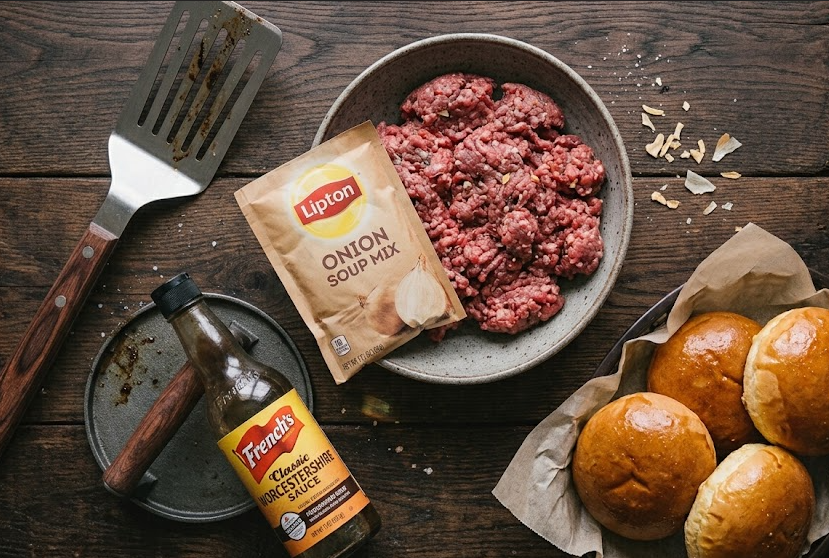
Ingredients (makes 4 burgers):
- 1 lb ground venison
- 1 packet Lipton onion soup mix (the full packet)
- 1 tablespoon Worcestershire sauce
- 4 brioche burger buns
- Your choice of toppings — see serving suggestions below
Optional add-ins for extra insurance:
- 1 egg — adds binding for very lean venison
- 2 tablespoons beef tallow or butter — adds fat if your venison is extremely lean
- 1 tablespoon cold water — helps keep the patty moist during the cook
Equipment:
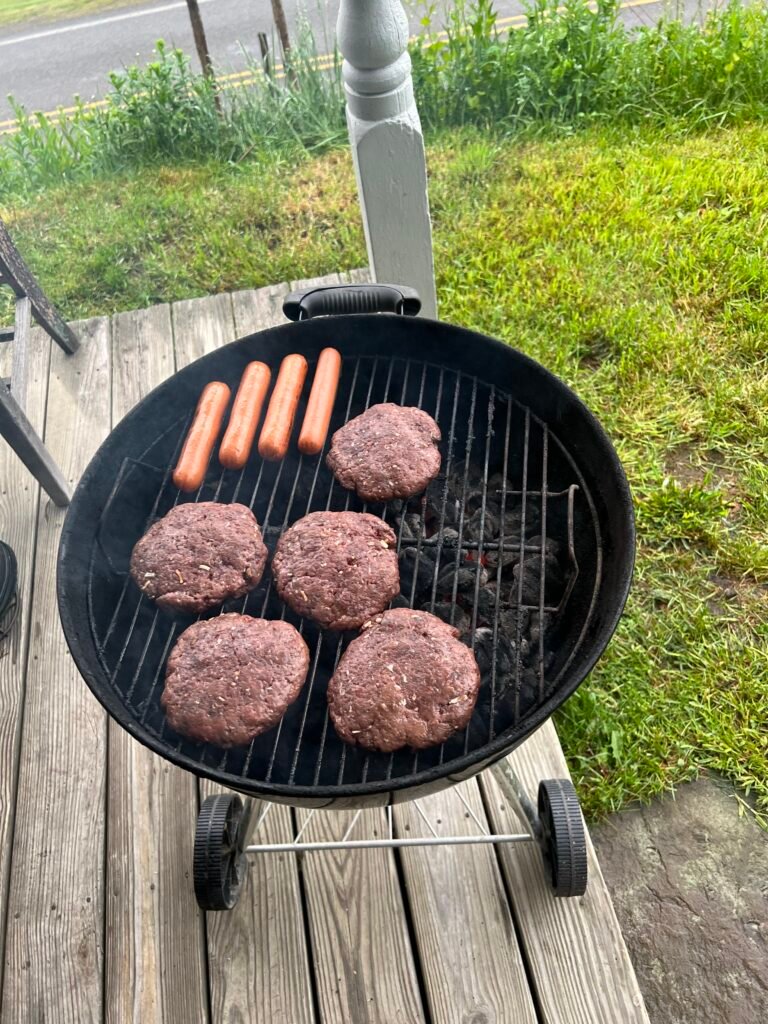
- Grill — gas or charcoal
- Meat thermometer
- Mixing bowl
- Burger press or your hands
- Spatula — wide and sturdy
For serving:
- Sharp cheddar or smoked gouda
- Caramelized onions — optional but genuinely excellent with the onion soup base
- Lettuce, tomato, red onion
- Good quality mayonnaise or burger sauce
- Brioche buns — toasted on the grill
The Fat Ratio Conversation
Before we get into the recipe I want to address the fat ratio question because it comes up every time anyone talks about venison burgers.
Should you add fat to your ground venison?
If your venison was processed at a butcher or processor ask them to add 10–15% beef tallow or pork fat at grinding time. This is the cleanest solution — the fat is incorporated evenly throughout the grind and the burger behaves more like ground beef from the start. Most processors offer this and it costs almost nothing extra.
If your venison is already ground and in the freezer — which is most people’s situation — you have two options. Add a tablespoon of cold butter or beef tallow to the meat mixture before forming patties. Or rely on the onion soup mix and Worcestershire to compensate. Both work. The fat addition produces a slightly juicier burger. The pure venison version with the soup mix still produces an excellent result and is what I make most often.
The one thing I’d avoid is adding olive oil — it doesn’t incorporate into cold meat the same way solid fat does and doesn’t improve the texture meaningfully.
Step 1 — Mix Your Burger Blend
This is the step that makes everything else work. Take your time here.
Place the ground venison in a large mixing bowl. Add the full packet of onion soup mix directly to the meat. Add the Worcestershire sauce.
Now mix — but not too much. Overmixing ground venison makes the texture dense and tough. You want to combine the ingredients until they’re evenly distributed through the meat — about 30 seconds of gentle folding and pressing. Stop as soon as you can’t see dry soup mix or streaks of Worcestershire.
The mixture should feel slightly tacky and hold together when you press a small amount between your fingers. If it still feels crumbly add a tablespoon of cold water and mix briefly. If you’re adding an egg add it with the other ingredients before mixing.
One critical technique tip: Keep your hands and the meat cold. Warm hands melt the fat in the meat — even the small amount in lean venison — which makes patties that fall apart. Run your hands under cold water before handling the meat. Work quickly. Get the patties formed and into the refrigerator before they warm up.
Step 2 — Form the Patties
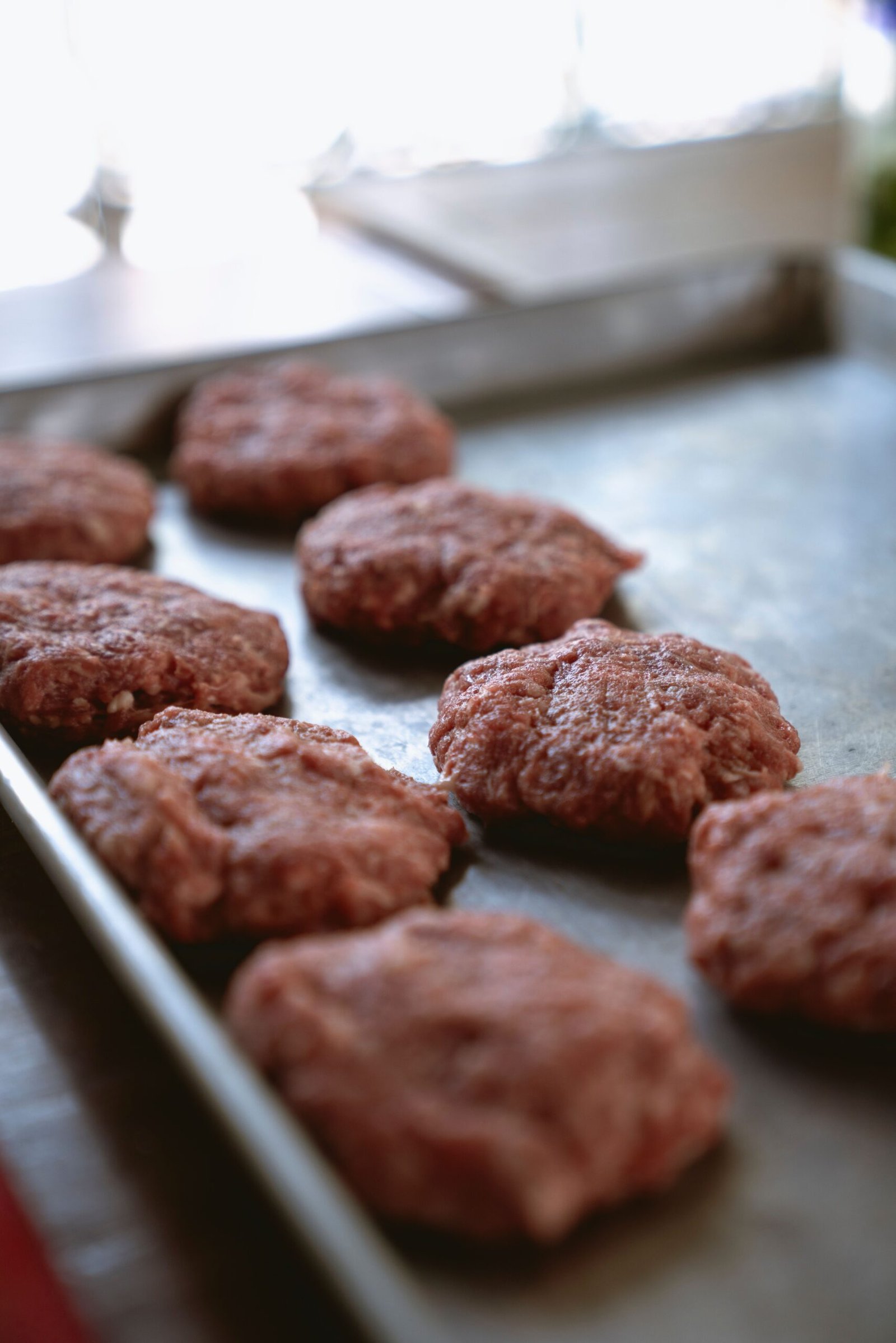
Divide your mixture into four equal portions — roughly 4 ounces each from one pound of meat.
Form each portion into a patty about ¾ inch thick. Don’t pack them too tightly — firm enough to hold together, loose enough to stay tender when cooked.
The thumb dimple trick: Press your thumb into the center of each patty to create a shallow dimple. This is one of the oldest burger tricks in existence and it works. When a burger patty cooks it contracts and puffs in the center — the dimple counteracts that contraction and gives you a flat even patty rather than a dome. For venison specifically — which contracts faster than beef due to lower fat content — this matters even more.
Make them slightly wider than your bun. Patties shrink on the grill. A patty that’s exactly the same diameter as your brioche bun will be noticeably smaller than the bun by the time it’s cooked. Make them about 20% wider than the bun diameter and they’ll fit perfectly after shrinkage.
Refrigerate before grilling: Place formed patties on a plate, cover with plastic wrap, and refrigerate for at least 30 minutes before grilling. This rest time firms the patties significantly and makes them dramatically easier to handle on the grill. It’s the single most impactful technique change most people never make. I rarely skip this step even when I’m in a hurry.
Step 3 — Prepare the Grill
Whether you’re cooking on gas or charcoal the setup matters for venison specifically.
Gas grill: Preheat to medium-high — 400°F to 425°F. You want a hot enough surface to get a good sear immediately but not so hot that the outside chars before the inside cooks. Clean and oil your grates thoroughly — venison sticks more than beef due to lower fat content. A well-oiled grate is the difference between a burger that flips cleanly and one that tears.
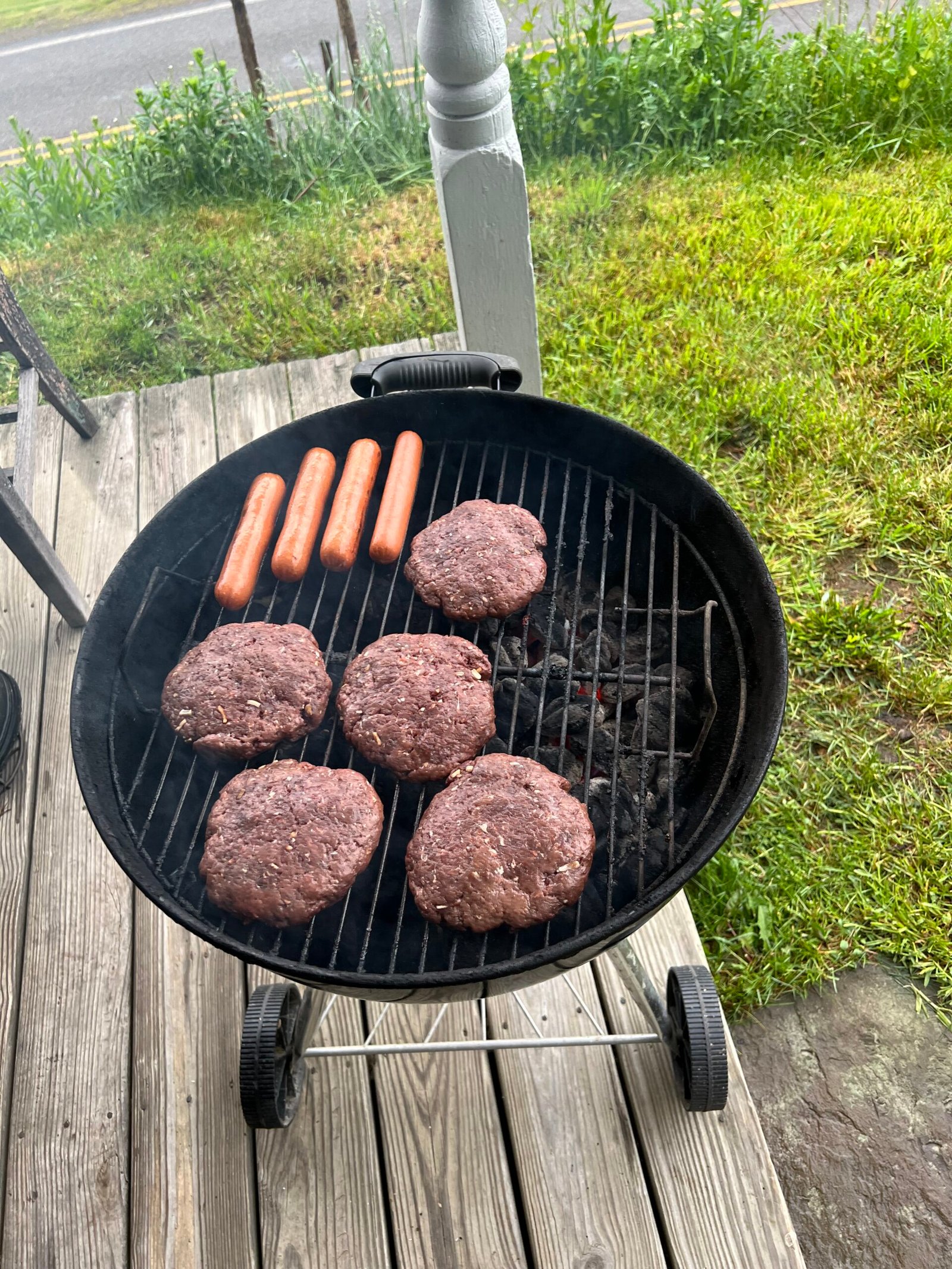
Charcoal grill: Build a two-zone fire — coals banked to one side creating a hot direct zone and a cooler indirect zone. Start the burgers over direct heat for the sear, then move to indirect if they need more time to reach temperature without burning the outside. This two-zone setup gives you much more control over the cook especially for lean venison that can go from perfect to overdone in under a minute.
Oil the grates: Fold a paper towel into a tight square, soak it in vegetable oil, and use tongs to rub it across the grill grates just before adding the burgers. Do this even if you have a non-stick grill surface. Venison needs the help.
Step 4 — Grill the Burgers
Take your cold patties directly from the refrigerator to the hot grill. The cold center slows the cook slightly which gives you more time to develop a good crust on the outside before the inside overcooks. This technique — starting with cold meat — is one of the best things you can do for a lean venison burger.
Place the patties on the grill and do not press them down. I know it’s tempting. Every backyard griller does it. Don’t. Pressing squeezes out the moisture venison can’t afford to lose.
Timing:
- First side: 3–4 minutes undisturbed — let the crust develop fully before flipping
- Flip once — only once — using a wide sturdy spatula
- Second side: 3–4 minutes
If adding cheese: Add cheese in the last 60–90 seconds of cooking. Close the grill lid after adding cheese — the trapped heat melts it without overcooking the burger.
Step 5 — Temperature Is Everything
This is the most important step in the whole recipe. Venison is an unforgiving meat when it comes to temperature — the window between perfect and overdone is narrow.
Target internal temperature: 160°F
I know. You’ve seen beef burger recipes tell you to pull at 130°F or 135°F for medium rare. Venison is different. The USDA recommends ground venison be cooked to 160°F — and unlike beef which stays juicy at lower temperatures, venison at 130°F can have a texture and appearance that most people find off-putting.
The good news: a well-made venison burger with onion soup mix and Worcestershire is still moist and delicious at 160°F. The fat from the soup mix ingredients and the moisture from the Worcestershire carry the burger home even at full temperature.
Use an instant-read thermometer — the ThermoPop by Thermoworks reads in 3 seconds and takes all the guesswork out. Insert it into the side of the patty horizontally to get an accurate center reading. Pull at 160°F and move immediately to the next step.
Step 6 — Toast the Brioche Buns
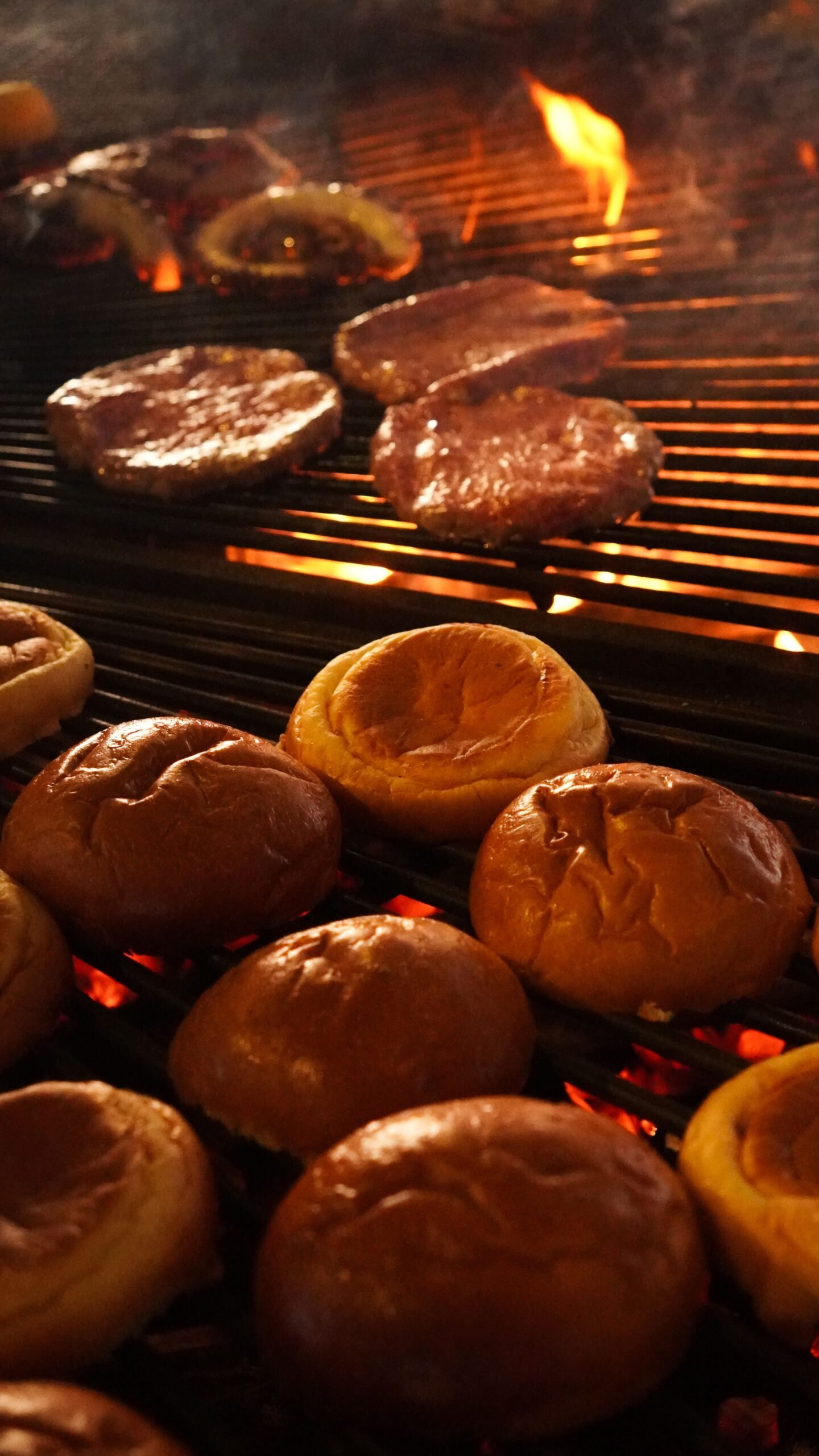
This step takes 90 seconds and makes a bigger difference than most people expect. A toasted brioche bun holds up to the burger juices without going soggy, adds a slight crunch that contrasts beautifully with the tender patty, and browns slightly in a way that adds flavor.
Cut your brioche buns in half and place them cut-side down directly on the grill grates for the last 60–90 seconds of the burger cook. Watch them — brioche has enough butter content to go from perfectly golden to burnt faster than a standard bun. Pull them as soon as they show light golden color.
A light spread of good quality mayonnaise on the cut surface before toasting is optional but genuinely excellent — the mayo browns against the hot grate in a way that tastes like something a restaurant would charge extra for.
Step 7 — Rest and Build
Pull your burgers off the grill and let them rest on a plate for 2 minutes before building. Even a burger benefits from a brief rest — the juices redistribute slightly and the patty firms up enough to hold its shape when you bite into it.
Build your burger in this order for best structure:
- Bottom brioche bun
- Mayonnaise or burger sauce on the bottom bun
- Lettuce — creates a moisture barrier between the bun and burger
- Venison patty with melted cheese
- Caramelized onions if using — the onion soup base in the patty and caramelized onions on top creates a layered onion flavor that’s genuinely special
- Tomato
- Red onion
- Top bun — mayonnaise on the inside
Topping Ideas That Work With the Onion Soup Base
The onion soup flavor profile in these burgers is bold and savory — toppings that complement rather than fight that flavor work best.
The classic build: Sharp cheddar, lettuce, tomato, red onion, mayonnaise. Clean and lets the venison shine.
The steakhouse build: Smoked gouda, caramelized onions, arugula, horseradish mayo. The smoked gouda plays beautifully against the Worcestershire in the patty.
The lodge build: Sharp cheddar, bacon, sautéed mushrooms, garlic aioli. Rich and deeply savory — the kind of burger you eat around a fire at hunting camp.
The simple build: American cheese, yellow mustard, dill pickle. Sometimes simple is exactly right. The American cheese melts perfectly and the pickle cuts through the richness.
The Caramelized Onion Upgrade
Since the onion soup mix is the flavor foundation of this burger adding actual caramelized onions on top creates a layered onion experience that takes this from a great burger to a genuinely memorable one.
Caramelized onions take 30–40 minutes done properly — this is not a quick step and it can’t be rushed. But they can be made ahead and reheated on the grill in the last few minutes of cooking.
Quick caramelized onion method:
- Slice 2 large yellow onions into thin half moons
- Heat 2 tablespoons of butter in a heavy pan over medium-low heat
- Add onions and a pinch of salt
- Cook stirring occasionally for 35–40 minutes until deeply golden and sweet
- Add a splash of Worcestershire sauce in the last 5 minutes
- Remove from heat and keep warm
The Worcestershire in the onions echoes the Worcestershire in the patty — it’s a small detail that makes the whole burger feel like it was designed rather than assembled.
Make-Ahead and Freezer Instructions
This is one of the best aspects of this recipe — it’s completely freezer and make-ahead friendly.
Make-ahead patties: Form patties, place on a parchment-lined baking sheet, cover with plastic wrap, and refrigerate up to 24 hours before grilling. They actually benefit from the extended rest — the onion soup mix hydrates more fully and the flavors meld together. Day-of patties are good. Overnight patties are better.
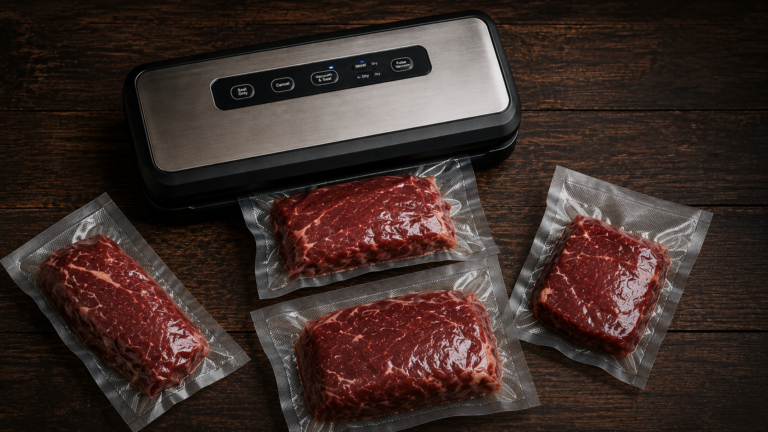
Freezer patties: Form patties and place on a parchment-lined baking sheet in a single layer. Freeze until solid — about 2 hours. Transfer to a zip-lock freezer bag with parchment between each patty. Freeze up to 3 months.
Cooking from frozen: Thaw overnight in the refrigerator — never on the counter. Cook as directed. Fully thawed patties cook identically to fresh. Partially frozen patties take significantly longer and cook unevenly — always thaw completely before grilling.
This make-ahead potential is one of the reasons I love this recipe for hunting camp — mix and form a double batch the night before, refrigerate overnight, and you have 8 perfect burgers ready to go on the grill whenever camp is hungry.
What to Serve With Venison Onion Soup Burgers
The onion soup burger is bold and savory enough to hold its own against strong sides. Here’s what works:
Classic sides:
- Cast iron skillet fries — thick cut, duck fat or tallow fried, sea salt
- Coleslaw — creamy and cool cuts through the richness of the burger
- Baked beans — classic camp food pairing
- Corn on the cob — grilled with herb butter
Lodge style sides:
- Cast iron mac and cheese — over the top but absolutely worth it
- Roasted sweet potato wedges with smoked paprika
- Wild rice salad with dried cranberries and toasted pecans
- Campfire baked potatoes with sour cream and chives
Light sides if the burger is the star:
- Simple green salad with vinaigrette
- Sliced tomatoes with sea salt and olive oil
- Watermelon slices — a summer cookout essential
Frequently Asked Questions
Why do my venison burgers always fall apart? Ground venison is extremely lean — typically 95% lean — and has almost no fat to bind the patty together when heat is applied. The solution is adding binding ingredients (onion soup mix, egg) to create structure within the patty, keeping the meat cold during forming, and refrigerating the formed patties for at least 30 minutes before grilling. A well-chilled patty with the right mix-ins will not fall apart on the grill.
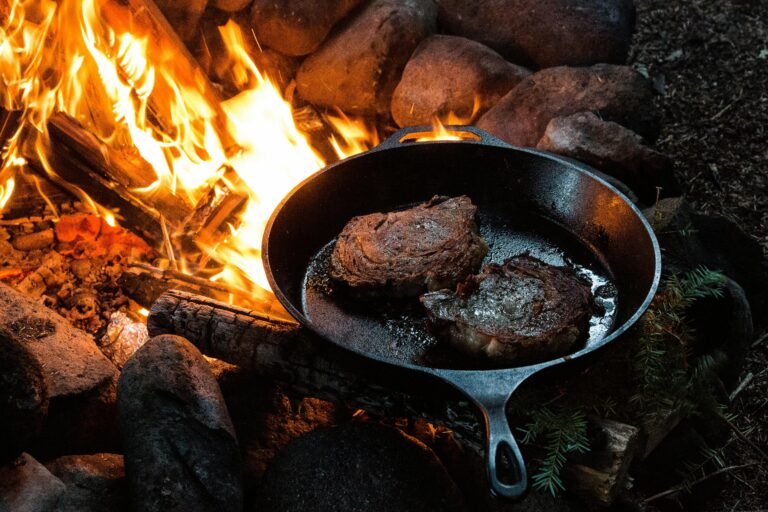
Can I use this recipe in a cast iron skillet instead of the grill? Absolutely. Heat a cast iron skillet over medium-high heat until very hot. Add a tablespoon of butter or beef tallow. Cook patties 3–4 minutes per side without pressing. The cast iron produces an excellent crust — different from the grill but equally good. Cover the skillet with a lid in the last 90 seconds to melt the cheese.
What is the best fat to add to ground venison for burgers? Beef tallow is the best option — it has the highest smoke point, the most neutral flavor, and the closest fat profile to what’s naturally in beef. Pork fat is a close second and produces an excellent burger with a slightly different flavor. Butter works well added to the mix but has a lower smoke point. Avoid olive oil — it doesn’t incorporate well into cold ground meat.
Can I make these without the onion soup mix? Yes — but you’ll need to compensate for both the flavor and the binding it provides. Substitute with 2 tablespoons of finely minced fresh onion, 1 teaspoon of beef bouillon powder, ½ teaspoon of garlic powder, ½ teaspoon of onion powder, and ½ teaspoon of dried thyme. Add an egg for binding since you’re losing the structure the soup mix provides.
How do I keep venison burgers juicy? Four things: keep the meat cold before and during forming, don’t overmix the patty blend, don’t press the patties on the grill, and pull at exactly 160°F — not a degree over. The onion soup mix and Worcestershire also add moisture and flavor that compensates for venison’s low fat content.
Can I make sliders with this recipe? Yes — form into 2-ounce patties about ½ inch thick and cook 2–3 minutes per side. Slider-sized venison onion soup burgers on small brioche slider buns are one of the best hunting camp appetizers you can put out. Make a double batch — they go fast.
Does this recipe work with other wild game? Yes — elk, antelope, and moose all work beautifully with this exact recipe. The leaner the meat the more important the onion soup mix and Worcestershire become. Wild boar ground meat is fattier than venison and also works well — it needs slightly less Worcestershire since it has more natural moisture.
The Hunting Camp Version
Let me tell you how this recipe actually gets made most often in my world — because it’s not always a backyard grill situation.
Hunting camp version: I mix the patties the night before in a zip-lock bag — dump the venison in, add the soup mix and Worcestershire, seal the bag, and squish everything together through the bag until it’s combined. No bowl to wash. No mess. Refrigerate overnight in the cooler.
Next day when camp is hungry I form the patties quickly with cold hands, press the thumb dimple, and they go straight on the camp grill over hardwood charcoal. Brioche buns get toasted on the grate. Sharp cheddar goes on in the last minute. Simple build — mayo, lettuce, tomato, onion.
It’s the meal people talk about at the end of the week when they’re packing up camp. Not because it’s complicated. Because it’s exactly right.
Conclusion
The venison onion soup burger is one of those recipes that sounds almost too simple to be as good as it is. Three main ingredients in the patty. Thirty minutes of refrigerator time. A hot grill and a thermometer. A good brioche bun.
But simple done right beats complicated done wrong every single time. And this burger — the one I’ve made more times than I can count, the one that convinced more than a few venison skeptics that wild game cooking is worth taking seriously — is simple done exactly right.
Make a double batch. Freeze half. Pull them out on the first cold Friday of deer season and put them on the grill while you sharpen your broadheads and talk about the morning ahead.
That’s what field to table cooking is actually about. If you liked this recipe, check out our 15 Easy Weeknight Ground Venison Recipes.
Got a venison burger secret that belongs in this recipe? Drop it in the comments — I’m always looking for the next thing to try.